 Save
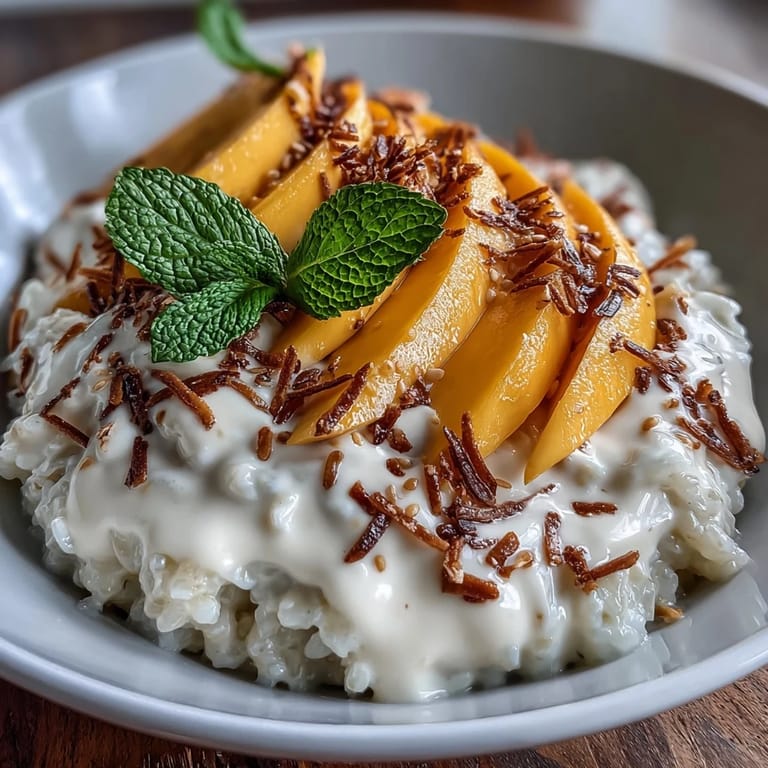
Save There's something about waking up to the smell of coconut that makes the whole day feel like a small vacation. I stumbled onto this bowl during a particularly gray winter, desperately craving something that tasted like sunshine and felt nourishing at the same time. The combination of warm sticky rice soaking up coconut sweetness, then crowned with bright mango slices, somehow turned my kitchen into a tropical refuge. It's become my go-to when I need to remind myself that breakfast doesn't have to be complicated to be memorable.
I made this for a friend who'd been dealing with a lot, and watching her face light up when she tasted that first spoonful—the warm rice, cool mango, creamy coconut—felt like I'd done something genuinely kind. She kept asking if it was complicated, amazed that something this luxurious came from such simple ingredients sitting in her own pantry. That's when I realized this bowl isn't just breakfast; it's a small act of comfort disguised as a meal.
Ingredients
- Glutinous (sticky) rice, 1 cup: This is the foundation—don't skip rinsing it properly or you'll end up with gluey, starchy rice that tastes chalky. The rinsing removes the excess starch that prevents the grains from staying separate and absorbing the coconut mixture evenly.
- Water, 1 1/2 cups: Use filtered water if you have it; it makes a subtle but real difference in the final taste and texture of the rice.
- Full-fat coconut milk, one 13.5 oz can: This is not the lite version—the fat is what makes the rice creamy and luxurious, so grab the can with the thick cream layer at the top.
- Maple syrup or agave nectar, 1/4 cup: This sweetens the rice gently without overpowering it; I've learned that agave dissolves more smoothly if your coconut milk is cold.
- Sea salt, 1/4 teaspoon: A tiny pinch that somehow makes the entire bowl taste more like itself, balancing sweetness with a whisper of savory depth.
- Ripe mangoes, 2 large: Choose mangoes that give slightly when you squeeze them gently and smell fragrant at the stem end; underripe ones will make the whole bowl feel disappointing.
- Toasted sesame seeds or coconut flakes, 2 tablespoons (optional): The toasting step matters here—it brings out a nutty, almost buttery flavor that plain seeds can't deliver.
- Fresh mint leaves (optional): A handful of mint leaves scattered on top adds brightness and makes the bowl feel more intentional and restaurant-worthy.
Tired of Takeout? 🥡
Get 10 meals you can make faster than delivery arrives. Seriously.
One email. No spam. Unsubscribe anytime.
Instructions
- Rinse your sticky rice:
- Run the rice under cold water in a fine-mesh strainer, stirring gently with your fingers as the water flows through. Keep rinsing until the water runs almost clear—it usually takes about three or four passes, and yes, this step really does matter for texture.
- Cook the rice gently:
- Combine the rinsed rice and water in a saucepan, bring to a boil (you'll hear it bubbling), then immediately lower the heat to the absolute minimum and cover it. Let it sit undisturbed for 15 to 20 minutes—I know it's tempting to peek, but don't; once the water is absorbed and the grains look translucent, remove it from heat and keep the lid on for exactly 10 more minutes.
- Warm your coconut mixture:
- While the rice cooks, pour the coconut milk into a small saucepan along with the maple syrup and sea salt. Heat it gently over medium heat, stirring occasionally, until it's steaming and fragrant but not boiling—boiling can separate the cream and make it grainy.
- Combine rice and coconut:
- Set aside half a cup of the coconut mixture in a small bowl (this is your drizzle). Pour the remaining warm coconut mixture over the cooked rice, and using a rice paddle or gentle spatula, fold it together—think of it like folding, not stirring, to keep those grains intact.
- Let it rest and soak:
- Cover the pot and let the rice sit for 10 minutes so it can fully absorb all those coconut flavors and become creamy and luxurious. This is the step that transforms regular rice into something that tastes like a treat.
- Assemble your bowls:
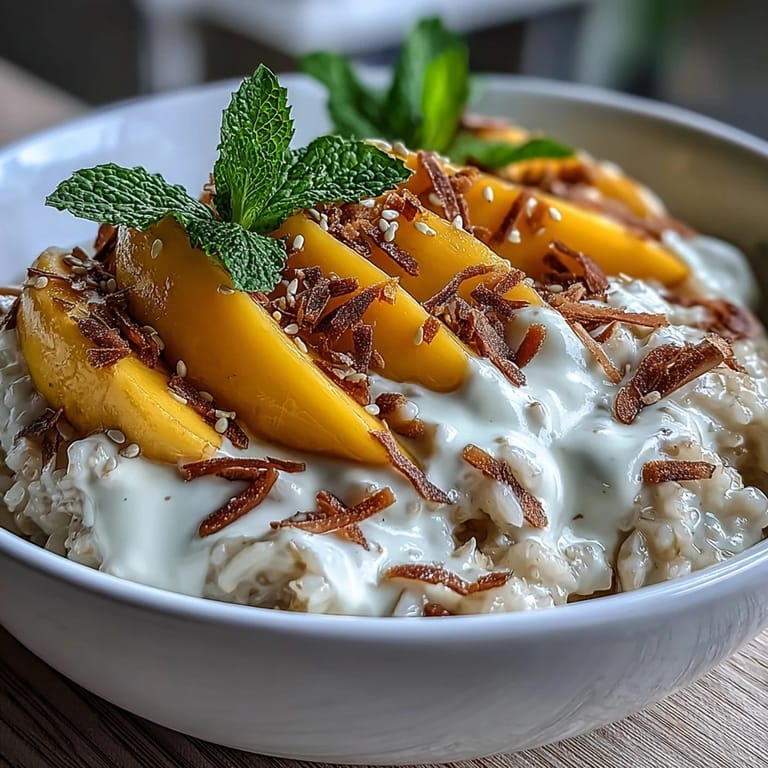
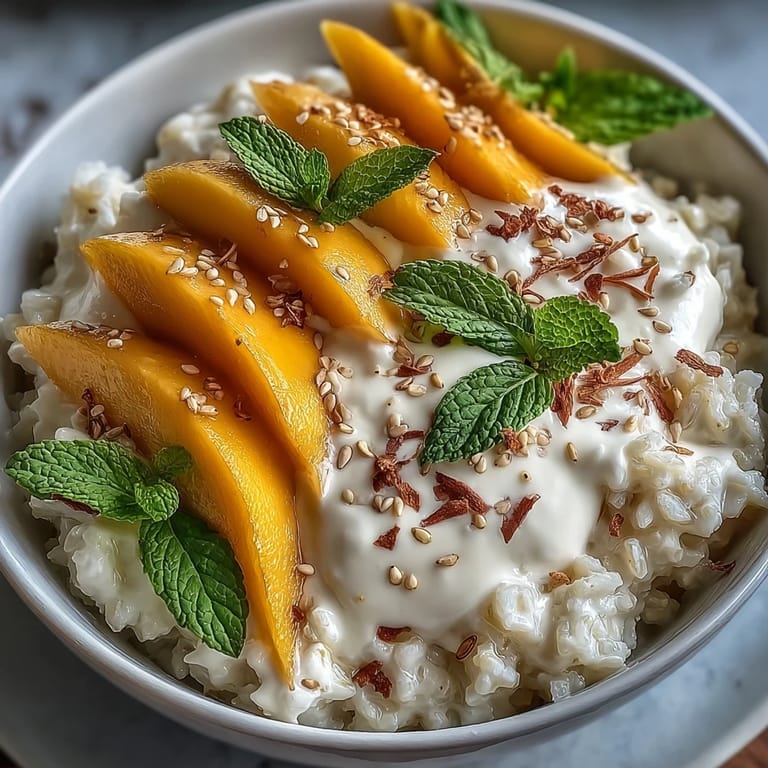
- Divide the warm coconut sticky rice among four bowls, arrange your mango slices on top in whatever way feels beautiful to you, then drizzle generously with that reserved coconut cream. Finish with sesame seeds and a few mint leaves if you're using them, and serve immediately while the rice is still warm.
 Save
Save There was a morning when I made this for myself after a rough night, and something about sitting quietly with this bowl in my lap—the warmth of the rice, the cold burst of mango, the sweetness of coconut—actually felt healing in a way that surprised me. Food doesn't always need an occasion; sometimes it just needs to be there when you need something good.
Choosing and Prepping Your Mangoes
The mango is the star here, so it deserves real attention. I've learned that the best mangoes for this bowl aren't the hardest ones—you want something that yields just slightly to pressure, with skin that's moving from green to gold or coral. If your mango is completely soft, it'll fall apart when you slice it; if it's rock hard, it'll taste starchy and bitter no matter what you do. The way to tell if it's ready is to smell the stem end—a ripe mango practically announces itself with fragrance.
The Magic of Resting Time
One of the biggest changes I made to my rice cooking was giving myself permission to let things sit and rest. That 10-minute pause after you pour the coconut mixture over the rice might feel like doing nothing, but the rice is actually opening up and absorbing all that flavor, transforming from plain rice into something creamy and sweet. Skipping this step will give you a bowl that tastes good but not transcendent.
Variations and Personal Touches
This bowl is genuinely flexible, which is part of why I keep making it. I've substituted coconut sugar for maple syrup when the house ran out (it creates a slightly more caramel-like flavor), and I've used short-grain sushi rice when I couldn't find glutinous rice and honestly couldn't tell the difference. Some mornings I add a sprinkle of granola for texture, other times I top it with fresh berries mixed in with the mango for added tartness and visual drama.
- If you prefer your coconut cream extra thick and cold, refrigerate that reserved portion for 15 minutes before drizzling—it creates an almost gel-like texture that feels indulgent.
- Jasmine tea or herbal tea like Thai iced tea pairs beautifully alongside this bowl if you want to lean into the tropical breakfast experience.
- Make extra sticky rice and coconut mixture—it keeps well in the fridge for two days and tastes wonderful cold, almost like a dessert.
 Save
Save This bowl has become my answer for mornings when I need something that feels both indulgent and honest, something that tastes like care without requiring any real acrobatics in the kitchen. Make it for yourself, and then make it for someone else—it's one of those recipes that gets better each time you do.
Recipe FAQ
- → Can I make these bowls ahead of time?
Yes, prepare the coconut sticky rice up to 2 days in advance and store refrigerated. Warm gently before serving and top with fresh mango and coconut cream just before eating.
- → What's the best way to cut mango for these bowls?
Peel the mango, then slice flesh away from the pit in large sections. Cut crosswise into even slices or cubes for easy spooning and beautiful presentation.
- → Is glutinous rice the same as regular white rice?
No, glutinous or sticky rice is a special variety that becomes chewy and adhesive when cooked. It's essential for authentic texture and cannot be substituted with long-grain white rice.
- → Can I use frozen mango instead of fresh?
Frozen mango works in a pinch, but thaw and drain well before topping. The texture will be softer, and flavor less vibrant than fresh ripe mango.
- → How do I store leftover coconut cream topping?
Keep reserved coconut cream in an airtight container in the refrigerator for up to 3 days. The fat may solidify—simply warm gently to return to drizzling consistency.
- → What other fruits pair well with coconut sticky rice?
Sliced fresh pineapple, papaya, or lychee complement the coconut flavors beautifully. Berries add tart contrast, while roasted bananas enhance the tropical sweetness.