 Save
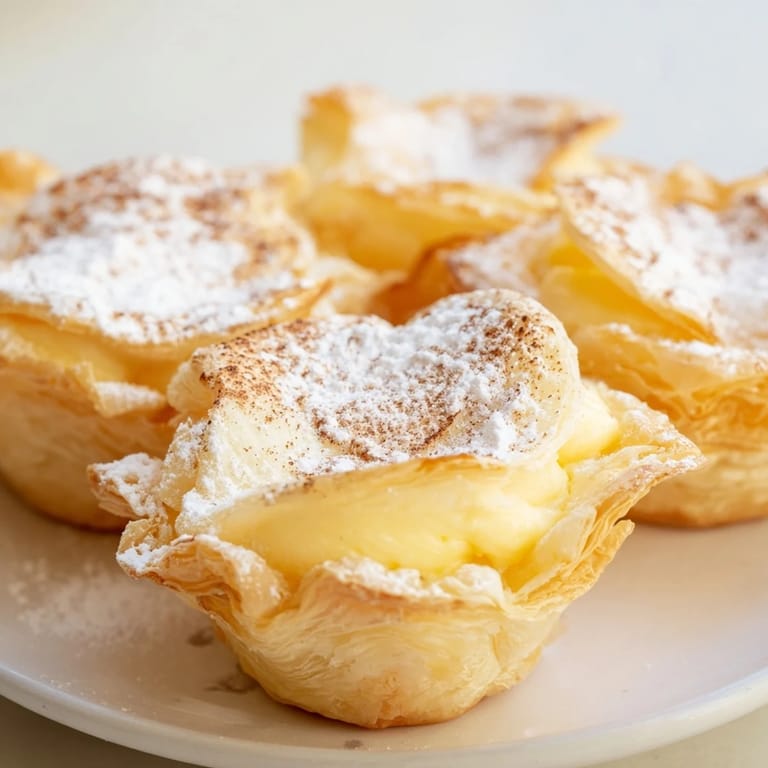
Save The first time I bit into a Portuguese egg tart at a small café in Lisbon, the phyllo shattered between my teeth and gave way to this silky, cinnamon-kissed custard that seemed impossibly creamy. I must have closed my eyes without meaning to because the pastry chef smiled when I opened them again, as if she'd seen that reaction a hundred times before. That moment stuck with me—not just the flavors, but the way something so elegant could also feel so approachable, something I could actually make at home. Years later, I finally tried recreating them in my own kitchen, and honestly, they've become the dessert I reach for when I want to impress without spending hours fussing.
I made these for my partner's family dinner last spring, and his grandmother—who'd actually lived in Portugal—took one bite and just nodded slowly. That nod meant everything; it meant the flavors landed right, that I'd captured something real. She suggested adding a whisper of lemon zest next time, which I now do without fail, and we've since made them together twice.
Ingredients
- Phyllo pastry sheets: These are your foundation—buy them fresh if you can, and keep them covered with a damp towel while working so they don't dry out and crack on you.
- Unsalted butter, melted: The butter is what creates those delicate, golden layers, so brush each sheet generously and don't skip it.
- Whole milk and heavy cream: Together they give the custard its luxurious texture; I learned the hard way that skim milk just doesn't have the same richness.
- Cornstarch: This is your thickening agent—it prevents the custard from being runny, and whisking it with cold milk first stops lumps from forming.
- Granulated sugar: It sweetens the custard and helps the yolks cook evenly when whisked together.
- Egg yolks: Four yolks create that silky, almost velvety texture that makes these tarts special; don't be tempted to use whole eggs.
- Vanilla extract and ground cinnamon: These two are what make these tarts taste Portuguese—the cinnamon especially brings warmth and complexity.
- Powdered sugar and cinnamon for topping: A final dusting of these finishes them beautifully and adds a little textural contrast.
Tired of Takeout? 🥡
Get 10 meals you can make faster than delivery arrives. Seriously.
One email. No spam. Unsubscribe anytime.
Instructions
- Heat your oven and prep the workspace:
- Set your oven to 200°C (400°F) and have everything within arm's reach—once you start working with phyllo, you want to move quickly so the sheets don't dry out.
- Butter and layer the phyllo:
- Brush each sheet lightly with melted butter, then stack three sheets together and cut them into squares roughly 4 inches on each side—you're aiming to cover the bottom and sides of a muffin cup with a little overhang. Repeat until you have 12 stacks.
- Shape the phyllo cups:
- Gently press each layered square into a muffin cup, letting the edges rise slightly above the rim for a rustic look.
- Pre-bake the shells:
- Bake the phyllo cups for 8–10 minutes until they're light golden and crispy, then pull them out and let them cool slightly while you make the custard.
- Whisk the custard base:
- In a saucepan, whisk the milk and cornstarch together until completely smooth—this step matters because lumpy custard is disappointing—then add the cream, sugar, egg yolks, vanilla, cinnamon, and salt.
- Cook the custard slowly:
- Over medium heat, whisk constantly for 5–7 minutes until the mixture thickens enough that your whisk leaves a trail that doesn't immediately disappear. You want creamy, not scrambled, so stay attentive.
- Fill the cups:
- Divide the warm custard evenly among the phyllo shells, filling each almost to the brim.
- Bake until just set:
- Return them to the oven for 8–10 minutes; the custard should be gently set on top but still have a tiny bit of jiggle in the center when you tilt the tin—that's where the magic happens as they cool.
- Finish and serve:
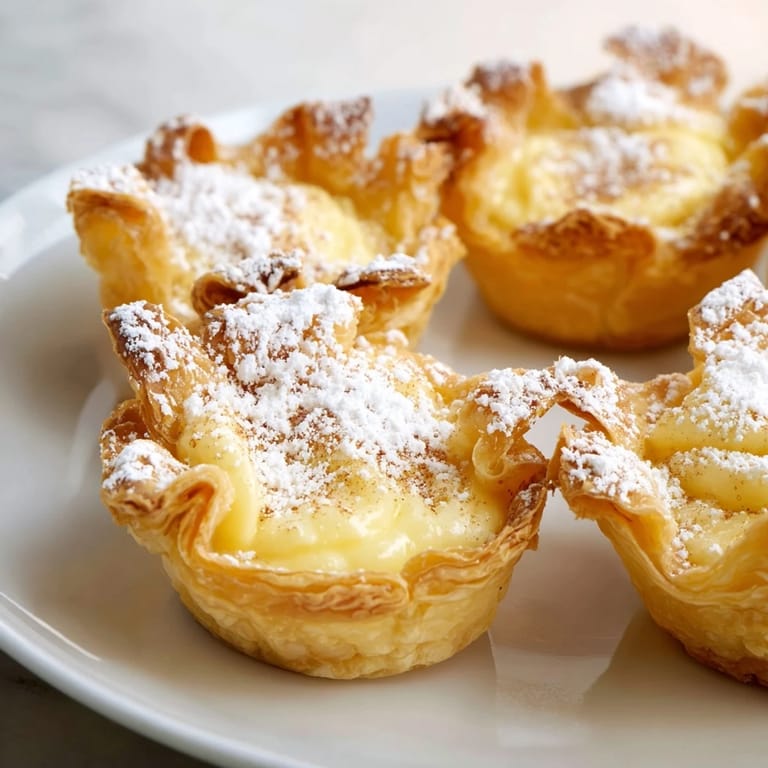
- Let them cool for 5–10 minutes, then dust each tart with a pinch of cinnamon and a light sprinkle of powdered sugar, creating a little cloud of sweetness on top.
 Save
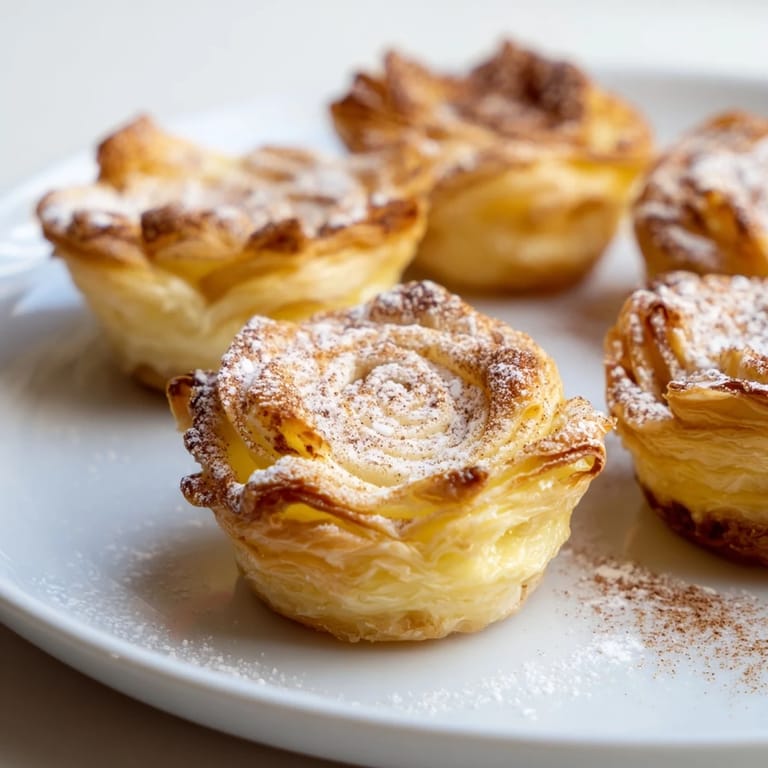
Save There's something almost meditative about brushing butter onto phyllo sheets, watching them gradually turn golden, hearing that satisfying crackle when you bite into one. My daughter once said these taste like something a fairy would eat, which made me laugh, but she's kind of right—they're delicate and a little magical.
Why Phyllo Is Worth the Effort
Phyllo pastry intimidates a lot of people, but honestly, it's more forgiving than you'd think. The key is not stressing if a sheet tears—a little butter and a gentle hand fix almost everything. Once you master the technique here, you'll realize phyllo works for so many desserts and savory dishes, and these tarts are the perfect place to build that confidence.
The Magic of Cinnamon in Custard
Cinnamon in custard isn't just a flavor—it's a secret that transforms something already delicious into something memorable. The spice warms the custard from the inside and makes people pause mid-bite, trying to figure out what they're tasting. In my experience, adding the cinnamon directly to the custard rather than just dusting it on top gives you deeper, more integrated flavor that lingers on your tongue.
Serving and Storage
These tarts are best enjoyed still slightly warm, when the phyllo is at its crispiest and the custard is still soft enough to feel luxurious. You can make them a few hours ahead and gently reheat them in a 150°C oven for just 5 minutes to restore the pastry's crispness without overdoing the custard. Leftovers keep for up to three days in an airtight container in the fridge, though they rarely last that long in my house.
- Serve them with espresso or a chilled glass of white port for an authentic Portuguese experience.
- A light dusting of lemon zest over the top adds brightness and pairs beautifully with the cinnamon.
- If the phyllo softens while sitting, don't panic—a few minutes in a warm oven brings back the crunch.
 Save
Save These Portuguese egg tarts have a way of turning an ordinary afternoon into something special, and honestly, that's the best reason to make them. Whether you're baking for yourself or for people you love, these little cups of crispy phyllo and silky custard never fail to delight.
Recipe FAQ
- → What type of pastry is used for the tart cups?
Phyllo pastry sheets are layered and baked to create crisp, flaky cups that hold the custard filling perfectly.
- → How is the custard thickened?
Cornstarch is whisked into milk and combined with egg yolks and cream, then cooked gently until it thickens to a smooth consistency.
- → Can the tarts be prepared ahead of time?
Yes, they can be baked in advance and stored chilled. Reheat briefly in the oven to restore crispness before serving.
- → What spices enhance the custard flavor?
Ground cinnamon is added to the custard and sprinkled on top, lending a warm, aromatic note to the tarts.
- → Are these tarts suitable for vegetarians?
Yes, these tarts contain no meat or gelatin and use common vegetarian ingredients like eggs, dairy, and phyllo pastry.