 Save
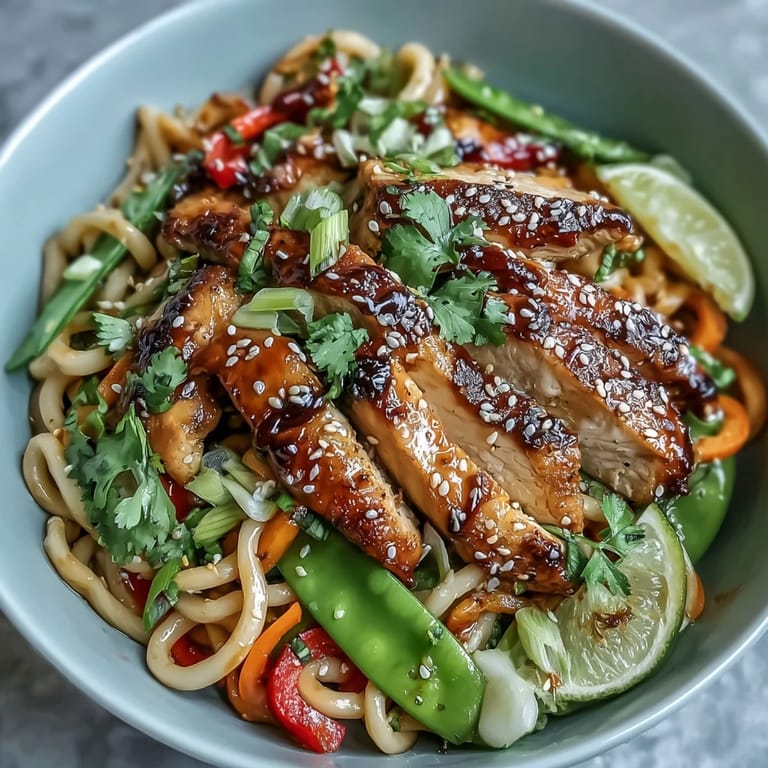
Save The kitchen window was cracked open one Thursday evening, letting in a cool breeze that carried the faint smell of rain. I had just come home from a long day and wanted something quick but satisfying, something that felt like a treat without the fuss. That's when I threw together this sesame chicken noodle bowl for the first time, tossing whatever vegetables I had into a hot pan and watching them sizzle. The brown sugar in the sauce caramelized just slightly, filling the room with a sweet, toasted aroma that made me forget how tired I was.
I made this for a friend who was skeptical about home-cooked Asian-inspired dishes, convinced they could never match restaurant quality. She watched me work, eyebrow raised, as I whisked the sauce and tossed everything in the wok with a confidence I didn't entirely feel. When she took her first bite and went quiet, then asked for seconds, I knew I had something worth keeping. Now she texts me every few weeks asking if it's sesame noodle night.
Ingredients
- Boneless, skinless chicken breast or thighs: Thighs stay juicier and more forgiving if you accidentally overcook them, but breasts work beautifully if sliced thin and cooked fast over high heat.
- Dried udon, soba, or rice noodles: Udon gives you chewy, satisfying bites, soba adds a nutty depth, and rice noodles keep things light and gluten-free if that matters to you.
- Red bell pepper: It adds a pop of color and a subtle sweetness that plays off the brown sugar in the sauce without tasting sugary.
- Carrot: Julienned carrots cook quickly and add a slight crunch that contrasts nicely with the tender noodles.
- Sugar snap peas: These little guys bring a fresh, crisp bite that keeps the bowl from feeling too heavy or saucy.
- Spring onions: Sliced thin, they add a mild sharpness and a hint of freshness right at the end.
- Low-sodium soy sauce: You control the salt level this way, and it keeps the sauce from becoming overwhelmingly salty when it reduces.
- Brown sugar: It caramelizes slightly when it hits the hot pan, giving the sauce a rich, glossy finish that clings to everything.
- Toasted sesame oil: A little goes a long way, this is the ingredient that makes the whole dish smell like your favorite noodle spot.
- Rice vinegar: It cuts through the sweetness and adds a bright, tangy note that keeps each bite interesting.
- Fresh ginger: Grated fine, it melts into the sauce and adds warmth without any fibrous bits getting stuck in your teeth.
- Garlic: Minced fresh, it adds depth and a slight pungency that rounds out the sauce beautifully.
- Cornstarch: Optional, but it helps the sauce cling to the noodles and chicken instead of pooling at the bottom of the bowl.
- Toasted sesame seeds: They add a nutty crunch and make the bowl look like it came from a restaurant.
- Fresh coriander or cilantro: A handful on top adds brightness and a burst of green that makes everything feel lighter.
- Lime wedges: A squeeze at the end wakes up all the flavors and adds a citrusy zing that ties everything together.
Tired of Takeout? 🥡
Get 10 meals you can make faster than delivery arrives. Seriously.
One email. No spam. Unsubscribe anytime.
Instructions
- Cook the noodles:
- Boil them according to the package directions, then drain and rinse under cold water to stop them from turning mushy. This also keeps them from sticking together while you prep everything else.
- Make the sauce:
- Whisk together soy sauce, brown sugar, sesame oil, rice vinegar, ginger, garlic, and cornstarch in a small bowl until smooth. The cornstarch will help it thicken beautifully once it hits the heat.
- Sear the chicken:
- Heat a large skillet or wok over medium-high with a splash of oil, then add the sliced chicken in a single layer. Let it brown for a minute before stirring, it should be golden and cooked through in about four to five minutes.
- Stir-fry the vegetables:
- Add a bit more oil to the same pan, then toss in the bell pepper, carrot, and snap peas. Stir-fry for two to three minutes until they soften slightly but still have a crisp bite.
- Bring it all together:
- Return the chicken to the pan, pour in the sauce, and toss everything to coat. Let it simmer for a minute or two until the sauce thickens and clings to the chicken and vegetables.
- Toss with noodles:
- Add the cooked noodles and spring onions, then toss everything together until the noodles are heated through and evenly coated. The noodles will soak up some of the sauce and become glossy and flavorful.
- Serve and garnish:
- Divide the noodle mixture among bowls, then sprinkle with toasted sesame seeds and fresh coriander. Serve with lime wedges on the side for anyone who wants an extra burst of brightness.
 Save
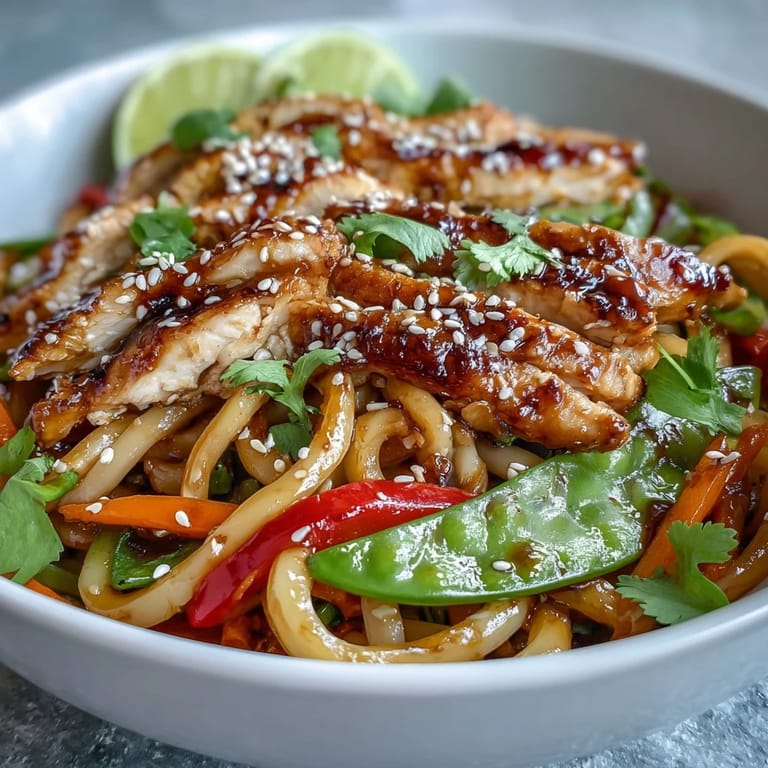
Save One evening, I served this to my nephew who usually turns his nose up at anything green or remotely healthy. He devoured his bowl, snap peas and all, and asked if we could have it again the next night. In that moment, I realized this dish had a kind of magic, it made vegetables disappear and turned a regular weeknight into something a little special.
Making It Your Own
This recipe is incredibly forgiving and practically begs you to improvise. If you have broccoli florets sitting in the fridge, toss them in with the other vegetables. Mushrooms, baby corn, bok choy, even zucchini, they all work beautifully. I've made this with leftover rotisserie chicken when I didn't feel like cooking protein from scratch, and it was just as good. You can also swap the chicken for tofu, just press it well and cube it instead of slicing, then pan-fry until golden on all sides.
Adjusting the Flavor
The beauty of this sauce is how easy it is to tweak. If you like things sweeter, add an extra teaspoon of brown sugar or a drizzle of honey. For more heat, stir in chili flakes, a spoonful of sambal oelek, or a few slices of fresh red chili. I once added a tablespoon of peanut butter to the sauce on a whim, and it turned into a creamy, nutty version that my family still requests. Taste as you go and trust your instincts, the sauce should make you want to lick the spoon.
Storing and Reheating
Leftovers keep well in the fridge for up to three days, though the noodles will soak up more sauce as they sit. When reheating, add a splash of water or a little extra soy sauce to loosen everything up, then warm it gently in a pan or microwave. I actually prefer the leftovers sometimes, the flavors deepen overnight and everything melds together in a way that feels even more cohesive.
- Store the noodles and sauce together in an airtight container, they'll stay fresh and flavorful.
- If you're meal prepping, keep the garnishes separate so the sesame seeds stay crunchy and the coriander stays bright.
- Reheat in a skillet over medium heat for the best texture, microwaving works but the noodles can get a bit soft.
 Save
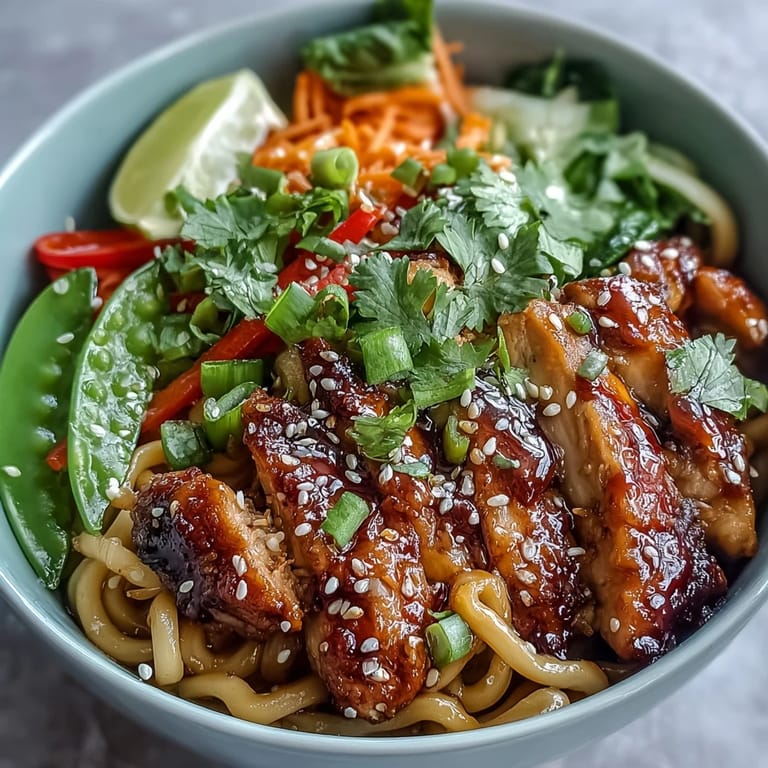
Save This bowl has become my go-to whenever I need something comforting, colorful, and quick. I hope it finds a place in your kitchen the way it has in mine.
Recipe FAQ
- → What type of noodles work best?
Udon, soba, or rice noodles all work beautifully. Udon offers a chewy texture, soba adds a nutty flavor, and rice noodles stay light. Choose based on preference or what's available.
- → Can I make this ahead?
Prepare the sauce and slice vegetables up to a day in advance. Cook everything just before serving for the best texture. The sauce actually develops more flavor when made ahead.
- → How do I make it vegetarian?
Replace the chicken with firm tofu, pressed and cubed. Increase the stir-fry time slightly to achieve golden edges. The sauce and vegetables remain exactly the same.
- → Can I adjust the sweetness?
Absolutely. Reduce the brown sugar for a more savory profile, or increase it for extra sweetness. Adding chili flakes creates a sweet-heat balance that works wonderfully.
- → What other vegetables can I add?
Broccoli florets, sliced mushrooms, shredded cabbage, baby corn, or bok choy all complement the flavors. Add heartier vegetables like broccoli earlier so they cook through.