 Save
Save There's a moment every autumn when I stand in the farmer's market and see pyramids of glossy red peppers, and I'm transported back to a rainy afternoon when my neighbor knocked on my door with a colander overflowing with them from her garden. She'd grown too many, she apologized, but I saw it as an invitation to experiment. That day I discovered that roasting peppers until their skins blacken and blister transforms them into something almost unrecognizable, something sweeter and deeper than the raw vegetable. This soup became my answer to those moments when I want something that tastes both elegant and effortless.
I made this soup for my sister during a particularly chaotic week when she was drowning in work stress, and watching her face soften after that first spoonful reminded me why I cook. She set her phone down, forgot about her emails, and we just sat in the kitchen talking for an hour while the steam rose between us. That's when I understood this soup isn't just food—it's a small act of slowing down.
Ingredients
- Red bell peppers (4 large, halved and seeded): These are the soul of the soup, and roasting them completely changes their character by caramelizing their natural sugars.
- Yellow onion (1 medium, chopped): Don't skip the chopping step—onions need surface area to release their sweetness into the pan.
- Garlic (2 cloves, minced): Fresh garlic matters here because it will spend time in the hot oil before the liquid arrives, and that brief bloom creates the whole flavor foundation.
- Carrot (1 medium, peeled and diced): This adds subtle earthiness and natural sweetness that balances the harissa's heat without overwhelming it.
- Olive oil (2 tablespoons for soup, 2 tablespoons for croutons): Use something you actually like tasting because it's a prominent ingredient, not a background player.
- Harissa paste (1 tablespoon): This North African staple brings complexity and warmth—start with less if you're cautious, but trust that it works beautifully here.
- Smoked paprika (1 teaspoon): The smokiness pairs perfectly with roasted peppers and adds depth without heat.
- Ground cumin (1 teaspoon): A small amount that ties everything together with warm, toasty notes that feel grounding.
- Vegetable broth (3 cups): Quality matters—cheap broth will taste like water no matter what you add to it.
- Diced tomatoes (1 can, 14 oz/400 g): Canned tomatoes are wonderful here because they've already concentrated their flavor, which supports the soup's overall intensity.
- Salt and black pepper (1 teaspoon salt, ½ teaspoon pepper): Season gradually and taste before serving because some broth brands are already salty.
- Sugar (1 teaspoon, optional): A pinch of sugar doesn't sweeten the soup—it just softens the acidity and lets all the other flavors come forward.
- Heavy cream or coconut cream (¼ cup, optional): Add this at the end if you want richness, or skip it entirely for a lighter version that's just as satisfying.
- Day-old bread (2 cups, cut into ½-inch cubes): Older bread is crispier and holds up better to roasting—fresh bread turns into toast instead of croutons.
- Garlic powder and dried oregano (½ teaspoon each): These season the croutons without burning, unlike fresh garlic which would turn acrid in the oven.
- Fresh parsley or cilantro for garnish: Either works beautifully—choose based on what you have and what sounds good to you in the moment.
Tired of Takeout? 🥡
Get 10 meals you can make faster than delivery arrives. Seriously.
One email. No spam. Unsubscribe anytime.
Instructions
- Start the peppers roasting:
- Heat your oven to 425°F and arrange halved peppers skin-side up on a baking sheet, then drizzle with a tablespoon of olive oil. The high heat will blister their skins and concentrate all their natural sugars into something almost caramelized—this is the step that makes everything taste special.
- Toast the croutons alongside:
- While the peppers work, toss bread cubes with olive oil, garlic powder, oregano, and salt, then spread them on a separate tray and slide it into the oven. They'll need about 10 to 12 minutes and one toss halfway through to turn golden and crispy all over.
- Cool and peel the peppers:
- Once both are done, let the peppers cool just enough to handle, then peel away the charred skins under cool running water—they'll slip off surprisingly easily. Don't stress about a few little pieces of skin left behind because that's actually flavor.
- Build the flavor base:
- Heat your remaining tablespoon of oil in a large pot over medium heat, then add the chopped onion, minced garlic, and diced carrot, stirring occasionally until they're soft and fragrant after about 5 to 7 minutes. You'll know it's ready when the kitchen smells irresistibly good and the onions are turning translucent.
- Bloom the spices:
- Stir in the harissa, smoked paprika, and cumin, cooking for just one minute until you can smell them wake up—this brief cooking time releases their essential oils into the oil and prevents them from tasting raw or dusty.
- Add everything and simmer:
- Pour in the roasted peppers, canned tomatoes with their juice, vegetable broth, salt, pepper, and sugar if using, then bring the whole pot to a boil before reducing the heat and letting it simmer for 15 minutes. This quiet simmering time lets all the flavors get to know each other and meld into something greater than their individual parts.
- Blend until silky:
- Remove from heat and use an immersion blender to puree the soup until it's completely smooth, working in batches if needed—the texture should be velvety, not gritty. This is where the soup transforms from ingredients into something restaurant-quality.
- Finish and taste:
- Stir in the cream or coconut cream if you're using it, then taste carefully and adjust the seasoning because every broth and tomato brand tastes slightly different. A pinch more salt or a crack more pepper might be exactly what's needed.
- Serve with intention:
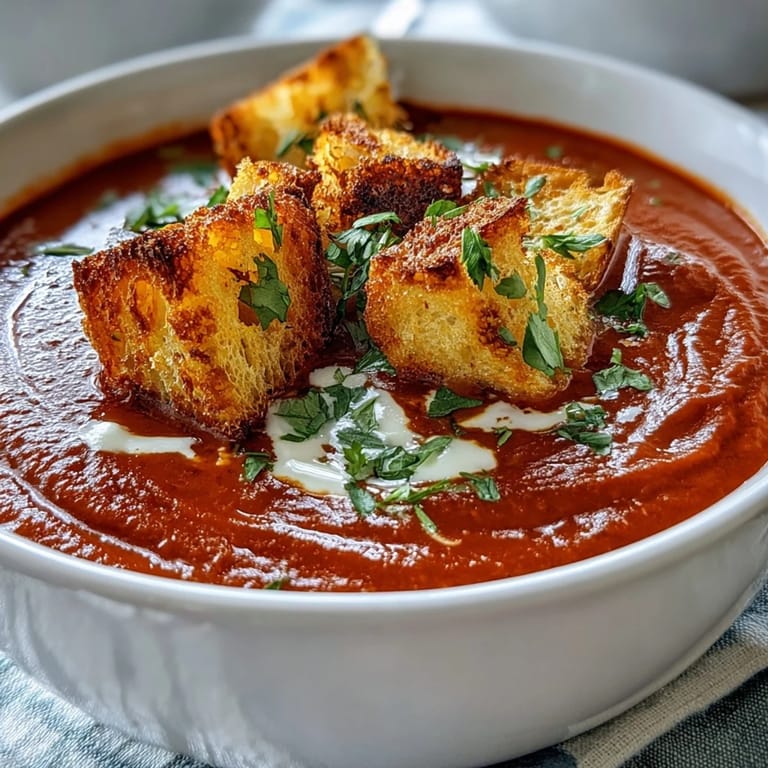
- Ladle the soup into bowls, top generously with crispy croutons, scatter fresh herbs across the top, and swirl a little extra harissa or cream into each bowl if it calls to you. The contrast between the warm, silky soup and the cool garnishes is half the pleasure.
 Save
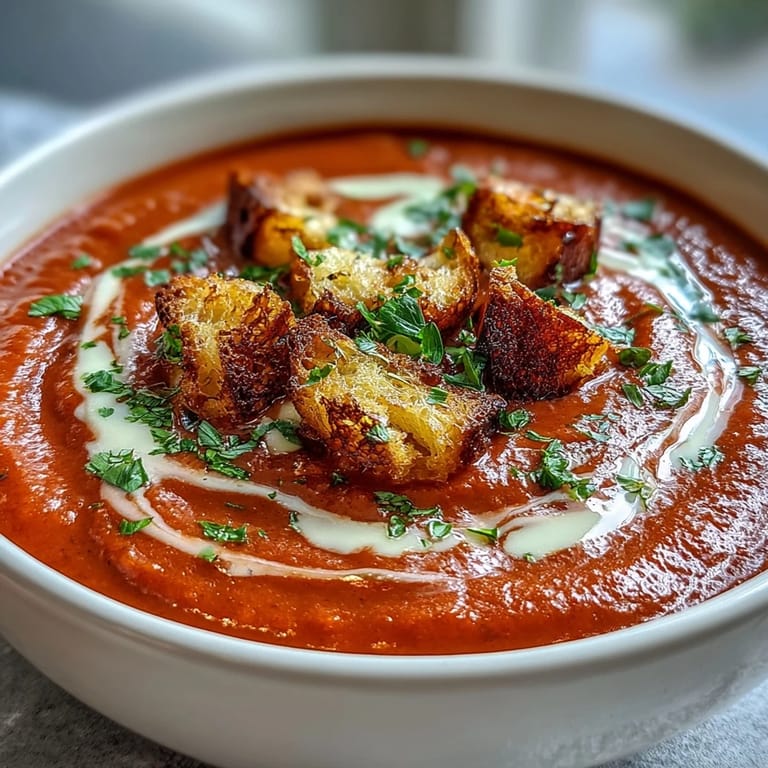
Save My eight-year-old nephew tried this soup at a family dinner and declared that he liked it because it was "fancy but not scary," which perfectly captures why this recipe has become my go-to when I want to impress without stress. There's something about serving something homemade and beautiful that makes an ordinary Tuesday feel like an occasion.
Why Roasting Changes Everything
The magic of this soup lives in the roasting step, which sounds like extra work but actually isn't because the oven does all the labor while you're free to do something else. Raw red peppers are bright and crisp, but roasted ones become sweet, soft, and almost fruity—the heat breaks down their cellular walls and their natural sugars caramelize into something entirely new. I used to skip this step until a friend made me taste the difference, and now I understand that roasting isn't a luxury or a technique for special occasions, it's the foundation that makes the whole recipe sing.
The Crouton Difference
There's a texture philosophy here worth understanding: the soup alone is velvet, which is beautiful but can feel almost too soft without contrast. Croutons aren't just garnish—they're the textural punctuation that makes your mouth interested in every bite, and when they're properly crispy and golden, they add a subtle garlic and herb flavor that complements the soup rather than competing with it. I learned this the hard way after serving croutons that turned to soggy bread within minutes, and now I make them at the last possible moment or toast them in the oven while the soup heats in bowls.
Small Adjustments That Matter Most
This recipe works beautifully as written, but it also responds well to your personal taste and what you have on hand. Think of it as a foundation rather than gospel, and adjust freely based on what you discover as you cook. Some quick thoughts that came from my own kitchen experiments.
- The optional sugar isn't about making the soup sweet—it's about balancing the acidity of the tomatoes and letting the other flavors come forward more clearly.
- If harissa feels too intense, start with half the amount and add more once the soup is blended because the flavor intensifies as it simmers.
- Coconut cream works beautifully if you're avoiding dairy, and it adds a subtle tropical note that actually complements the North African spices.
 Save
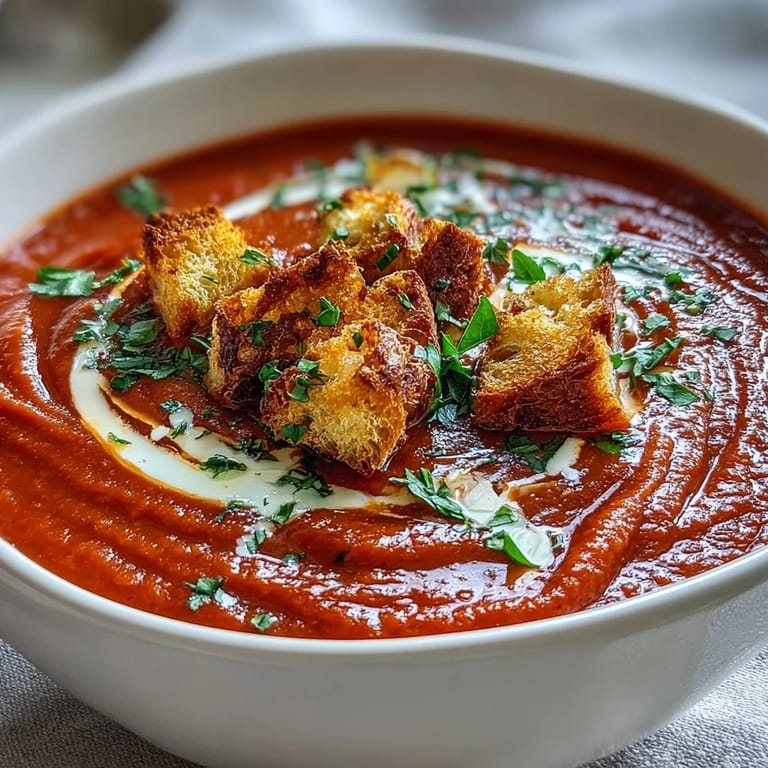
Save This soup feels like a conversation in a bowl—each spoonful reveals something new, from the warmth of harissa to the earthiness of cumin to the textural surprise of croutons. Make it once as written, then make it again with your own adjustments, and it becomes yours.
Recipe FAQ
- → Can I make this soup ahead of time?
Yes, this soup reheats beautifully. Store in an airtight container in the refrigerator for up to 4 days. The croutons are best made fresh but can be stored in a sealed bag for 2-3 days.
- → How can I make this soup vegan?
Substitute coconut cream or your favorite plant-based cream for the heavy cream. The croutons are naturally vegan if you use olive oil. Skip any cheese garnishes.
- → What can I serve with this soup?
Pair with a green salad, crusty bread, or grilled cheese sandwich. A crisp Sauvignon Blanc or light wheat beer complements the flavors well.
- → Can I freeze this soup?
Yes, freeze without the cream for up to 3 months. Thaw overnight in the refrigerator, reheat gently, and stir in cream just before serving.
- → How do I roast peppers without an oven?
Place peppers directly over a gas burner flame, turning frequently with tongs until charred on all sides. Alternatively, use a hot grill pan.
- → Is this soup spicy?
The harissa adds subtle warmth rather than overwhelming heat. Adjust the amount to your preference, or omit for a milder version.