 Save
Save There's something about the smell of tomatoes hitting a hot oven that makes a kitchen feel instantly like home. One rainy afternoon, I found myself with a pile of tomatoes that needed rescuing and a sudden craving for something warm and uncomplicated. The magic happened when I stopped overthinking it and just let the oven do what it does best—coax out every bit of sweetness those tomatoes had to give. What emerged was this velvety, golden soup that tasted nothing like the sad canned versions I'd grown up with. It became my go-to recipe for those moments when comfort matters more than effort.
I made this soup for my sister when she had a rough week at work, and watching her take that first spoonful—the way she paused, then smiled without saying anything—reminded me why I love cooking for people. She asked me to make it again the next time she visited, which meant I had to stop treating it like a casual one-off and actually write down what I was doing. That's when I realized how forgiving and adaptable this recipe really is, and how it somehow tastes even better the second time around.
Ingredients
- Ripe tomatoes, halved (1.5 lbs): The foundation of everything—look for tomatoes that give slightly when you press them, and don't let anyone talk you into using pale, mealy ones.
- Large onion, quartered (1): Onions mellow and almost disappear into the soup when roasted, adding sweet depth without any harshness.
- Garlic cloves, peeled (4): Roasting tames garlic's sharpness and makes it turn golden and almost buttery, which is nothing like raw garlic's bite.
- Olive oil (2 tbsp for soup, plus 2 tbsp for croutons): Quality matters here since it's not being cooked into oblivion—good olive oil carries the flavor of the whole dish forward.
- Salt (1 tsp for soup, ¼ tsp for croutons) and black pepper (½ tsp): Salt draws out the tomatoes' natural juices during roasting, creating a more concentrated flavor.
- Smoked paprika, optional (½ tsp): I learned to add this after a friend suggested it, and now it feels like the secret ingredient that makes people ask what's different.
- Vegetable broth (2 cups): The broth becomes the body of the soup, so don't use anything too aggressive in flavor—you want it to support the tomatoes, not overshadow them.
- Tomato paste (1 tbsp): This concentrated hit of umami strengthens the tomato flavor when you're working with just one roasting tray's worth.
- Sugar, optional (1 tsp): A tiny pinch balances acidity without making the soup taste sweet—only add if your finished soup tastes sharp.
- Heavy cream (½ cup): The cream isn't just decoration; it softens the acidity and adds a silky mouthfeel that makes the soup feel more restaurant-quality.
- Fresh basil leaves (2 tbsp, plus more for garnish): Add basil right before blending so it stays bright and green—if you add it too early or cook it too long, it loses its vibrancy.
- Day-old bread, cut into ½-inch cubes (2 cups): Day-old bread crisps up better than fresh because it has less moisture, so don't use bread straight from the bakery.
- Garlic powder (½ tsp) and dried oregano (¼ tsp): These season the croutons themselves so they're flavorful little bites, not just neutral bread texture.
Tired of Takeout? 🥡
Get 10 meals you can make faster than delivery arrives. Seriously.
One email. No spam. Unsubscribe anytime.
Instructions
- Get your oven ready and prep your vegetables:
- Heat your oven to 425°F and while it's warming, halve your tomatoes and cut your onion into chunky pieces—rough is fine because they're going to collapse anyway. Peel your garlic cloves and leave them whole; they'll get soft and sweet without any effort on your part.
- Roast the foundation:
- Spread the tomatoes, onion, and garlic on a baking sheet, drizzle generously with olive oil, then scatter salt, pepper, and smoked paprika over everything. Let them sit in the oven for 25 to 30 minutes until the tomato edges are darkened and caramelized and the whole tray smells like concentrated summer.
- Build the croutons while vegetables roast:
- On a separate baking sheet, toss your bread cubes with olive oil, garlic powder, salt, and oregano until each piece is coated. Bake for 8 to 10 minutes, shaking the pan halfway through, until they're golden and crisp enough that they make a satisfying crunch when you bite one.
- Combine and simmer:
- Pour your roasted vegetables into a large pot, add the vegetable broth and tomato paste, and stir until the paste breaks up and distributes. Bring everything to a gentle simmer and let it bubble quietly for about 5 minutes so the flavors start to meld.
- Blend in basil and create smoothness:
- Tear your fresh basil leaves and add them to the pot, then use an immersion blender to puree everything until it's completely smooth and velvety. If you're using a countertop blender, work in batches and be careful because hot soup splatters—let each batch cool for a minute first.
- Finish with cream and adjust seasoning:
- Pour in the heavy cream and taste what you've made, then decide if you need that optional sugar to balance any acidity. Heat the soup gently until it's steaming but not boiling, since cream can break if it gets too hot.
- Serve and garnish:
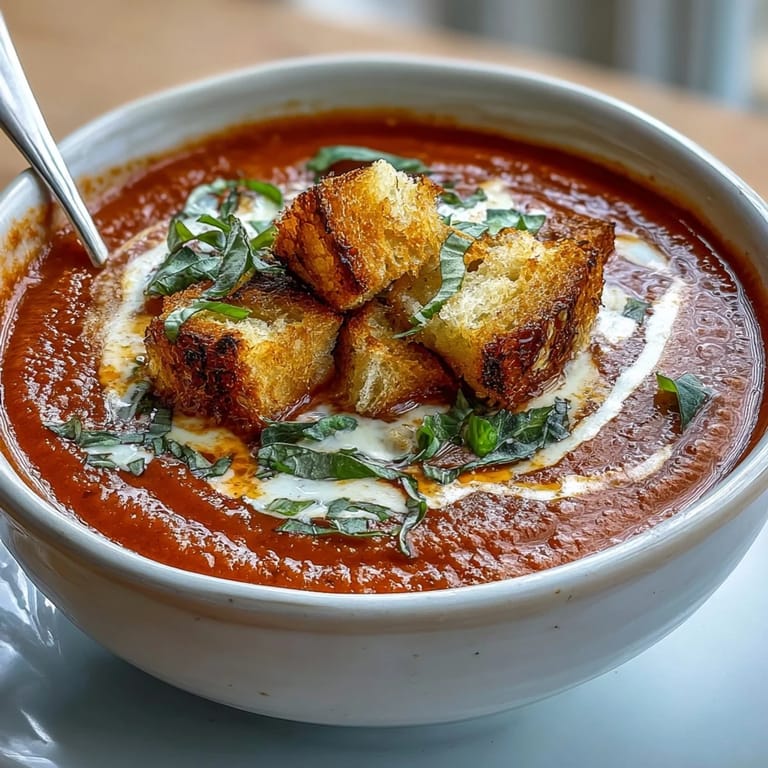
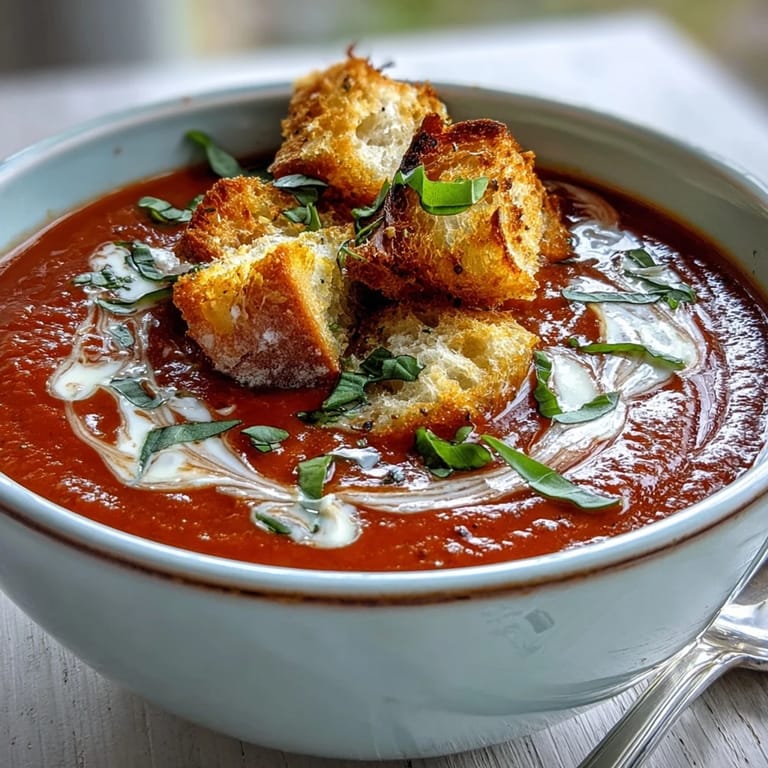
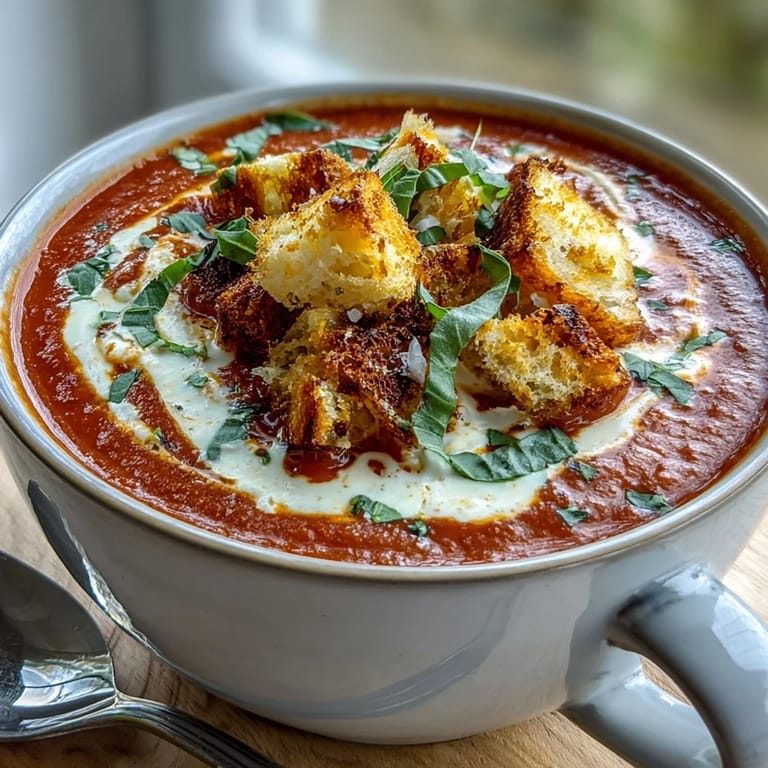
- Ladle the soup into bowls, then swirl a little extra cream on top in whatever pattern makes you happy. Scatter croutons over the surface, add a fresh basil leaf or two, and watch people's faces when they taste it.
 Save
Save The most perfect moment with this soup happened when I made it for my neighbor's dinner party, and she served it in these vintage bowls she'd found at an estate sale, each one a different color. People lingered over that course longer than they should have, and someone asked for seconds before the main course even came out. That's when I understood that a good soup isn't just about nutrition or efficiency—it's about slowing people down enough to really taste something.
Why Roasting Changes Everything
When you roast tomatoes instead of simmering them, you're inviting the Maillard reaction to happen—that's the chemical magic that creates new flavors and caramelized browning that you absolutely cannot get from just heating them gently. The dry heat of the oven concentrates the tomatoes' natural sugars and deepens their flavor in a way that even the longest simmer won't achieve. I discovered this by accident when I forgot about tomatoes I'd prepped and left them in the oven while I was distracted, and what came out was so much more complex than my usual approach that I never went back to the old way.
The Crouton Strategy
Homemade croutons are where the textural contrast happens, and they're genuinely easier to make than buying them while tasting infinitely better. The key is using bread that's already a day old because fresh bread holds too much moisture and ends up chewy instead of crisp—this is one of those little kitchen lessons that sounds weird until you try it and realize it makes complete sense. I've also learned that if you make extra croutons and store them in an airtight container, they stay crunchy for almost a week, so you can add them to salads or eat them straight from the container when you're standing at the counter pretending you're not snacking.
Adjusting for Your Taste
Every batch of tomatoes is different, and the best cooks taste constantly instead of just following instructions blindly. Acidity can range dramatically depending on whether your tomatoes are early season or late season, so that optional sugar isn't a mistake—it's a safety net for when the soup tastes sharp instead of mellow. If you find yourself adding cream and the soup still feels thin or lacks body, a tiny stir of tomato paste works wonders without making it taste tomatoey.
- For a vegan version, coconut cream swirled in at the end adds richness that dairy-free alternatives sometimes struggle to deliver.
- If you have fresh tomatoes in summer but want to make this in winter, freeze roasted tomatoes flat on a baking sheet first, then store them in a freezer bag.
- Leftovers keep for three days in the fridge, and this soup actually tastes better the next day when flavors have had time to settle together.
 Save
Save This soup has become one of those recipes I make without thinking, the way some people make pasta or toast. It's the kind of dish that reminds you why cooking for yourself and others matters so much.
Recipe FAQ
- → Can I make this ahead of time?
Absolutely. The soup actually tastes better the next day as flavors meld. Store in an airtight container in the refrigerator for up to 4 days. Reheat gently over low heat, adding a splash of broth or cream if needed.
- → Can I freeze this soup?
Yes, freeze before adding the cream. Cool completely, transfer to freezer-safe containers, and freeze for up to 3 months. Thaw overnight in the refrigerator, reheat, and stir in cream just before serving.
- → What tomatoes work best?
Roma or plum tomatoes are ideal for their meaty texture and low water content. Vine-ripened or heirloom tomatoes also work beautifully. Canned whole tomatoes can substitute fresh when tomatoes aren't in season.
- → How do I make it dairy-free?
Substitute heavy cream with full-fat coconut cream, cashew cream, or your favorite plant-based alternative. Coconut cream adds subtle sweetness that pairs beautifully with roasted tomatoes.
- → What can I serve alongside?
A grilled cheese sandwich is the classic pairing. Fresh bread, green salad with vinaigrette, or roasted vegetables also complement nicely. The croutons are essential for that satisfying crunch.
- → My soup is too acidic—how do I fix it?
The sugar helps balance acidity, but you can also add a pinch of baking soda while simmering. Taste and adjust gradually. A bit more cream or a teaspoon of butter also helps mellow sharp flavors.