 Save
Save My neighbor stopped by on a gray October afternoon with a bag of potatoes from her garden, and I suddenly remembered why I'd been craving something warm and uncomplicated. That evening, while the first real chill settled outside, I stood at the stove watching cream swirl into golden broth, and the whole kitchen smelled like butter and comfort. There's something about potato soup that feels less like cooking and more like wrapping yourself in something familiar. It's the kind of dish that doesn't demand perfection, just presence.
I made this for my sister when she was going through a rough week, and she called me three days later asking for the recipe because she'd already made it twice. Watching her face soften with that first spoonful told me everything I needed to know about food's quiet power. Comfort isn't always about novelty; sometimes it's just about knowing someone cared enough to make something warm for you.
Ingredients
- 900 g russet potatoes, peeled and diced: Russets break down beautifully and give the soup its naturally creamy body without needing extra thickeners, which I learned by accident the first time I used waxy potatoes and ended up with something too chunky.
- 1 medium yellow onion, chopped: Yellow onions add a gentle sweetness that balances the earthiness of potatoes better than white ones do.
- 2 celery stalks, chopped: This is your secret depth layer; don't skip it even though it disappears into the blend.
- 2 cloves garlic, minced: Fresh garlic makes all the difference, though if you only have jarred, use about half as much since it's more concentrated.
- 1 medium carrot, peeled and chopped: Adds color and a hint of natural sweetness that rounds out the flavor profile.
- 1 L vegetable or chicken broth: Use good broth; it's one of the few ingredients that actually tastes like itself in this soup.
- 240 ml whole milk: Whole milk matters here because low-fat versions can make the soup taste thin and sad.
- 120 ml heavy cream: This is what makes it feel special, that slight richness that lingers on your tongue.
- 2 tbsp unsalted butter: Unsalted lets you control the salt level yourself, which matters more than you'd think.
- 1 tsp salt, or to taste: Taste as you go because different broths have different sodium levels.
- ½ tsp freshly ground black pepper: Fresh ground is worth the small effort; pre-ground tastes tired by comparison.
- ¼ tsp ground nutmeg (optional): Just a whisper of this transforms the soup from good to memorable, but only if you go light-handed with it.
Tired of Takeout? 🥡
Get 10 meals you can make faster than delivery arrives. Seriously.
One email. No spam. Unsubscribe anytime.
Instructions
- Build your foundation with the aromatics:
- Melt butter over medium heat and add your onions, celery, carrot, and garlic. Let them soften for 5 to 7 minutes, stirring occasionally, until the kitchen smells like you're actually cooking something. You'll know it's ready when the onions turn translucent and you can almost see through them.
- Introduce the potatoes and let them get tender:
- Add your diced potatoes, broth, salt, pepper, and nutmeg if you're using it. Bring the whole thing to a boil, then lower the heat and let it simmer uncovered for about 20 minutes until the potatoes break apart easily when you poke them with a fork. This is the part where you can step away and do something else, though your kitchen will smell so good you probably won't want to.
- Blend it into something silky:
- Turn off the heat and use an immersion blender to puree everything until it reaches the texture you want. Some people like it completely smooth; I prefer leaving a few small potato pieces for texture. Either way feels right, so trust your instinct here.
- Bring in the cream and warm gently:
- Stir in the milk and heavy cream, then return the pot to low heat. Stir occasionally and let it warm through, but never let it boil once you've added the dairy or you'll end up with a broken, separated mess. This step takes about 5 minutes and it's where the soup transforms into something luxurious.
- Taste, adjust, and serve:
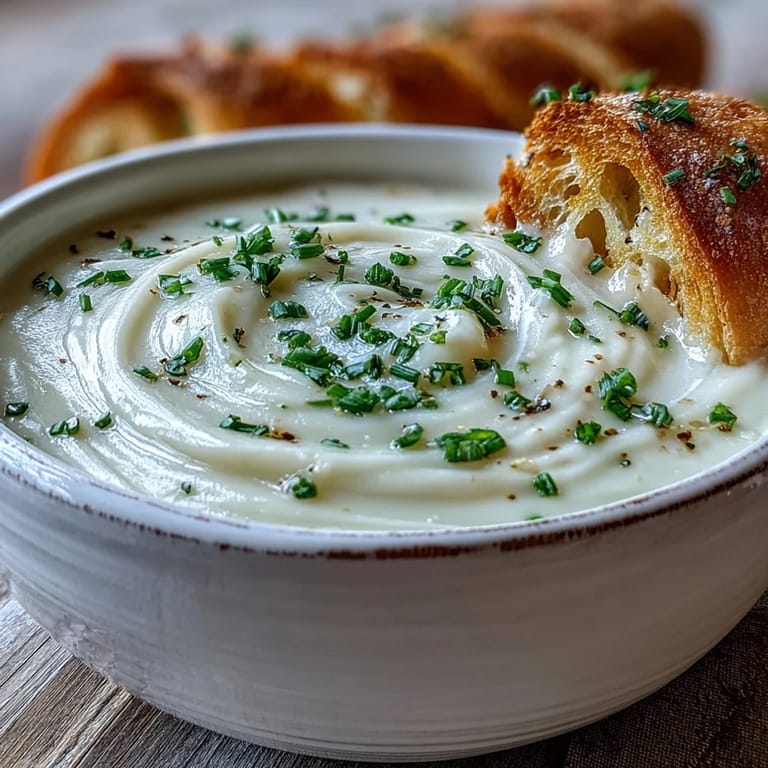
- Give it a taste and adjust the seasoning if needed, then ladle it into bowls and add whatever toppings call to you. The soup is now ready to do what it does best: comfort you.
 Save
Save This soup became my go-to when I needed to feel like I had things under control, which turns out is more often than I'd like to admit. There's something about standing over a pot of slowly simmering broth that makes the chaos outside your kitchen feel less urgent.
Making It Your Own
The beauty of this recipe is that it accepts additions without complaint. I've stirred in roasted garlic when I had it, added crispy bacon because why not, scattered sharp cheddar on top, and once even threw in a handful of fresh spinach at the very end. Think of this base recipe as your canvas; the soup will still taste like itself even when you're making it different.
Storage and Reheating
This soup keeps in the refrigerator for up to 4 days and actually improves as it sits. When you're ready to eat it again, reheat it gently on the stove over low to medium-low heat, stirring occasionally and adding a splash of milk or broth if it's thickened too much. The freezer is also an option, though the texture shifts slightly after thawing, becoming more separated; I usually freeze it without the cream and stir that in fresh after reheating.
Variations and Swaps
For a vegan version, swap the butter for olive oil or vegan butter, use unsweetened plant-based milk and cream, and make sure your broth is vegetable-based. The soup loses nothing in translation; it just tastes like a different version of itself. You can also play with the spice profile by adding cayenne pepper for heat, fresh thyme or rosemary for earthiness, or even a squeeze of lemon juice at the end if you want to brighten everything up.
- A pinch of smoked paprika brings unexpected depth without changing the soup's essential character.
- If you don't have an immersion blender, a regular blender works just fine; just let the soup cool slightly and blend in batches so you don't overfill it.
- Don't be afraid to taste as you cook and adjust; good seasoning is the difference between soup that's nice and soup that people actually remember.
 Save
Save This soup is proof that you don't need complicated techniques or rare ingredients to make something that feels genuinely nourishing. Make it when you need reminding that good food is sometimes the simplest answer.
Recipe FAQ
- → Can I make this potato soup ahead of time?
Yes, prepare the soup up to 2 days in advance and store in an airtight container in the refrigerator. Reheat gently over low heat, stirring occasionally to prevent separation. Add a splash of milk or broth if it thickens too much upon standing.
- → What's the best potato variety for this soup?
Russet potatoes are ideal because their high starch content creates a naturally creamy texture when blended. Yukon Gold potatoes also work well and don't require peeling. Avoid waxy varieties like red potatoes, as they won't break down as smoothly.
- → How do I achieve the smoothest texture?
Use an immersion blender directly in the pot for convenience, or transfer batches to a countertop blender. Blend for 2-3 minutes until completely silky. For extra refinement, pass the pureed soup through a fine-mesh sieve before adding the dairy.
- → Can I freeze this soup?
Freeze before adding the milk and cream for best results. Cool the pureed base completely, transfer to freezer-safe containers, and store for up to 3 months. Thaw overnight in the refrigerator, then reheat and stir in the dairy when ready to serve.
- → What can I substitute for heavy cream?
Half-and-half creates a lighter version, while coconut cream adds richness for dairy-free diets. For a lower-fat option, use additional whole milk or stir in a tablespoon of butter or olive oil for body without cream.
- → How do I prevent the dairy from curdling?
Always remove the pot from heat before adding milk and cream. Stir them in gradually while the soup is still hot but not boiling. Return to only the lowest heat to warm through—never let dairy-based soups reach a rolling boil.