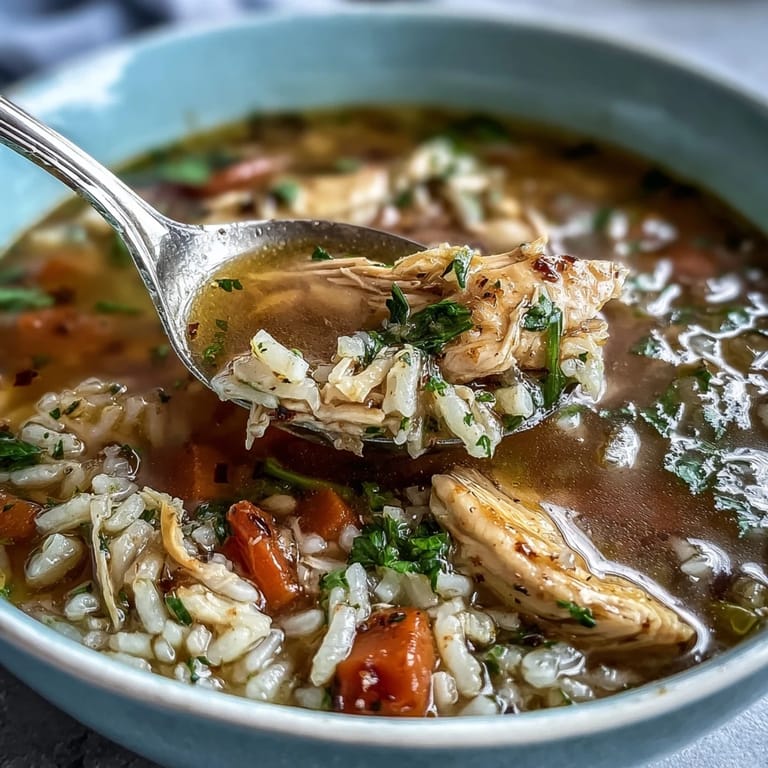
 Save
Save There's something about a pot of chicken and rice soup that feels like coming home, even when you're already there. My neighbor handed me a bowl on a gray Tuesday afternoon when I was juggling work deadlines and an empty fridge, and I remember thinking how such simple ingredients—broth, rice, a few vegetables—could taste so complete. The soup was still steaming, ribbons of steam curling up like the most honest kind of comfort. I went back to ask for the recipe, and what I got was something better: permission to make it my own way, adding what I had on hand and learning that the magic wasn't in perfection but in the ritual of slow simmering.
I made this for my sister after she'd been dealing with the cold that everyone passes around in winter, and watching her ask for seconds told me everything I needed to know about whether a recipe was worth keeping. She said it tasted like someone cared, and I realized that's what one-pot meals do best—they let the cook's attention shine through in every spoonful. That's when this became more than a recipe in my collection.
Ingredients
- Chicken breasts: Buy boneless, skinless pieces and cut them into bite-sized chunks yourself rather than using pre-cut; they stay more tender and taste fresher.
- Yellow onion, carrots, and celery: This aromatic base is worth taking the time to dice properly because those flavors become the foundation of everything else in the pot.
- Garlic: Fresh minced garlic makes a noticeable difference; bottled works in a pinch but loses some brightness.
- Baby spinach or kale: Optional, but I add it every time because the greens wilt into the broth and add color without effort.
- Long-grain white rice: Rinse it first under cold water to remove excess starch, which keeps the soup from becoming gluey as it sits.
- Low-sodium chicken broth: This matters more than you'd think; I learned to taste and adjust salt at the end rather than relying on the broth's seasoning.
- Dried thyme and oregano: These gentle herbs tie everything together without overpowering the delicate chicken flavor.
- Olive oil: Just enough to start the vegetables without making the soup greasy.
Tired of Takeout? 🥡
Get 10 meals you can make faster than delivery arrives. Seriously.
One email. No spam. Unsubscribe anytime.
Instructions
- Build your flavor base:
- Heat the olive oil in a large pot over medium heat, then add diced onion, carrots, and celery. Let them soften for about four to five minutes, stirring now and then, until the kitchen starts to smell warm and alive. You're not looking for color here, just tenderness and the start of something good.
- Wake up the garlic:
- Add minced garlic and cook for just one minute until fragrant; this is the moment you'll smell the difference between raw garlic and cooked garlic. Don't walk away or it'll brown, which tastes bitter.
- Begin with the chicken:
- Stir in chicken pieces and cook for a couple minutes until they're pale and starting to firm up. They don't need to be cooked through yet since they'll finish in the simmering broth, which keeps them tender.
- Bring it together:
- Add the rinsed rice, dried herbs, bay leaf, salt, and pepper. Pour in all the chicken broth and increase the heat until you see a rolling boil. This is the moment the soup stops being ingredients and starts becoming something whole.
- Let time do the work:
- Reduce heat to a gentle simmer, cover the pot, and cook for about twenty minutes, stirring occasionally. The rice will soften, the chicken will turn white and opaque, and the broth will taste deeper. You'll know it's ready when a grain of rice dissolves easily between your fingers.
- Add the greens:
- Stir in your chopped spinach or kale and cook uncovered for two or three minutes until it wilts into the broth. The color will shift from soup to something more vibrant.
- Taste and adjust:
- Remove from heat and fish out the bay leaf. Taste a spoonful and decide if it needs more salt, pepper, or brightness. A squeeze of fresh lemon juice at the end lifts everything without making it taste sour.
- Serve with intention:
- Ladle into bowls and garnish with fresh parsley. There's no rush here; let people take their time with warmth and nourishment.
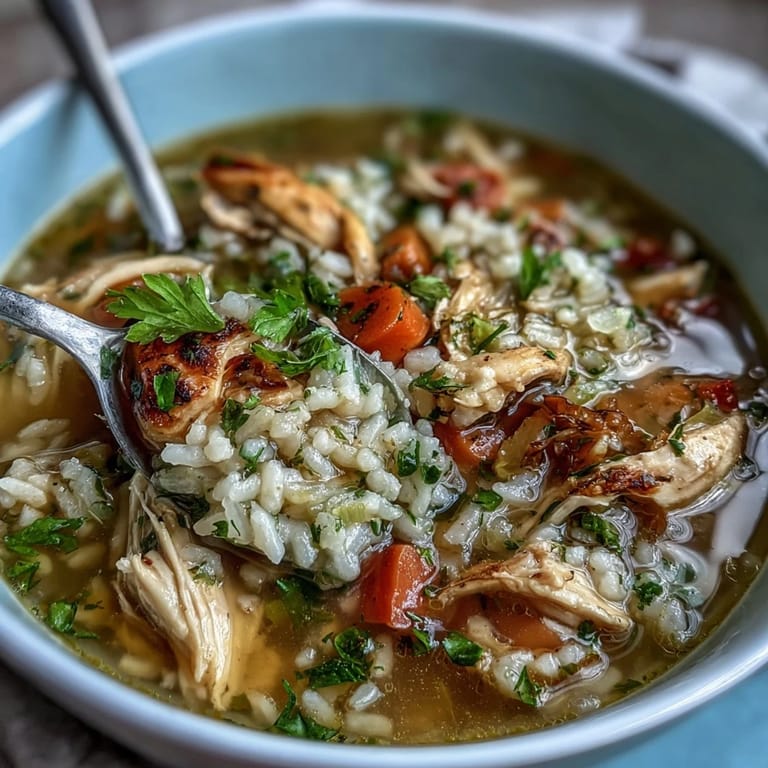 Save
Save I've learned that food is never just about hunger; it's about rhythm and repetition, about knowing you can make something good whenever someone needs it. This soup has become my go-to answer when friends are tired or sick or just need something warm before heading back out into the world. There's power in that simplicity.
Why This Soup Works Year-Round
In summer, I make it with chilled broth served at room temperature and fresh herbs, turning it into something lighter than its winter self. In fall, I add extra vegetables because what grows then is what tastes best. Winter is when I crank up the portions and the warming spices, and spring calls for the addition of those tender young greens that start appearing at the market. The recipe doesn't change so much as it responds to what's available and what your body actually needs in that moment.
The Brown Rice Alternative
If you want to use brown rice instead of white, know that it takes longer to soften and the soup develops a deeper, earthier taste. I increase the simmering time to thirty-five or forty minutes and sometimes add an extra cup of broth because brown rice is hungrier. The texture becomes chewier, which some people love and others find too substantial, so this is worth experimenting with based on what appeals to you.
Small Changes That Matter
One night, I dropped a parmesan rind into the pot while simmering and forgot about it until the very end, and the umami it added was subtle but real. Fresh lemon juice is optional on the ingredient list, but I've never made it without because that brightness at the end is what separates a nice soup from a memorable one. These aren't requirements, but they're small experiments worth trying once you've made the basic version a few times and understand how it tastes.
- A parmesan rind added while simmering deepens the broth in ways that feel almost magic.
- For a vegetarian version, use vegetable broth and add a can of drained chickpeas instead of chicken for protein and substance.
- Leftovers keep in the refrigerator for four days and freeze beautifully for up to three months.
 Save
Save This soup asks so little of you and gives back so much—warmth, nourishment, and the quiet satisfaction of having made something whole from simple things. That's enough.
Recipe FAQ
- → Can I use brown rice instead of white rice?
Yes, brown rice can be substituted but requires a longer simmering time of about 35-40 minutes to become tender.
- → How can I make this dish vegetarian?
Replace the chicken with a plant-based protein like chickpeas and use vegetable broth instead of chicken broth.
- → What herbs complement the flavors best?
Dried thyme, oregano, and fresh parsley provide a balanced, aromatic flavor profile that enhances the dish.
- → Can I prepare this in advance?
Yes, leftovers thicken as rice absorbs the liquid; add extra broth when reheating to maintain consistency.
- → Does adding parmesan rind affect the taste?
Adding a parmesan rind while simmering enriches the broth with a subtle, savory depth but should be removed before serving.