 Save
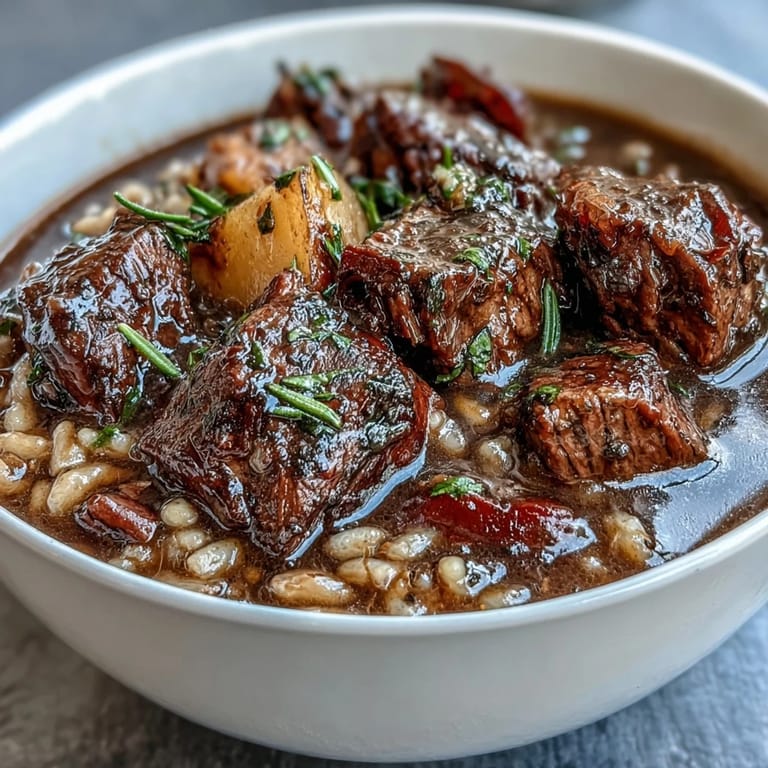
Save My kitchen smelled like a Dublin pub the first time I made this stew, except better—because it was mine. A friend had just moved to the city and mentioned craving something warm that tasted like home, and I remembered my grandmother's stories about simmering beef in stout until the whole house felt like a hug. That Guinness bottle sat on my counter for a week before I finally committed, wondering if beer really belonged in a pot with barley and root vegetables. It absolutely does.
I served this to four friends on a November evening when the rain wouldn't stop, and nobody wanted to leave the table even after the bowls were empty. We just sat there, talking and laughing while the pot simmered away, filling the kitchen with that unmistakable aroma of thyme, beef, and dark beer. That's when I realized this stew isn't really about following steps—it's about creating a moment where people want to stay.
Ingredients
- Beef chuck (2 lbs / 900 g): This is the one ingredient you shouldn't skimp on because chuck has enough marbling to stay tender through two hours of simmering, and those fat pockets are what make the broth silky and rich.
- Olive oil (2 tablespoons): Just enough to get your pan screaming hot without burning; this heat is what creates the crust on your beef that tastes like actual flavor.
- Yellow onion, garlic, and aromatics: The holy trinity that builds your flavor foundation—don't rush the sautéing because those caramelized edges are where the magic lives.
- Carrots, parsnips, celery, potatoes, and rutabaga: Each root vegetable brings its own sweetness and earthiness, creating layers of flavor that deepen as they soften into the broth.
- Pearl barley (3/4 cup / 130 g): Rinse it first to remove starch, which keeps your stew from becoming gluey, and the barley itself adds a nutty chewiness that makes this feel substantial.
- Guinness stout (1 can / 440 ml): The star ingredient that sounds fancy but costs about as much as a coffee—it brings umami and a subtle sweetness that rounds out the savory beef.
- Beef broth and water (4 cups broth + 1 cup water): This ratio gives you enough liquid for the barley to plump up without making everything taste diluted.
- Thyme, rosemary, bay leaves, and Worcestershire sauce: These seasonings work together to deepen the earthiness—don't skip the bay leaves because they add a subtle complexity that feels impossible to identify but impossible to live without.
Tired of Takeout? 🥡
Get 10 meals you can make faster than delivery arrives. Seriously.
One email. No spam. Unsubscribe anytime.
Instructions
- Heat your pot and get serious about browning the beef:
- Set a large Dutch oven over medium-high heat and let the oil shimmer until it's almost smoking—you want to hear that sizzle when the beef hits the pan. Work in batches so the meat actually browns instead of steaming, giving each piece about five minutes to develop a golden crust on all sides.
- Build your flavor base with the vegetables:
- In the same pot, soften the onion first for a few minutes, then add the garlic and watch it bloom into the oil before piling in all your root vegetables. Sauté everything together for about five minutes, stirring occasionally, until the edges start to caramelize and the whole kitchen smells like a rustic restaurant kitchen.
- Toast the tomato paste:
- Stir in the tomato paste and let it cook for just a minute—this caramelizes it slightly and removes that raw, tinny taste that uncooked tomato paste can have. You'll notice the paste darkens and becomes fragrant, which is exactly what you want.
- Combine everything and bring it to life:
- Return the beef to the pot, add your barley, Guinness, broth, water, and all your herbs and seasonings, then stir everything together. Bring the whole thing to a boil—you'll see it bubble up and smell even more incredible—then turn the heat down to low, cover it, and let it do its thing.
- Let time do the work:
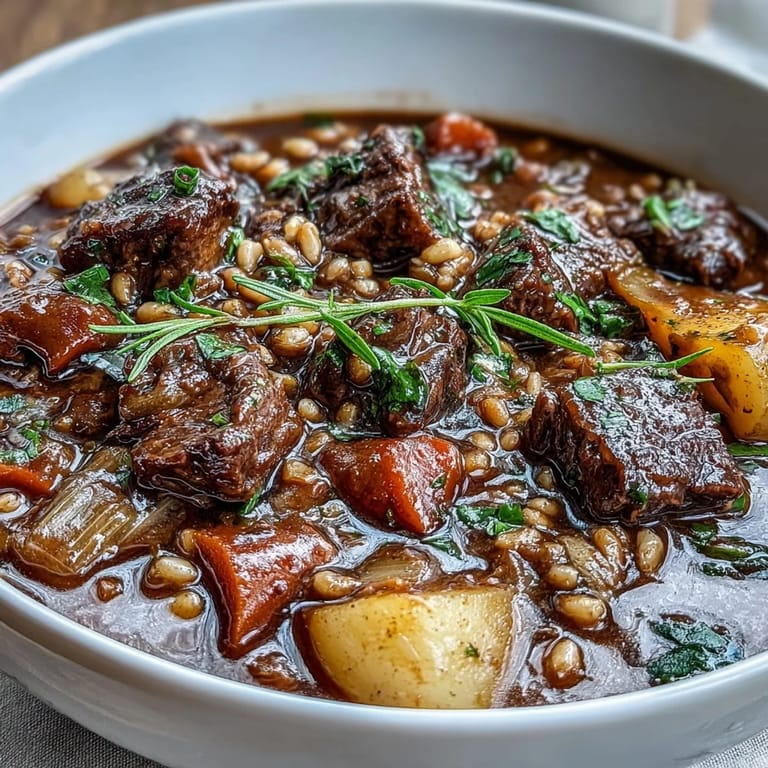
- Cover the pot and let it simmer gently for one and a half to two hours, stirring occasionally so nothing sticks to the bottom. The beef should be fork-tender, the barley should have absorbed the liquid but still have a slight chew, and the vegetables should be soft enough to break with a spoon.
- Taste, adjust, and finish:
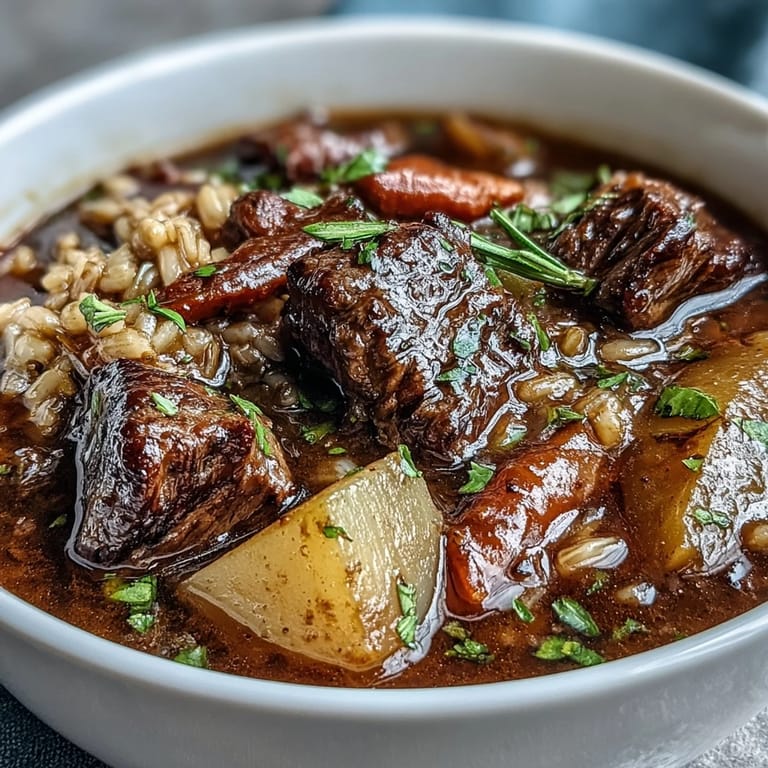
- Pull out the bay leaves, taste your stew, and adjust salt and pepper to your preference—remember that it'll taste even more developed the next day. Ladle it into bowls and top with fresh parsley if you have it.
 Save
Save There's something about serving this stew that makes you feel like you've done something important, even though you mostly just stood around and stirred occasionally. My brother actually asked for the recipe after one bowl, which almost never happens, and I realized it's because this dish tastes like someone cared.
The Secret is Patience
Two hours sounds like a long time, but that's exactly what transforms tough beef chuck into something so tender it barely needs your teeth. The low, slow simmer also allows all those individual flavors—the beer, the herbs, the roasted vegetables—to meld together into something that tastes bigger than the sum of its parts. Every ten minutes or so, I like to take the lid off and breathe in, which is part cooking and part meditation.
When to Deviate from the Recipe
Your root vegetable drawer might have different treasures than mine, and that's exactly the point of a stew like this. Sweet potato adds a subtle sweetness, celeriac brings an almost celery-forward earthiness, and parsnips can take the place of carrots if that's what you're holding. The Guinness is wonderful, but I've made this with other stouts and even with extra beef broth for friends who don't drink, and it's still incredible—just slightly different.
The Morning After
There's a reason I always make this stew when I know leftovers will be appreciated—it genuinely tastes better the next day after sitting in the fridge overnight. The flavors seem to have rearranged themselves into something more harmonious, and the broth becomes even more silky. Just reheat it gently on the stovetop, add a splash of water if it's thickened too much, and serve it with the same love you gave it the first time.
- If you want a thicker stew, mash a few of the potatoes against the side of the pot with your spoon before serving.
- Crusty bread is non-negotiable—you'll want something to soak up every last drop of that incredible broth.
- Make a double batch and freeze half in portions so you have comfort food waiting for the next cold night.
 Save
Save This stew is what happens when you take five minutes to read a recipe and two hours to let it become something special. Make it once and you'll understand why it's the kind of dish people remember.
Recipe FAQ
- → Can I use a different stout instead of Guinness?
Yes, any dark stout can be substituted to maintain the rich, malty flavor profile in the stew.
- → How do I ensure the beef is tender?
Simmer the beef gently for 1.5 to 2 hours to break down connective tissues and achieve a tender texture.
- → What root vegetables work best in this dish?
Carrots, parsnips, rutabaga, celery, and potatoes provide a hearty complement and absorb the savory broth flavors well.
- → Is it better to use fresh or dried herbs?
Dried thyme and rosemary hold up well during long cooking times and contribute robust aroma to the stew.
- → Can I make this stew thicker?
Mash some of the potatoes and vegetables against the pot side before serving to naturally thicken the broth.
- → What sides pair well with this stew?
Crusty bread or soda bread complement the stew perfectly by soaking up the flavorful broth.