 Save
Save The skillet was already smoking when I realized I'd forgotten to prep the peppers. That chaotic Tuesday taught me this recipe is forgiving enough to handle real life. Now it's my go-to when the week feels impossible and I need something bright on the table fast. The sizzle of chicken hitting hot oil still resets my mood every time. One pan, forty minutes, and everyone stops scrolling their phones.
I made this for my neighbor who'd just had a baby, and she texted me at midnight asking for the recipe. She said it was the first meal she'd actually tasted in weeks, not just shoveled down between feedings. That's when I knew this wasn't just convenient. It's the kind of dish that brings you back into your body, makes you notice the lime and cilantro and the way the cheese gets all stretchy.
Ingredients
- Boneless, skinless chicken breasts (450 g, cut into thin strips): Thin strips cook fast and soak up seasoning better than chunks, plus they're easier to eat in a skillet situation.
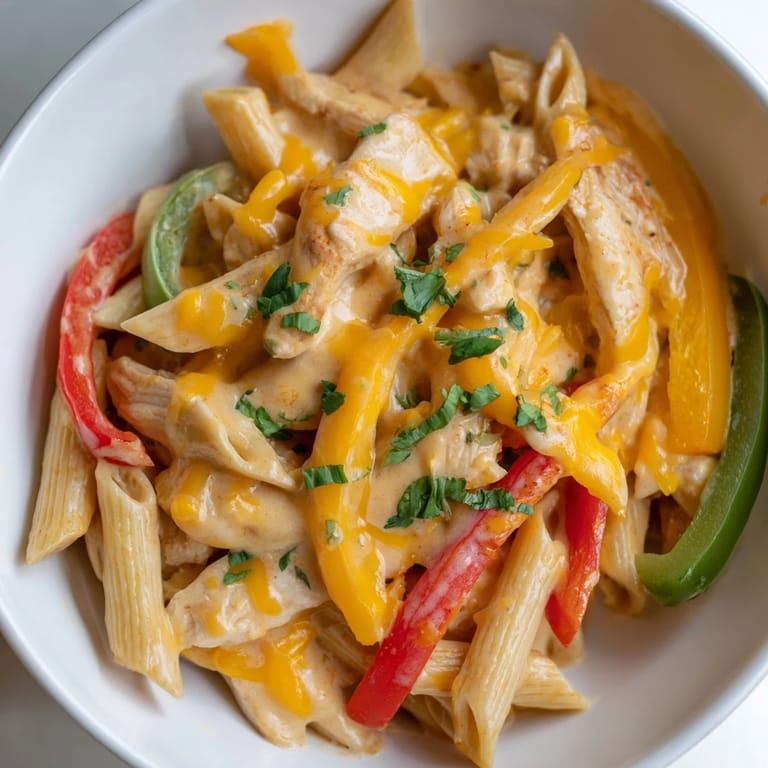
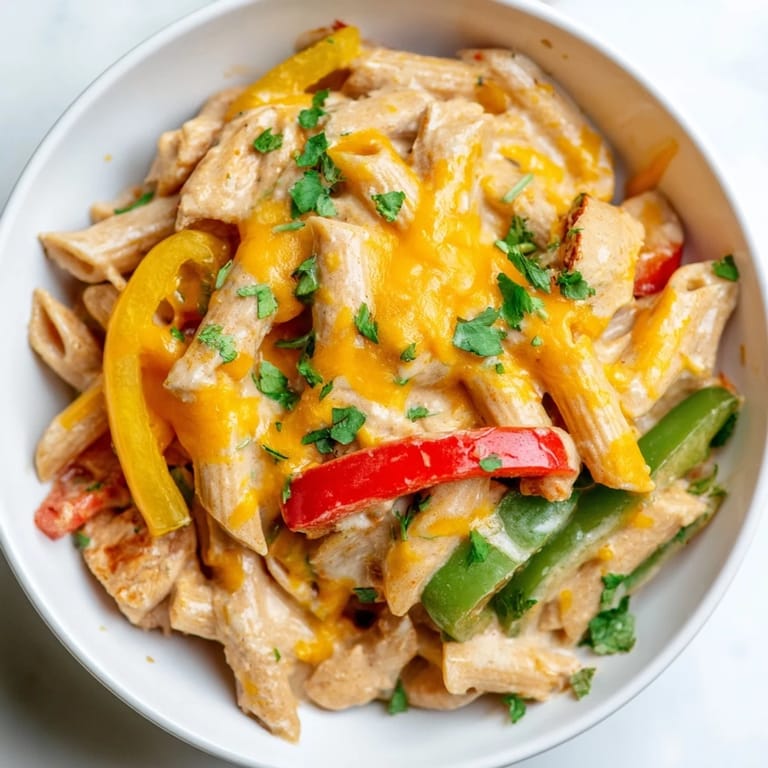
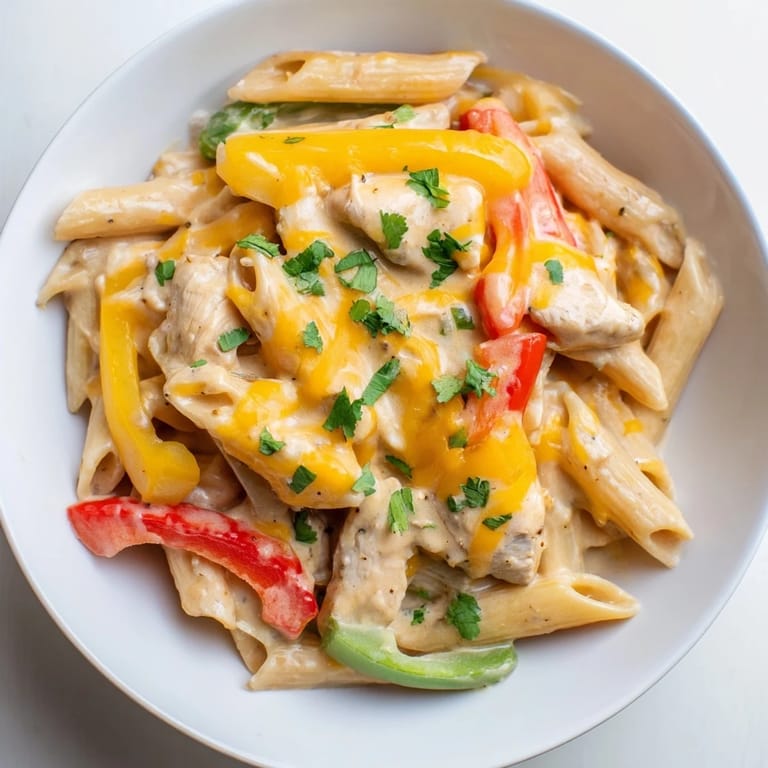
- Red, yellow, and green bell peppers (1 each, thinly sliced): The color mix isn't just pretty, each pepper has a slightly different sweetness that builds layers of flavor.
- Medium onion (1, thinly sliced): Onions turn sweet and jammy when they hit that hot skillet, adding a backbone to all the bright notes.
- Garlic (2 cloves, minced): Always add garlic after the peppers or it'll burn and turn bitter, learned that the hard way.
- Penne or rotini pasta (250 g): Shapes with ridges grab onto the creamy sauce and don't get boring bite after bite.
- Olive oil (2 tablespoons): Keeps everything from sticking and adds a subtle richness that butter can't quite match here.
- Low-sodium chicken broth (600 ml): This is your cooking liquid and flavor base, low sodium lets you control the salt as the liquid reduces.
- Heavy cream (120 ml): Just enough to make the sauce cling without feeling heavy, you can taste the spices through it.
- Chili powder (2 teaspoons): The main player in fajita flavor, earthy and warm without being aggressive.
- Ground cumin (1 teaspoon): Adds that toasty, almost nutty depth that makes Tex-Mex taste like itself.
- Smoked paprika (1 teaspoon): This is the secret, it gives you that grilled flavor even though everything stays in one pan.
- Dried oregano (½ teaspoon): A little goes a long way, it ties all the spices together without shouting.
- Salt (½ teaspoon, or to taste): Start with less, you can always add more after the cheese goes in.
- Black pepper (¼ teaspoon): Freshly cracked makes a difference, but the pre-ground stuff works fine too.
- Cayenne pepper (¼ teaspoon, optional): I always add it, but my kids skip it and just squeeze extra lime instead.
- Shredded cheddar or Monterey Jack cheese (100 g): Monterey Jack melts smoother, cheddar tastes sharper, both work beautifully.
- Fresh cilantro (chopped, for garnish): Some people hate it, I get it, but for me this dish feels incomplete without that bright herbal punch.
- Lime wedges (for serving): Not optional in my house, the acid wakes up every other flavor and cuts through the cream perfectly.
Tired of Takeout? 🥡
Get 10 meals you can make faster than delivery arrives. Seriously.
One email. No spam. Unsubscribe anytime.
Instructions
- Sear the Chicken:
- Heat 1 tablespoon olive oil in your largest skillet over medium-high heat until it shimmers. Toss the chicken strips with half the spice mix and add them to the hot pan, spreading them out so they brown instead of steam, about 4 to 5 minutes.
- Cook the Vegetables:
- Remove the chicken and add the remaining oil, then pile in the peppers and onion. Let them sit undisturbed for a minute to get those charred spots, then stir and cook until soft, about 5 minutes.
- Build the Base:
- Stir in the garlic and cook just until you can smell it, maybe a minute. Add the chicken back, then pour in the uncooked pasta, broth, and cream, stirring everything together before bringing it to a gentle boil.
- Simmer the Pasta:
- Lower the heat to medium-low, cover the skillet, and let it simmer for 12 to 15 minutes, stirring every few minutes so nothing sticks. The pasta should be tender and most of the liquid absorbed into a creamy sauce.
- Melt the Cheese:
- Take the lid off and scatter the shredded cheese evenly over the top. Cover again for about 2 minutes until it melts into glossy pools.
- Garnish and Serve:
- Sprinkle chopped cilantro over everything and serve straight from the skillet with lime wedges on the side. Squeeze the lime over your portion, it's the final piece that makes everything sing.
 Save
Save My son once asked if we could have fajita pasta instead of cake for his birthday dinner. He was seven, and I thought he was joking, but he was completely serious. We made it together that night, and he insisted on squeezing his own lime wedge even though half of it ended up on his shirt. That's when a recipe stops being just food and starts being a little tradition you didn't plan for.
Making It Your Own
I've swapped the chicken for shrimp when I find good ones on sale, they only need three minutes in the pan. My friend uses black beans and skips the meat entirely, adding them in with the pasta so they warm through. You can toss in a handful of frozen corn with the peppers, it adds sweetness and a little pop of texture. Once you get the method down, this becomes a template for whatever's in your fridge.
Leftovers and Storage
This keeps in the fridge for three days in an airtight container, though the pasta soaks up more liquid as it sits. I actually like it better the next day, reheated in a skillet with a splash of broth to loosen it up. The peppers get even softer and the flavors meld together into something almost creamy. My husband eats it cold straight from the container, which I don't understand but also can't argue with.
Tools and Timing
The only thing that matters here is a large, deep skillet with a lid that actually fits. I've tried this in a shallow pan and ended up with half the liquid evaporating too fast. A wooden spoon keeps you from scratching up your pan while you stir, and a sharp knife makes slicing the peppers thin enough to cook quickly. If you prep your vegetables while the chicken sears, you'll stay ahead of the timing and nothing burns.
- Use a 12-inch or larger deep skillet with a tight-fitting lid.
- Slice everything before you start cooking, this moves fast once the heat is on.
- Keep a little extra broth nearby in case your pasta absorbs liquid faster than expected.
 Save
Save This is the kind of recipe that makes you look like you planned ahead even when you absolutely didn't. It's bright, it's hearty, and it never tastes like a compromise.
Recipe FAQ
- → Can I use a different pasta shape?
Absolutely. While penne and rotini work beautifully, any medium pasta like farfalle or rigatoni will work. Avoid thin pasta like spaghetti as it may overcook in the one-pan method.
- → How do I prevent the pasta from becoming mushy?
Use uncooked pasta and stir occasionally while simmering. The pasta absorbs the broth gradually, so check doneness around 12 minutes. Start tasting early to catch your preferred texture.
- → What can I substitute for heavy cream?
Half-and-half, evaporated milk, or even plain Greek yogurt stirred in at the end work well. Each creates a slightly different texture but maintains the creamy richness.
- → Can I make this ahead of time?
Prepare ingredients in advance, but cook just before serving for best texture. The skillet meal is designed for fresh cooking, though leftovers store well refrigerated for 2-3 days.
- → Is this gluten-free friendly?
Yes, simply swap regular pasta for gluten-free varieties and use gluten-free chicken broth. All spices are naturally gluten-free, though always verify labels for cross-contamination warnings.
- → How can I add more heat to this dish?
Increase cayenne pepper beyond ¼ teaspoon, add sliced jalapeños during the pepper sauté, or include fresh diced serrano peppers. Start small and adjust to your heat preference.