 Save
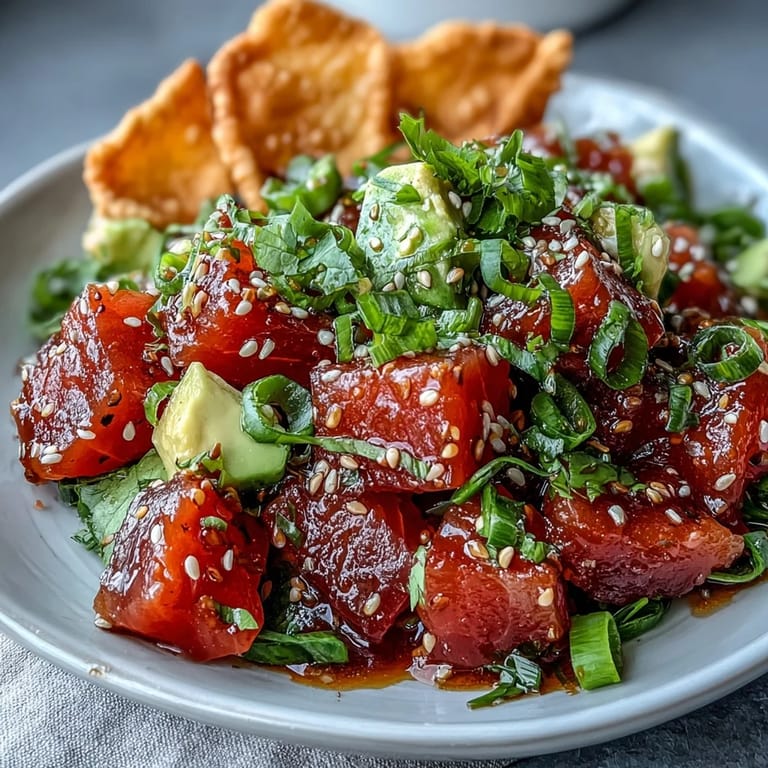
Save One summer evening, my friend Marcus arrived at dinner with sushi-grade tuna and a challenge: make something exciting in under an hour. I'd never attempted tartare before, but watching him slice that beautiful ruby fish sparked something, and I dove into my pantry for sriracha and sesame oil. What emerged was this vibrant, snappy dish that somehow felt both restaurant-worthy and completely approachable. Now it's my go-to when I want to impress without the fuss.
I served this at a dinner party last spring when everyone arrived depleted from their week, and something about those bright, spicy flavors seemed to wake everyone up. By the third bite, conversations shifted from tired small talk to animated discussions, and I realized tartare had this strange power to transform a gathering. The simplicity of the dish meant I could mingle instead of being trapped in the kitchen, which made the whole evening feel less like hosting and more like hanging out with friends who happened to eat my food.
Ingredients
- Sushi-grade tuna (300 g): This is non-negotiable—ask your fishmonger for sushi-grade or sashimi-grade, and buy it the same day you plan to serve it; the quality difference is everything.
- Soy sauce (2 tbsp): Use regular or low-sodium based on preference; it grounds the dressing with umami depth.
- Sriracha sauce (1 tbsp): Start here and adjust upward if you like serious heat; the chili kick balances the richness of the tuna.
- Toasted sesame oil (2 tsp): This concentrated oil adds a nutty warmth that can't be replicated, so don't skip the toasted variety.
- Fresh lime juice (1 tbsp): Squeeze it yourself just before mixing; bottled juice tastes flat and hollow by comparison.
- Rice vinegar (1 tsp): It adds a gentle tang without overpowering the delicate fish.
- Honey or agave syrup (1 tsp): A whisper of sweetness rounds out the sharp flavors and keeps the dressing balanced.
- Scallions (2 tbsp): Slice them just before serving so they stay bright and crisp; the white and green parts both contribute different flavors.
- Fresh cilantro (1 tbsp, optional): I skip it sometimes when I'm in a cleaner mood, but it adds a floral note that some people adore.
- Toasted sesame seeds (1 tsp): Buy these pre-toasted if you can find them; toasting your own takes an extra five minutes but deepens their flavor.
- Wonton wrappers (12): Look for them in the refrigerated section of your Asian market or grocery store, and check the date because stale wrappers won't crisp properly.
- Vegetable oil: Use something neutral like canola or vegetable oil for frying; avoid olive oil, which has too low a smoke point.
- Sea salt: Sprinkle this on the warm wonton chips rather than before frying, so it clings to the surface instead of sliding off.
- Ripe avocado (1): Add this only minutes before serving to prevent browning; choose one that yields slightly to pressure.
- Lime wedges: These aren't optional—diners will squeeze them over everything, and the burst of acid is essential to the dish.
Tired of Takeout? 🥡
Get 10 meals you can make faster than delivery arrives. Seriously.
One email. No spam. Unsubscribe anytime.
Instructions
- Fry the wonton chips until they shatter:
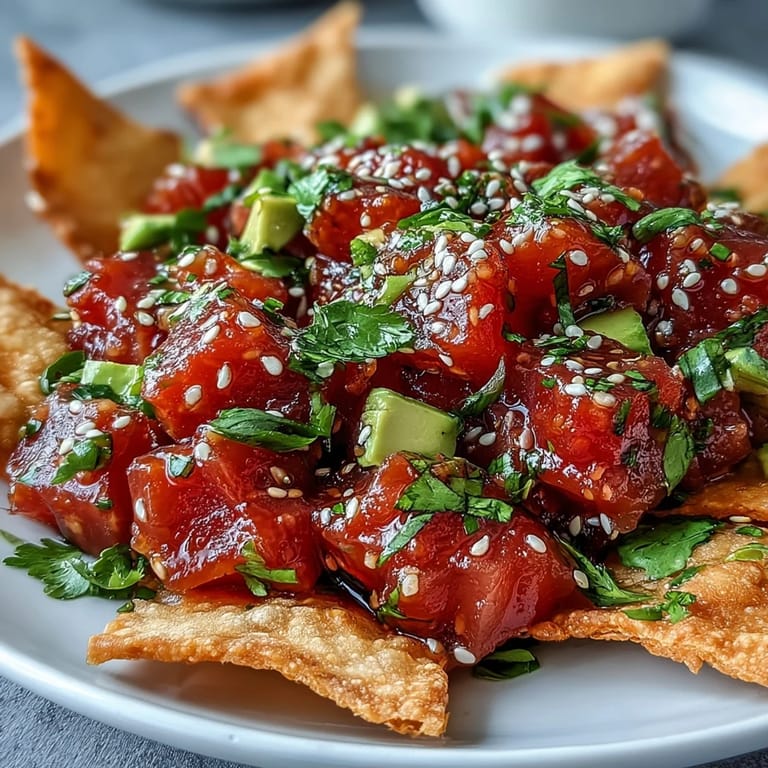
- Heat 2-3 cm of oil in a deep skillet over medium-high heat and let it get properly hot before you add anything. Working in batches so they don't crowd, fry each triangle for about 30 seconds per side until they're deep golden and make that satisfying crispy sound when you move them with your spoon, then drain them on paper towels and salt them while they're still warm.
- Build the dressing in a small bowl:
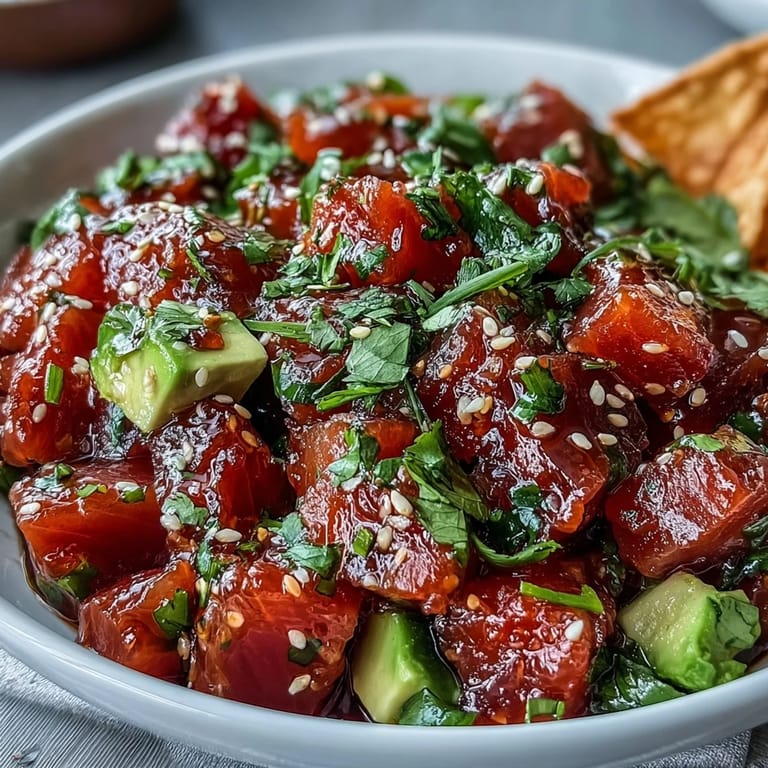
- Whisk together the soy sauce, sriracha, sesame oil, lime juice, rice vinegar, and honey until everything is combined and slightly glossy. The dressing should smell vibrant and alive, with all those flavors singing at the same volume.
- Toss the tuna gently but thoroughly:
- Put the diced tuna in a medium bowl and pour the dressing over it, then fold everything together with a spatula using slow, deliberate motions so you coat each piece without breaking it apart. Add the scallions, cilantro if you're using it, and sesame seeds, folding again until the mixture looks cohesive.
- Fold in avocado at the last moment:
- Cube your avocado as close to serving time as possible and fold it in gently so it stays in distinct pieces rather than turning mushy. This step should take about thirty seconds.
- Plate and serve immediately:
- Arrange the tartare on a platter or divide it among four plates, scatter the wonton chips around it, and set lime wedges nearby so guests can adjust the brightness themselves. This dish doesn't wait, so have everyone ready to eat the moment you put it down.
 Save
Save My neighbor tasted this dish once and then asked me to make it for her birthday dinner, which meant I'd somehow created something she wanted to share with the people she loved most. There's something quietly powerful about that—a recipe so simple and clean that it becomes less about impressive technique and more about genuine generosity.
The Science Behind the Crunch
Wonton wrappers are mostly flour and water, and when you fry them, the heat flash-evaporates the moisture and creates those millions of tiny air pockets that scatter light and crack between your teeth. The oil temperature matters hugely here; if it's too cool, you get greasy, limp chips, but if it's too hot, they'll brown before they crisp through. I learned this the hard way by watching a batch turn dark brown while staying chewy in the middle, and now I use a simple test: drop a tiny scrap of wrapper in the oil, and it should sizzle immediately and float to the surface within seconds.
Why This Dressing Works
The combination of soy sauce and sriracha gives you salt and heat, while lime juice and rice vinegar provide bright acidity that cuts through the richness of the raw fish. Sesame oil adds a muted, toasted quality that connects everything, and the honey rounds out sharp edges without making the dressing sweet. It's a formula that's been borrowed from poke bowls and Asian-fusion restaurants, but once you understand why each ingredient is there, you can adjust it fearlessly based on your preferences and what you have on hand.
Serving Tricks That Changed Everything
I used to plate tartare on a bed of greens like a salad, which meant everything got soggy and the subtle flavors muddled together. Now I serve it on a cold plate with the wonton chips separate and the lime wedges just within arm's reach, so each person can compose their own bites and everything stays exactly as crisp and bright as intended. Temperature matters too; a chilled plate keeps the raw fish at its best, and if you have time, you can even set your serving plates in the freezer for ten minutes before plating.
- Set your plates in the freezer for 10 minutes before plating to keep everything cold and fresh.
- Serve the wonton chips on the side so they don't get soggy from contact with the tartare.
- Let guests add their own lime juice so they control the brightness and acid level of each bite.
 Save
Save This tartare has become my secret weapon for those moments when I want to cook something that feels special but doesn't require hours of my time or energy. It's proof that elegance doesn't need to be complicated.
Recipe FAQ
- → What type of tuna is best used for this dish?
Sushi-grade tuna is recommended for its freshness and suitable texture when served raw.
- → How can I adjust the spice level?
Modify the amount of sriracha sauce to suit your preference, from mild to extra spicy.
- → What are the key components of the dressing?
The dressing combines soy sauce, sriracha, toasted sesame oil, fresh lime juice, rice vinegar, and a touch of honey or agave syrup.
- → How should the wonton chips be prepared?
Wonton wrappers are cut diagonally and fried in hot vegetable oil until golden and crispy, then lightly salted.
- → Can this dish accommodate dietary restrictions?
Yes, substituting gluten-free soy sauce and wrappers makes it suitable for gluten-sensitive diets; it is naturally dairy-free and pescatarian.