 Save
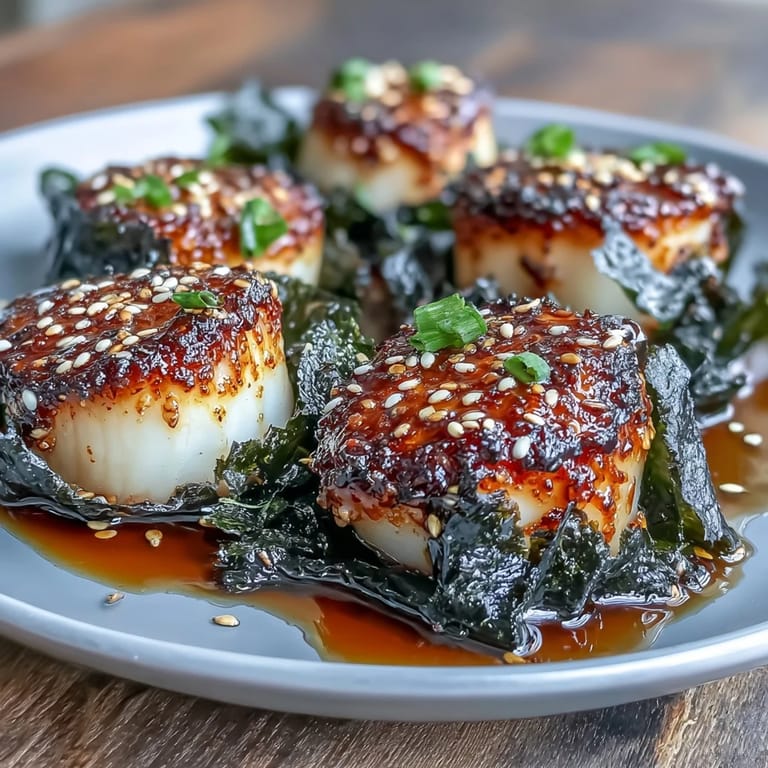
Save A friend once handed me a plate of these seaweed-wrapped scallops at a dinner party, and I was genuinely surprised by how something so elegant could come together in under thirty minutes. The nori crackled between my teeth while the scallop stayed buttery and tender inside, and the ponzu sauce cut through everything with this bright, almost playful zing. I went home that night determined to figure out how to make them myself, mostly because I couldn't stop thinking about that contrast of textures.
The first time I made these for my partner, I was so nervous about overcooking the scallops that I kept poking them with my spatula like some anxious cook in a cooking show. He laughed at me but then tasted one and got completely quiet, which is always a good sign. That quiet moment made me realize these aren't just appetizers—they're the kind of dish that makes people slow down.
Ingredients
- 8 large sea scallops, cleaned and patted dry: Dryness is everything here—if your scallops are wet, they'll steam instead of sear, and you'll lose that beautiful golden crust that makes this dish special.
- 4 sheets nori (dried seaweed), cut in half: These become crispy and slightly smoky when they hit the hot pan, creating the textural magic that makes people ask what the secret is.
- 1 tablespoon sesame oil: Don't skip this or substitute it with vegetable oil—sesame oil adds a toasty, distinctive flavor that bridges the Japanese flavors together.
- Salt and freshly ground black pepper, to taste: Just a light hand here; the nori and ponzu sauce bring plenty of seasoning already.
- Toothpicks or kitchen twine (for securing): These keep the nori from unraveling during the sear, though honestly, if you wrap tightly enough, you might not need them.
- 3 tablespoons soy sauce: The backbone of ponzu, bringing that savory depth that makes your taste buds wake up.
- 2 tablespoons fresh lemon juice: This is what gives ponzu its characteristic brightness and cuts through the richness of the scallops.
- 1 tablespoon rice vinegar: A gentler acid than distilled vinegar, it adds sharpness without harshness.
- 1 tablespoon mirin: A touch of natural sweetness that balances the salty-sour elements perfectly.
- 1 teaspoon finely grated fresh ginger: Fresh ginger matters here—the warmth and slight spice wake up your palate between bites.
- 1 teaspoon sugar: Just enough to round out the ponzu flavors without making it taste sweet.
- 1 green onion, finely sliced: Adds a fresh, oniony note that feels alive in every spoonful of sauce.
- Toasted sesame seeds and thinly sliced green onion (optional garnish): These finish the dish with color and a little extra textural layer that makes plating feel intentional.
Tired of Takeout? 🥡
Get 10 meals you can make faster than delivery arrives. Seriously.
One email. No spam. Unsubscribe anytime.
Instructions
- Mix your ponzu sauce first:
- Whisk together the soy sauce, lemon juice, rice vinegar, mirin, ginger, and sugar in a small bowl until the sugar completely dissolves—you want everything harmonized before you even touch the scallops. Set it aside and let it sit while you work; the flavors will deepen.
- Season and wrap with intention:
- Pat each scallop dry one more time if needed, then season both sides with just a whisper of salt and pepper. Lay a half sheet of nori shiny-side out, place the scallop in the center, then wet the edge of the nori with water and wrap it snugly around—the moisture acts like glue and helps it stick to itself.
- Get your pan screaming hot:
- Pour the sesame oil into a nonstick skillet and let it heat over medium-high heat until it shimmers and moves like water across the pan. This takes about a minute, and you'll smell that toasty sesame aroma filling your kitchen—that's your signal you're ready.
- Sear with confidence and patience:
- Place each scallop seam-side down in the hot oil and resist the urge to move it around; let it sit for 2 to 3 minutes until the nori turns crispy and darkens slightly. Flip gently and sear the other side for another 2 to 3 minutes, then transfer to your serving plate.
- Finish and serve:
- Remove any toothpicks you used, then drizzle the ponzu sauce over the top or serve it on the side for dipping. Scatter sesame seeds and green onion over everything if you're using them, and taste one right away while it's still warm and crispy.
 Save
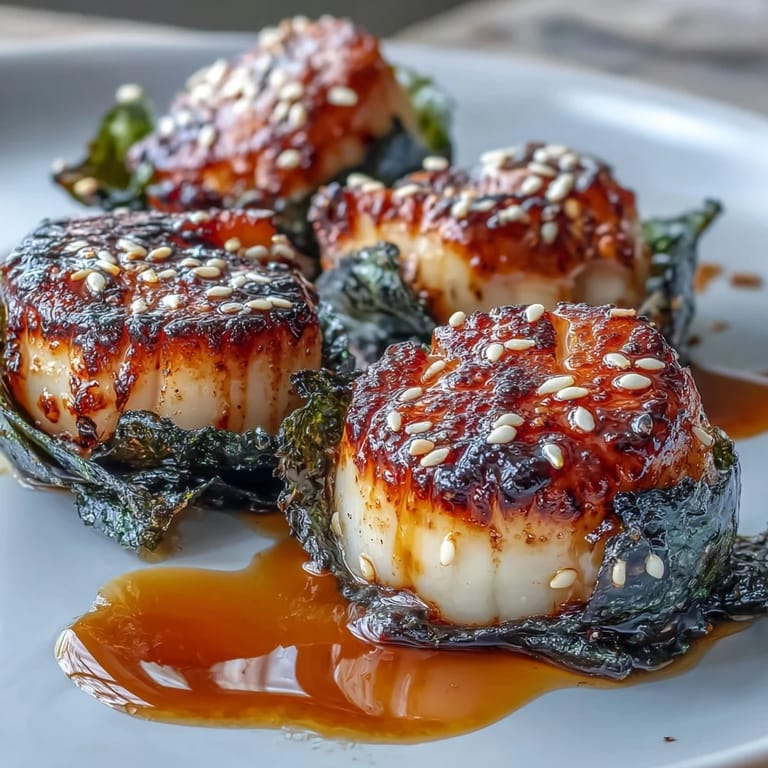
Save My mom tasted these once and said they reminded her of a dinner she had in Tokyo in the 1980s, and suddenly we were planning a trip together. Food has this weird power to transport people, and these little bites became the gateway to a whole conversation about travel and flavors we wanted to explore together.
The Magic of Nori in Hot Oil
There's something almost alchemical about what happens to nori when it meets a hot pan—it transforms from flexible and slightly damp into something crispy and almost smoky, like the seaweed is finally becoming what it was always meant to be. The first time you hear that sizzle and smell that transformation, you understand why Japanese cooks have been using this technique for centuries. It's not just wrapping; it's actually building texture and flavor simultaneously.
Why Ponzu Sauce Changes Everything
Ponzu isn't just a condiment here—it's the thing that ties all the flavors together and keeps the dish from feeling heavy or one-note. The brightness cuts through the richness of the scallop, the umami from soy sauce deepens everything, and the ginger adds this subtle warmth that lingers. I've learned that the best Japanese dishes work like this, where each component is distinct but also dependent on the others for the full experience to land.
Making This Your Own
Once you nail the basic technique, you can absolutely play with this recipe in ways that feel true to your own kitchen and taste preferences. Some people add a pinch of chili flakes to the ponzu for heat, others substitute yuzu juice for lemon if they can find it, and I've even seen friends serve these over sushi rice to stretch them into a light entrée rather than an appetizer. The structure is solid enough to support your own experiments.
- If you can't find fresh scallops, frozen ones work fine as long as you thaw them completely and pat them extra dry before wrapping.
- Make the ponzu sauce the day before and let it sit in the fridge overnight—the flavors actually get rounder and more integrated.
- These are best served immediately after searing, so time your cooking for when people are ready to eat, not before.
 Save
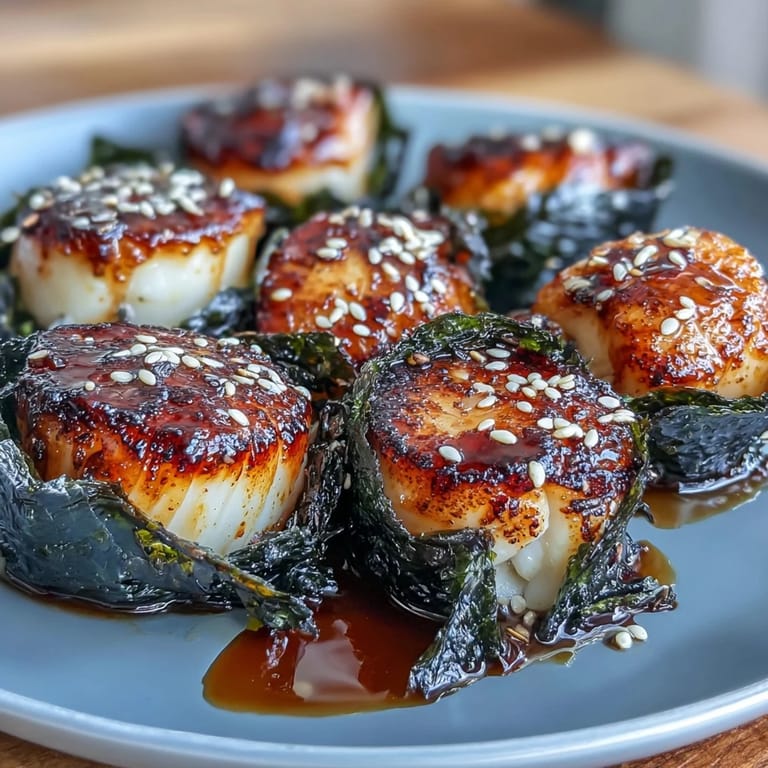
Save These scallops have become my go-to dish when I want to cook something that feels impressive but doesn't require a culinary degree or four hours in the kitchen. Every time I make them, I'm reminded that the most elegant meals are often the simplest ones executed with just a little bit of care.
Recipe FAQ
- → What is the best way to secure the nori around the scallops?
Moisten the edge of the nori with a bit of water to help it stick, then wrap it tightly around each scallop and secure with a toothpick or kitchen twine to keep it in place during searing.
- → Can I substitute any ingredients in the ponzu sauce?
Yes, swapping lemon juice with yuzu juice can offer a more authentic citrus flavor. Adjust the sugar or ginger amount to balance sweetness and spice to your preference.
- → How do I know when the scallops are perfectly cooked?
Cook scallops 2–3 minutes per side until the nori is crisp and the scallops turn opaque with a slightly firm but tender texture.
- → Can this dish be prepared gluten-free?
Yes, by using certified gluten-free soy sauce and mirin, you can avoid gluten while maintaining the dish’s flavors.
- → What are good serving suggestions for this dish?
Serve over a bed of fresh greens or sushi rice for a light entrée. Garnish with toasted sesame seeds and sliced green onions for added color and crunch.