 Save
Save My neighbor knocked on the fence one July afternoon with a bag of lemons from her tree, insisting I do something with them before they went soft. I'd been eyeing Mediterranean recipes all summer, and something about the way she said "do something" felt like permission to experiment. That's how these lemon herb chicken skewers came to life—born from a generous neighbor, a grill that needed purpose, and the kind of golden-hour cooking that makes you forget about everything else for a while.
I made these for a small dinner party the following weekend, and what struck me most wasn't the compliments (though there were plenty). It was watching my friend Sarah take her first bite, close her eyes, and just breathe in the smell of charred lemon and oregano smoke still clinging to the kitchen air. She later told me it tasted like a memory she didn't actually have—and somehow that felt like the highest compliment a dish could receive.
Ingredients
- Boneless, skinless chicken breasts (600 g): Cut into even 2.5 cm cubes so they grill uniformly; irregular sizes mean some pieces dry out while others stay pink.
- Olive oil (2 tablespoons): This acts as your marinade base, carrying all the flavor into the chicken fibers and helping it brown beautifully on the grill.
- Lemon zest and juice (1 large lemon): The zest gives you brightness without extra moisture, while fresh juice brings acidity that tenderizes the meat gently.
- Garlic (2 cloves, minced): Mince it fine so it distributes evenly and doesn't turn bitter when grilled; larger pieces tend to char unpleasantly.
- Fresh parsley and oregano (1 tablespoon each): Fresh herbs make all the difference here—dried feels dusty by comparison, though dried oregano works in a pinch.
- Smoked paprika (½ teaspoon): This adds depth and a hint of smokiness that makes the grilled char taste intentional rather than accidental.
- Greek yogurt (250 g): Use full-fat if you can find it; the tzatziki gains body and richness that 2% yogurt struggles to deliver.
- Cucumber (½ medium): Grate it and squeeze hard to remove excess water, otherwise your tzatziki becomes a watery disappointment within hours.
- Fresh dill (1 tablespoon): This herb is essential to authentic tzatziki—it tastes like cool water on a hot day, which is exactly the vibe you're going for.
- Wooden skewers (8): Soak them fully; I learned this the hard way with charred, brittle skewers that looked like tiny torches rather than cooking vessels.
Tired of Takeout? 🥡
Get 10 meals you can make faster than delivery arrives. Seriously.
One email. No spam. Unsubscribe anytime.
Instructions
- Build your marinade:
- Whisk together olive oil, lemon zest, juice, minced garlic, parsley, oregano, salt, pepper, and paprika in a bowl until it looks glossy and fragrant. The zest should glisten throughout, and the smell should make you want to start cooking immediately.
- Coat the chicken:
- Add your chicken cubes to the marinade and toss until every piece glistens with the herb mixture. Cover with plastic wrap or a lid and refrigerate for at least 30 minutes—longer is better, up to 2 hours if you have time.
- Prepare the tzatziki while waiting:
- Combine Greek yogurt, your squeezed cucumber, minced garlic, olive oil, dill, lemon juice, salt, and pepper in a separate bowl and stir until smooth. Taste it and adjust the salt; it should taste bright and herbaceous, not bland or overly garlicky.
- Soak wooden skewers:
- If using wooden skewers, submerge them in water for at least 20 minutes before grilling. This prevents them from becoming kindling on the grill, which honestly looks dramatic but tastes like failure.
- Thread the skewers:
- Remove chicken from the fridge and thread pieces onto skewers, spacing them slightly apart so heat circulates evenly. If pieces are pressed together, they steam instead of sear, and you lose that crucial caramelization.
- Heat your grill:
- Preheat your grill or grill pan to medium-high heat for about 5 minutes, then lightly oil the grates with a folded paper towel dipped in neutral oil. Cold grates stick; hot, oiled ones release beautifully.
- Grill with intention:
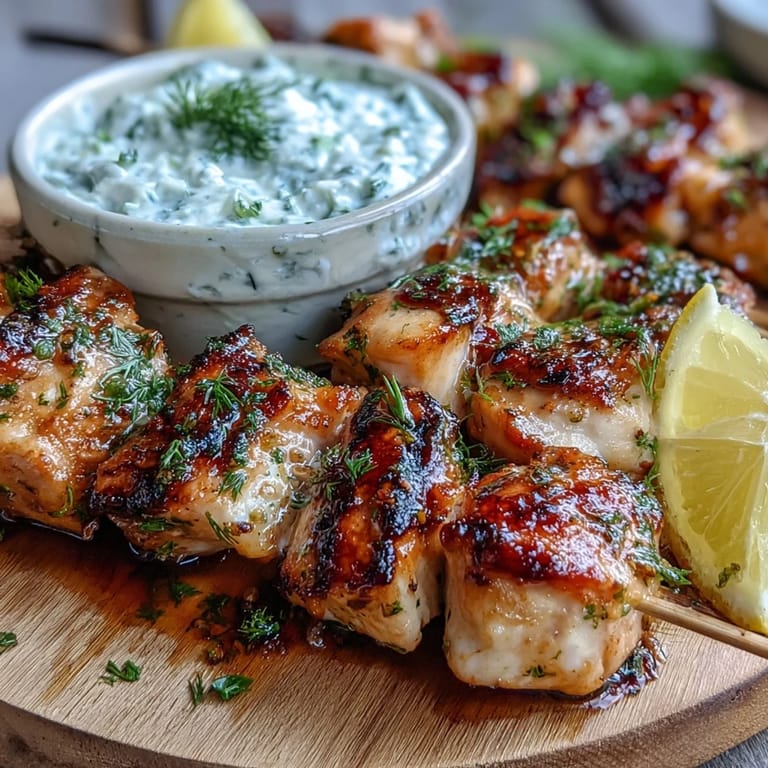
- Place skewers on the grill and resist the urge to move them around immediately; let them sit for 5–7 minutes until golden char marks appear. Flip once and cook the other side for another 5–7 minutes until the chicken reaches 75°C (165°F) internally and the surface shows light charring.
- Rest before serving:
- Remove skewers from heat and let them rest on a clean plate for 2 minutes. This allows juices to settle back into the meat instead of running out onto your plate the moment you bite in.
 Save
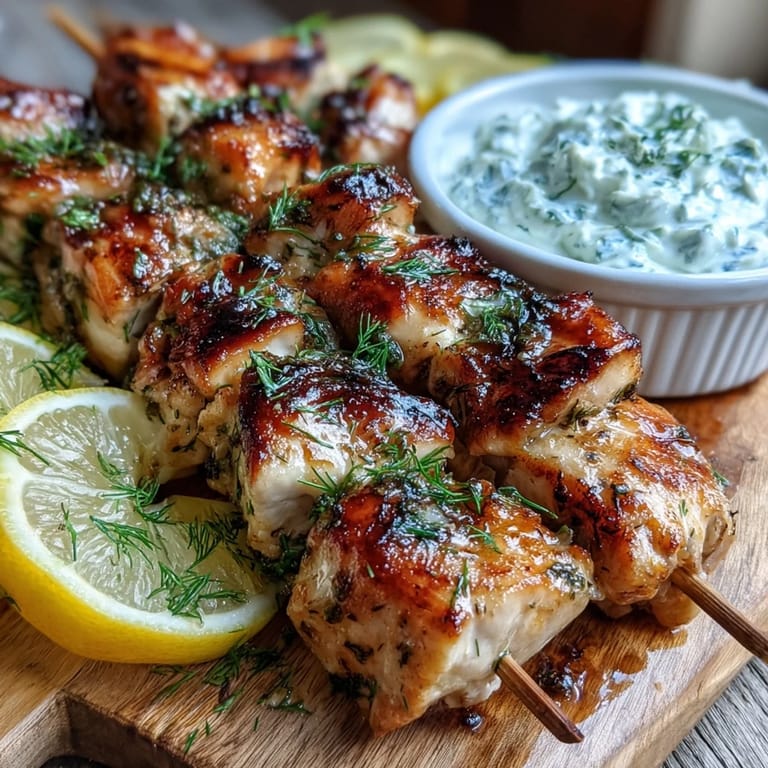
Save There's something almost meditative about standing over a hot grill on a summer evening, watching chicken transform from pale pink cubes to burnished, charred pieces that smell like a Greek island vacation you haven't taken yet. My kids actually asked for seconds without being asked, which in my house feels like winning the lottery.
The Art of Even Threading
I used to think skewer threading was just about pushing chicken onto wood, but I learned the hard way that spacing matters tremendously. When pieces are tightly packed, steam gets trapped and the chicken essentially poaches instead of grilling; when they're spaced out, hot air circles each cube and creates that gorgeous caramelized exterior. The sweet spot is leaving about a quarter-inch between each piece, which feels slightly generous until you realize it's actually brilliant.
Grilling Temperature Secrets
Medium-high heat is your friend here, but I've learned that every grill has moods and hot spots. If your grill runs particularly hot, move skewers to slightly cooler zones halfway through cooking to prevent charring before the inside reaches temperature. A meat thermometer removes all guesswork—aim for 75°C (165°F) in the thickest piece, and you'll never serve undercooked chicken again.
Making This Meal Complete
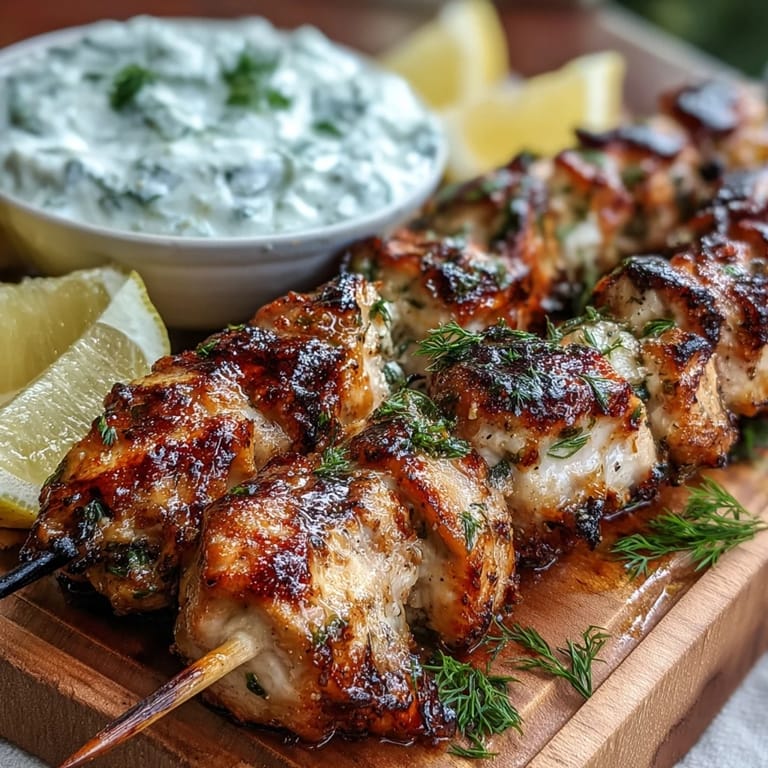
These skewers shine brightest when paired with something cool and crunchy—a Greek salad with crisp cucumbers and briny feta, or grilled vegetables that have absorbed the same charred smoke. The contrast between hot, herbaceous chicken and cold, garlicky tzatziki is where the magic happens, each cooling the other and making you want another bite before you've finished the first.
- Serve the tzatziki in a small bowl on the side rather than drizzling it directly, so guests control how much they use.
- Have lemon wedges at the table—a squeeze of fresh juice right before eating brightens everything and makes the dish taste alive.
- Make the tzatziki a few hours ahead if possible; the flavors deepen and meld when they rest together in the fridge.
 Save
Save This recipe became a summer staple in my kitchen not because it's complicated, but because it reminds me that sometimes the best meals are born from generosity and curiosity. Those lemons from my neighbor's tree turned into something I make whenever the weather turns warm.
Recipe FAQ
- → How long should I marinate the chicken?
Marinate the chicken for at least 30 minutes, but for the best flavor and tenderness, let it sit in the refrigerator for up to 2 hours before grilling.
- → Can I use chicken thighs instead of breasts?
Absolutely. Chicken thighs will yield even juicier skewers and are more forgiving on the grill, though they may need an extra minute or two of cooking time.
- → How do I prevent wooden skewers from burning?
Soak wooden skewers in water for at least 20 minutes before threading the chicken. This prevents them from charring or catching fire on the grill.
- → Can I make the tzatziki sauce ahead of time?
Yes. The tzatziki actually benefits from sitting in the refrigerator for a few hours or overnight, allowing the flavors to meld together. It will keep fresh for up to 3 days.
- → What should I serve with these skewers?
These pair beautifully with grilled vegetables, a crisp Greek salad, warm pita bread, or roasted potatoes for a complete Mediterranean feast.
- → Can I cook these indoors if I don't have a grill?
Certainly. A grill pan or cast iron skillet over medium-high heat works wonderfully. You can also broil them in the oven for 8-10 minutes, turning halfway through.