 Save
Save I discovered this dish on a cold winter morning while flipping through a coffee-table book about Nordic landscapes, and something about those stark, white-on-white tundra photographs made me hungry in an unexpected way. The image of sparse vegetation dotted across endless pale earth stayed with me, and I found myself thinking: what if I could translate that visual silence into something you could taste? The result was this delicate, minimalist salad that tastes as clean and cool as a frozen morning feels.
I served this at a dinner party last spring when someone asked if I could make something "elegant but not fussy," and I remember how quiet the table went when I set down that frosted stone plate. No one spoke until they'd tasted it, and then the questions started—about the white pepper, the toasted sesame, why the vegetables were so impossibly thin. That's when I realized this dish does something most food doesn't: it makes people slow down and notice.
Ingredients
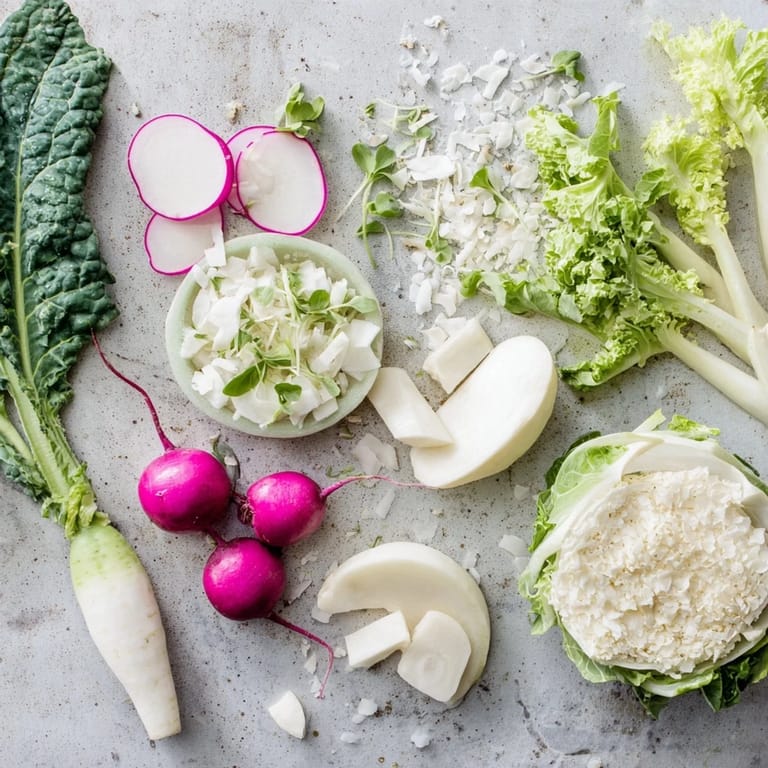
- Daikon radish: Slice this thin enough to see light through it; the thinness makes it sweet and almost impossibly delicate.
- Kohlrabi: People often skip this, but its subtle sweetness and crisp texture are what anchor the whole dish to earth instead of floating into pure abstraction.
- Belgian endive: Use fresh, pale leaves as your base—they're sturdy enough to hold the toppings but tender enough to feel luxurious.
- Cauliflower florets: Finely chop these into small pieces so they feel like an accent rather than a main player.
- Coconut flakes: Toast them lightly yourself if possible; store-bought toasted ones can taste a bit tired.
- Sesame seeds: The white and black mix gives you visual contrast that mimics the tundra palette—white snow, dark shadows.
- Microgreens: These go on last, just before serving, because they wilt if they sit on the cold plate too long.
- Extra-virgin olive oil: Use something you actually like drinking; it's the only liquid fat here, so quality matters.
- Lemon juice and white wine vinegar: Together they brighten without overpowering—think of them as sunlight on ice.
- White pepper: This is subtler than black pepper and won't visually interrupt the pale aesthetic you're building.
- Flaky sea salt: Finish with this; it adds flavor and looks like actual snowflakes scattered across the plate.
Tired of Takeout? 🥡
Get 10 meals you can make faster than delivery arrives. Seriously.
One email. No spam. Unsubscribe anytime.
Instructions
- Chill your stage:
- Pop that stone or marble platter into the freezer for 15 minutes—the coldness is part of the dish's identity, not just a serving suggestion. The plate should feel crisp to the touch when you pull it out.
- Make the dressing:
- Whisk the olive oil, lemon juice, vinegar, and white pepper together in a small bowl until emulsified. Taste it; it should taste bright and slightly peppery, with the lemon and vinegar dancing equally.
- Slice your vegetables:
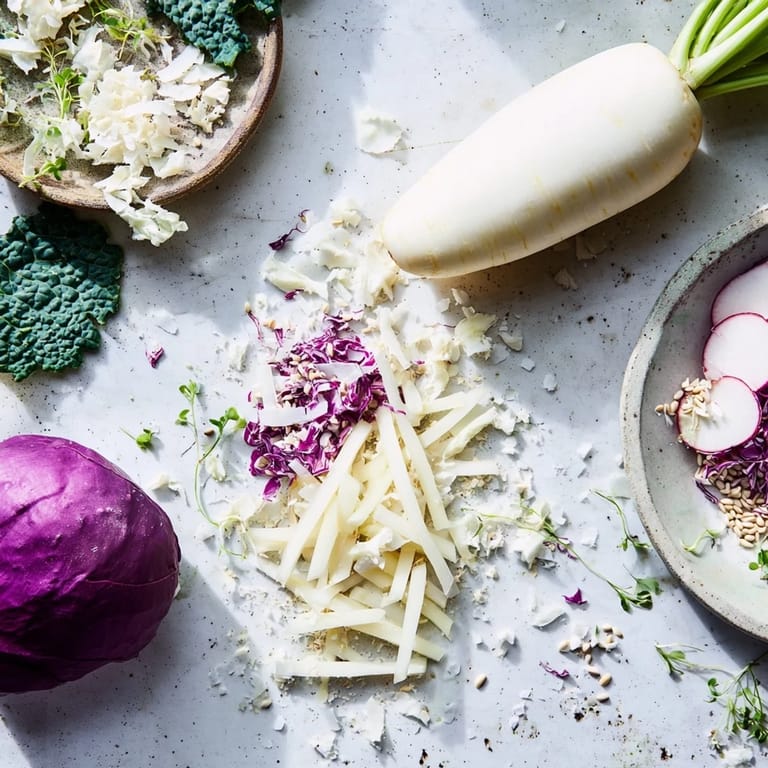
- Use a mandoline if you have one—it'll get your daikon and kohlrabi nearly transparent, which is what you're after. Even slices mean the whole thing looks composed and intentional.
- Scatter the foundation:
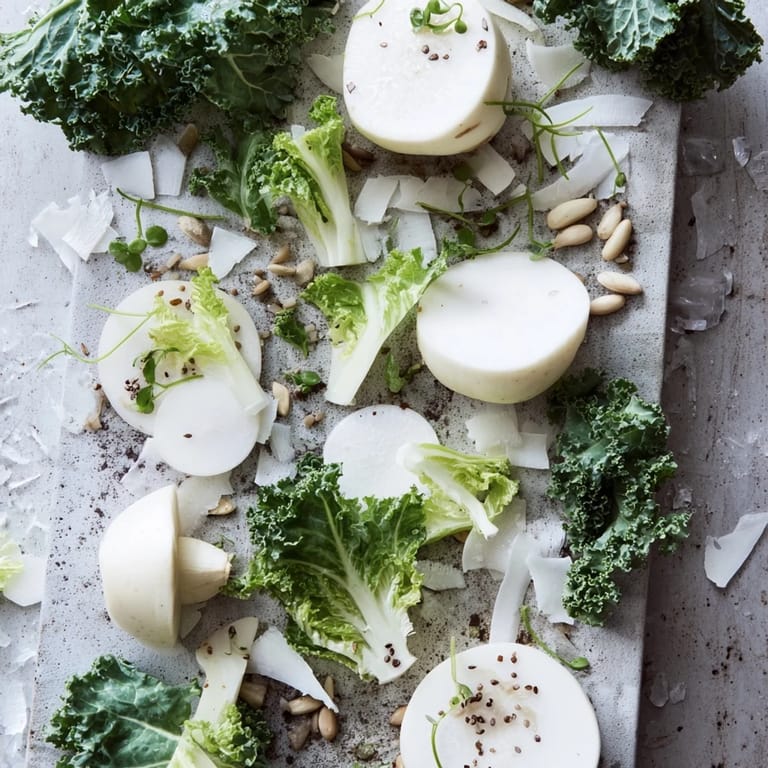
- Arrange the daikon, kohlrabi, and endive leaves across your frozen plate in a loose, asymmetrical pattern. Think windswept, not centered—leave empty space on purpose, because emptiness is part of the design.
- Add the textures:
- Sprinkle the finely chopped cauliflower, coconut flakes, and both sesame seeds over the vegetables in random patches. This is where you start to see the tundra taking shape—scattered, layered, almost accidental-looking.
- Dress with intention:
- Drizzle the dressing lightly—you want the vegetables to stay crisp, not marinate. A light hand here keeps everything crunchy and pale.
- Finish and serve:
- Top with microgreens and a pinch of flaky sea salt, then carry it straight to the table. The cold plate will stay cold for several minutes, but eat quickly to keep that icy texture.
 Save
Save A friend once told me that this was the first time she'd really tasted sesame seeds, because they weren't buried under dressing or mixed into a heavy sauce—they were just there, separate and audible, cracking between her teeth. That's when I understood that the minimalism wasn't about being spare; it was about letting each ingredient speak.
The Art of Nordic Plating
There's a reason Nordic restaurants became famous for this kind of sparse, considered plating—it's not about making food look small, it's about making the plate tell a story. Emptiness becomes as important as fullness, and white space on the plate mirrors white space in the landscape. When you arrange your vegetables, think about composition rather than coverage: where is your eye drawn first, and what journey does it take across the plate? The randomness should feel deliberate, like you've studied it.
Playing with Acidity
The dressing is incredibly forgiving, and I've experimented with it countless times. Yuzu juice brings a deeper, almost perfumy brightness that feels more Japanese than Nordic. Rice vinegar or champagne vinegar soften the sharpness into something sweeter. I once tried a touch of white miso and it became earthy instead of crisp, which completely changed the mood. The white wine vinegar and lemon juice pairing I've landed on feels like the most honest version—clear, clean, unfussy.
Beyond Vegetarian
If you want to add protein, think about what stays cold and doesn't overwhelm the delicate vegetable arrangement. Smoked whitefish breaks into delicate flakes that look like driftwood scattered across the plate. Chilled shrimp works beautifully but needs to be poached gently so it stays tender. I've also tried thin shavings of smoked salmon, which add a salty depth without adding heaviness. Whatever you choose, treat it as a garnish, not a main event—this dish's power comes from its restraint.
- Chill any protein you add so it doesn't warm the plate.
- Use protein sparingly; a few flakes or shrimp pieces, not handfuls.
- Consider the color contrast—pale proteins blend in, darker ones become visual anchors.
 Save
Save This dish reminds me that sometimes the most memorable meals aren't about abundance or complexity—they're about paying attention. Serve it cold, serve it soon, and let your guests discover what happens when simplicity becomes an art form.
Recipe FAQ
- → What vegetables are featured in this dish?
Thinly sliced daikon radish, kohlrabi, Belgian endive leaves, and finely chopped cauliflower florets create the crisp base.
- → How is the flavor profile described?
Subtle and delicate, combining mild citrus acidity with a touch of white pepper and the natural nuttiness from sesame seeds.
- → What is the purpose of serving on a chilled stone plate?
The cold surface enhances the crisp texture and evokes the cool, windswept tundra atmosphere, adding sensory appeal.
- → Are there suggested ingredient variations?
Try swapping rice vinegar or yuzu juice in the dressing for a different acidity or add smoked whitefish flakes for protein (non-vegetarian option).
- → How long does preparation typically take?
Approximately 25 minutes, including chilling time for the serving platter, with no cooking required.
- → What garnishes enhance the dish?
Toasted white and black sesame seeds, unsweetened coconut flakes, microgreens, and flaky sea salt add texture and visual interest.