 Save
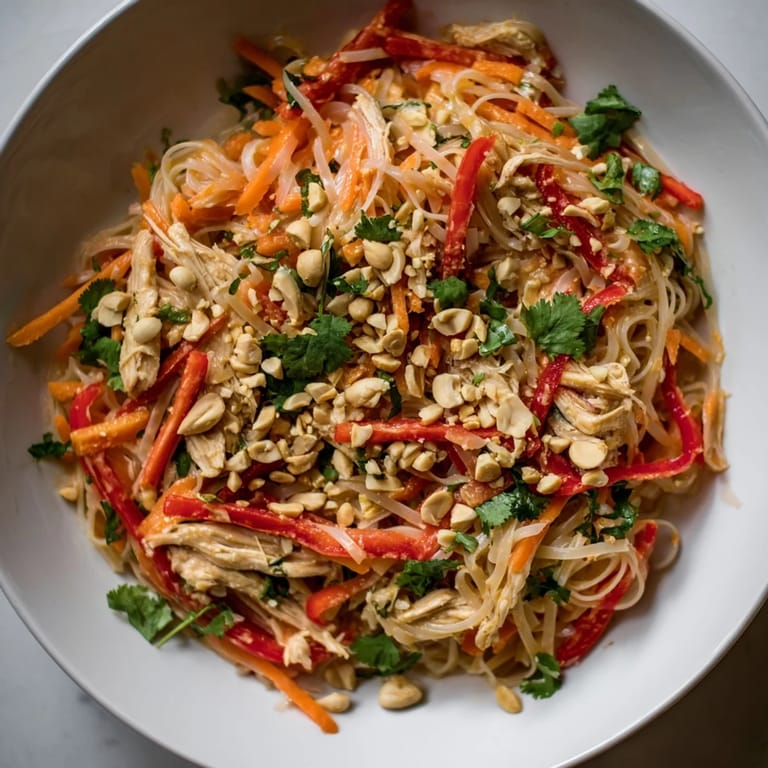
Save I discovered this dish on a humid afternoon when my neighbor brought over a container of something cold and fragrant, and I couldn't stop eating it straight from the bowl. She mentioned it took barely thirty minutes, and that line stuck with me because I was tired of spending an hour in a hot kitchen during summer. The balance of creamy peanut, sharp lime, and tender chicken felt like a small rebellion against heavy, complicated cooking. Now it's what I make when I want something that tastes like I tried much harder than I actually did.
The first time I made this for a potluck, I was nervous because peanut anything can feel risky in a crowd, but three people asked for the recipe before I'd even set the bowl down. What surprised me most was how the lime juice kept everything bright and fresh instead of letting it turn into a dense, oily pile. That's when I realized the ratio matters less than understanding how each element pulls its weight.
Ingredients
- Chicken breasts (2, about 300g): Poach or pan-sear them gently so they stay tender when shredded—overcooked chicken will make the whole dish feel dry no matter how good the dressing is.
- Spaghetti or rice noodles (300g): Rice noodles give you a naturally gluten-free option and add a lighter texture, but spaghetti works beautifully too if you break it into shorter pieces.
- Red bell pepper (1): The crisp sweetness is essential; it cuts through the richness and keeps each bite interesting.
- Shredded carrots (1 cup/100g): Raw carrots stay crunchy and add natural sweetness, which balances the tangy dressing perfectly.
- Spring onions (2): Use both white and green parts for different textures and a mild onion bite that doesn't overpower.
- Fresh cilantro (1/2 cup/15g): This is what makes it taste Thai-inspired; don't skip it or substitute if you can help it.
- Roasted peanuts (1/4 cup/35g): Chopped roughly so you get texture in every other bite; unsalted is better so you control the salt level.
- Cucumber (1, optional): The coolness and crunch elevate this from side dish to something you actually look forward to eating.
- Creamy peanut butter (1/3 cup/80g): The foundation of everything; natural peanut butter works too but stir it first so the oil isn't separated.
- Soy sauce (2 tablespoons): Use tamari if you're cooking gluten-free, or reduce slightly if your soy sauce is particularly salty.
- Honey or maple syrup (1 tablespoon): A touch of sweetness that rounds out the lime acidity without making it taste dessert-like.
- Lime juice (2 tablespoons/about 1 lime): Fresh is non-negotiable here; bottled lime juice tastes flat and won't give you that bright pop.
- Rice vinegar (1 tablespoon): This adds subtle tang that makes the dressing taste more complex and less one-dimensional.
- Sesame oil (1 tablespoon): A small amount goes a long way; too much and it tastes overpowering rather than aromatic.
- Fresh ginger (1 teaspoon grated): Grate it just before mixing so it's sharp and alive, not sitting in a jar tasting like nothing.
- Garlic (1 clove, minced): One clove is enough; garlic should be a whisper here, not a shout.
- Warm water (2-3 tablespoons): Add this gradually until the dressing flows like poured honey, not like thick frosting.
- Chili flakes or Sriracha (1/2 teaspoon, optional): Start small and taste as you go; heat is personal and you can always add more.
Tired of Takeout? 🥡
Get 10 meals you can make faster than delivery arrives. Seriously.
One email. No spam. Unsubscribe anytime.
Instructions
- Cook the noodles until just tender:
- Bring a large pot of salted water to a rolling boil and cook the noodles one or two minutes under package time so they're still slightly firm. Drain them, then rinse under cold running water while gently stirring to stop the cooking and remove the starch.
- Whisk the dressing until smooth:
- In a bowl, combine the peanut butter, soy sauce, honey, lime juice, rice vinegar, sesame oil, ginger, and garlic, whisking constantly. Add the warm water a tablespoon at a time until the dressing flows smoothly without any peanut butter lumps, which should take about a minute of steady whisking.
- Combine everything in one bowl:
- Add the cooled noodles to the dressing along with the shredded chicken, bell pepper, carrots, spring onions, and cucumber if you're using it. Toss gently but thoroughly so every strand gets coated without crushing the vegetables or shredded chicken too much.
- Finish with cilantro and peanuts:
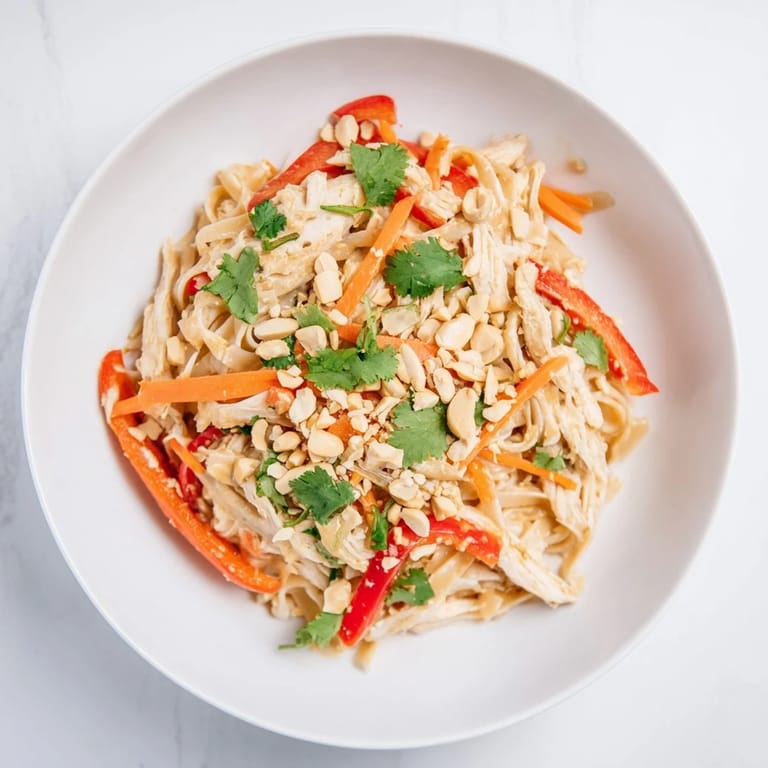
- Scatter the chopped cilantro and roasted peanuts across the top just before serving so they stay crisp. Taste and adjust the lime, soy sauce, or heat to your preference, remembering that flavors settle after an hour so you can always taste again later.
- Serve now or chill:
- This dish tastes wonderful right away at room temperature, or you can cover it and refrigerate for thirty minutes if you prefer everything very cold. Either way, give it a gentle toss again right before you serve to redistribute any dressing that's settled on the bottom.
 Save
Save My partner always jokes that this pasta is what convinced him that salads could be meals, not just appetizers or something to eat while waiting for real food. The moment he understood that cold noodles in peanut sauce could satisfy him completely, something shifted in how we thought about eating, especially in warm weather. Now this is what we make when we're cooking for people who think they don't like salads.
Why This Works as a Meal
The protein from the chicken and peanuts keeps you full, the vegetables add fiber and brightness, and the dressing is thick enough that you're not eating something that feels insubstantial. It sits somewhere between a salad and a noodle dish, which means it has the comfort of pasta but the freshness of vegetables. I've learned to trust dishes that feel casual but are actually nutrient-dense because those are the ones I want to make again.
Making It Your Own
This recipe is a template more than a rulebook, which is why it works for so many different situations and preferences. I've made it with shrimp instead of chicken, added cashews alongside the peanuts for richness, swapped the cilantro for mint when that's what I had on hand. The core of the thing—the peanut-lime dressing and the cold noodles—stays constant, but everything around it can flex based on what's in your refrigerator and what sounds good that day.
- Substitute the chicken with tofu cubes, shrimp, or edamame for a different protein that needs the same amount of time to prep.
- Add a handful of shredded cabbage or spinach if you want more volume without changing the flavor profile significantly.
- Keep chili flakes separate until the end so people can adjust the heat to their own comfort level.
Timing and Storage
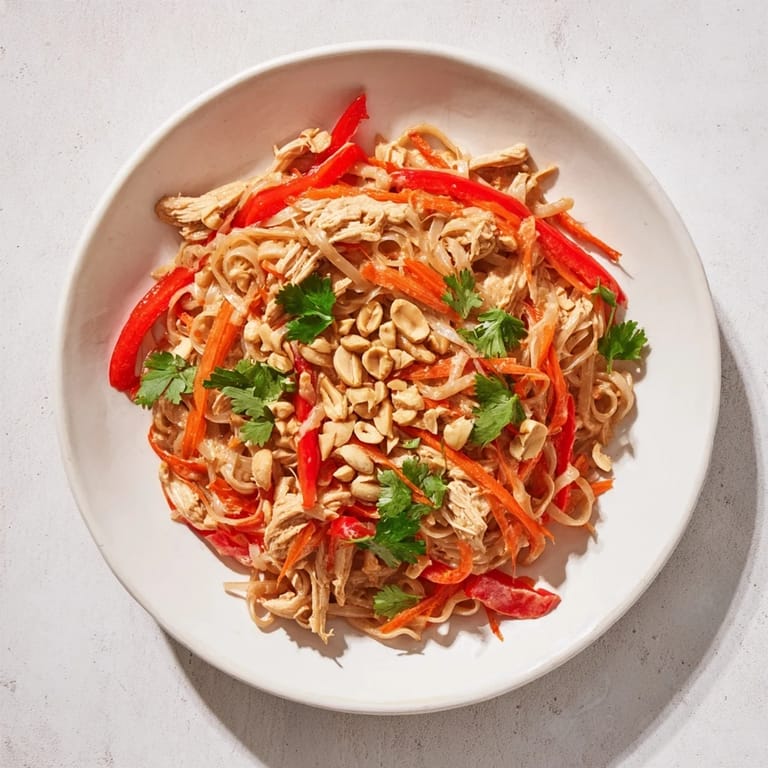
This dish comes together in about thirty-five minutes from an empty kitchen, which makes it excellent for weeknight dinners when you're hungry now, not later. If you're thinking ahead, you can cook the noodles and chicken the morning before, then assemble everything while the dressing sits at room temperature. Leftovers keep beautifully for two days in the refrigerator; just give everything a toss before eating and add a tiny splash more lime juice if it tastes flat after sitting.
 Save
Save This pasta has become my answer to the question of what to eat when I want something satisfying, quick, and bright all at once. It reminds me that the best meals don't need to be complicated, just thoughtful.
Recipe FAQ
- → Can I use a vegetarian protein substitute?
Yes, tofu or edamame can replace chicken for a vegetarian-friendly option.
- → How can I make the dressing thinner if needed?
Add warm water gradually while whisking until the dressing reaches a smooth, pourable consistency.
- → Are rice noodles suitable for gluten-free diets?
Rice noodles are generally gluten-free; ensure soy sauce is replaced with tamari to maintain gluten-free status.
- → What can I serve with this dish?
A crisp Riesling or iced green tea pairs well, complementing the creamy and tangy flavors.
- → Can I adjust the spice level?
Yes, add or reduce chili flakes or Sriracha according to your preferred heat level.
- → Is it better to serve this dish warm or cold?
Serving chilled for 30 minutes enhances the flavors, but it can also be enjoyed immediately fresh.