 Save
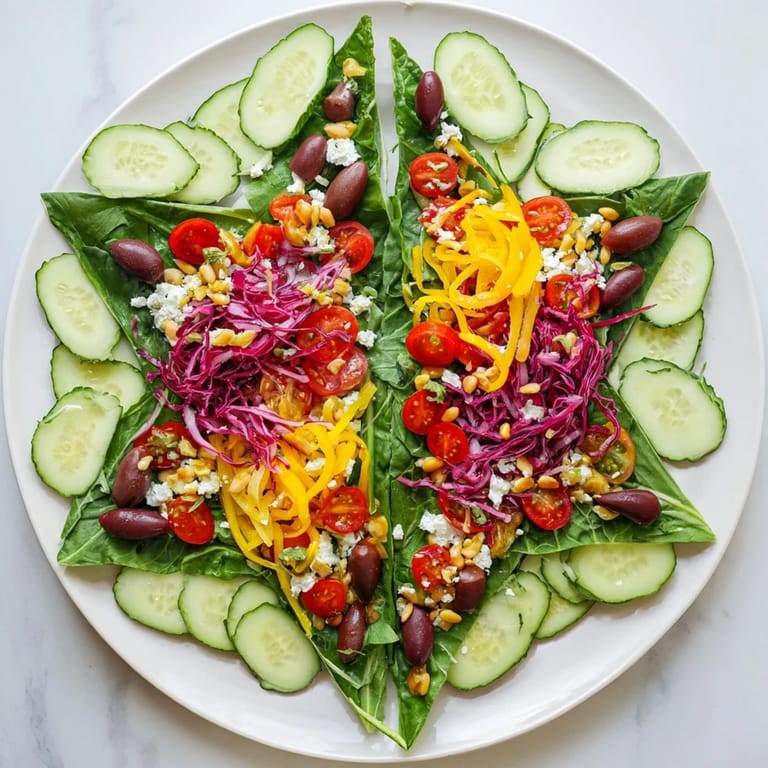
Save I'll never forget the Hanukkah dinner when my grandmother suggested we turn our salad into something more meaningful. She'd always believed that food should tell a story, and that year, we decided our story would be written in vegetables. I spent the afternoon carefully arranging cucumber slices into perfect triangles, and when I stepped back to see the Star of David emerge from the platter, I understood what she meant. This salad became more than just sustenance—it was art, history, and celebration all on one table.
I remember my cousin's daughter asking why we were making a star out of salad, and I realized in that moment that this dish teaches something without a single word spoken. Watching her help arrange the tomatoes into their sections, understanding the significance through her own hands—that's when I knew this recipe would become a tradition in our family, the one we pull out not just for holidays, but whenever we wanted to bring people together in a way that felt intentional and joyful.
Ingredients
- Baby spinach and arugula: These leafy greens form your canvas, and I learned the hard way to dry them completely—any excess moisture will make your star collapse. They're also your nutritional foundation, so don't skip them
- Cucumbers: Slice them thin and uniform; they'll be the geometric lines that actually create the star shape. A mandoline makes this easier if you have one, but a sharp knife works beautifully too
- Cherry tomatoes: Halve them so they nestle into the sections and create that jewel-like effect when light hits the platter. The sweetness of good tomatoes makes the whole salad sing
- Bell peppers: Use both yellow and red for visual drama; they're structural and delicious. The thin slices let you layer colors without making any section too heavy
- Purple cabbage: This adds an unexpected crunch and the deep color creates such beautiful contrast against the brighter vegetables
- Feta cheese: Crumble it generously along the edges and points—it's your finishing touch that brings richness and a touch of tang. Use vegan feta if that works better for your gathering
- Kalamata olives and capers: These are optional but they're my secret weapon for visual complexity and salty depth that makes people ask what the special ingredient is
- Toasted pine nuts: The toasting step matters—it wakes up their flavor and adds a warmth that raw nuts just don't have. Toast them yourself if possible for the best result
- Extra virgin olive oil, lemon juice, red wine vinegar: This simple dressing respects the quality of the vegetables instead of overpowering them. The balance of acid and oil is what makes it sing
Tired of Takeout? 🥡
Get 10 meals you can make faster than delivery arrives. Seriously.
One email. No spam. Unsubscribe anytime.
Instructions
- Prepare Your Canvas:
- Start with a large, flat platter—I prefer something with a slight rim to keep the dressing contained. If you're using a cutting board or wooden platter, all the better for that rustic feel. Make sure everything is clean and dry before you begin.
- Build Your Green Foundation:
- Spread the spinach and arugula in a thin, even layer across your platter. Use your hands to tuck and arrange them, creating subtle texture. This is your base, and it should look intentional but natural, like a painter's base coat.
- Outline Your Star:
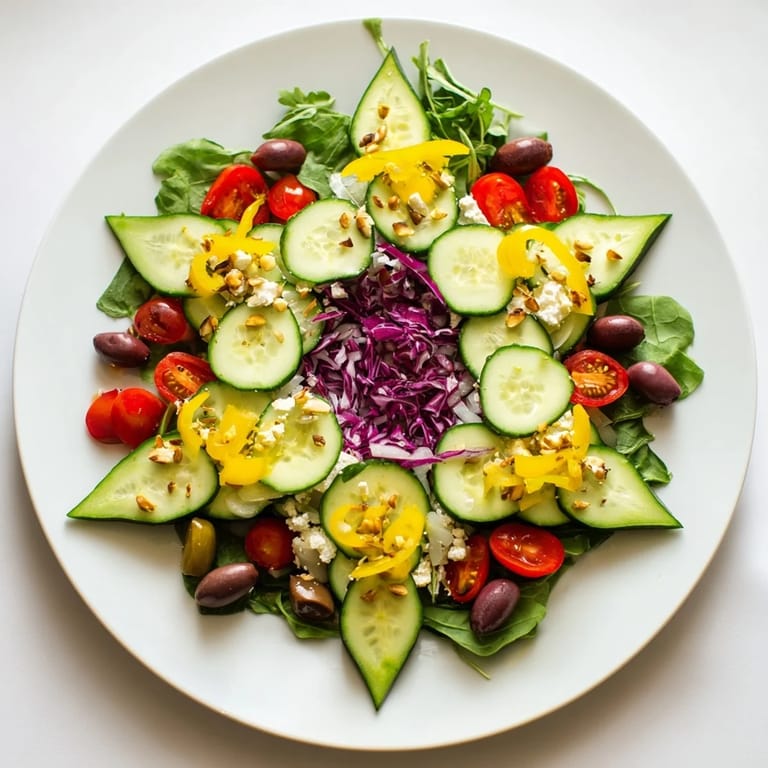
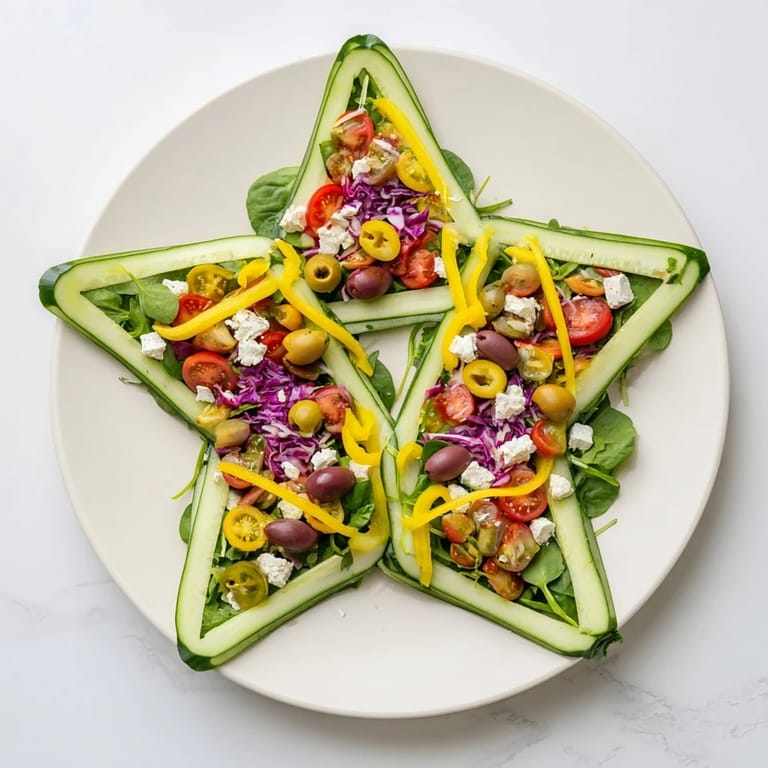
- Here's where the geometry begins. Take your cucumber slices and arrange them to form two overlapping equilateral triangles. Step back frequently to check your angles. One triangle points up, one points down—they should intersect in the middle to create that six-pointed star. This is meditative work; don't rush it.
- Fill the Sections:
- Now comes the color. Each of the six points and the center hexagon gets its own color family. Fill some sections with tomatoes, others with bell peppers, some with that gorgeous purple cabbage. Create contrast between neighboring sections so the star really pops visually.
- Add Texture and Accent:
- Scatter feta cheese along the edges and points of your star. Distribute olives, capers, and toasted pine nuts across the platter, concentrating them at the points for extra visual interest. These aren't random—they're the details that make it look intentional.
- Make Your Dressing:
- Whisk together the olive oil, lemon juice, red wine vinegar, honey, Dijon mustard, salt, and pepper in a small bowl. The mustard acts as an emulsifier, bringing everything together beautifully. Taste it straight from the whisk—adjust the lemon or salt to your preference. It should taste bright and assertive.
- The Final Moment:
- Right before serving, drizzle the dressing evenly over the entire platter, or serve it on the side if you're concerned about keeping the presentation perfect. Either way works, and I've done both depending on my mood.
 Save
Save There was a moment during that first Hanukkah dinner when everyone at the table fell quiet for just a second after the salad was unveiled. Then my grandmother squeezed my hand under the table, and I felt the weight of what we'd created together—not just a beautiful dish, but a visual reminder of strength, unity, and celebration. That's when food truly becomes more than sustenance. That's when it becomes memory.
Choosing Your Vegetables Wisely
The vegetables you choose will make or break the visual impact of this platter. I've learned to shop the perimeter of the market with an eye for color and freshness. The tomatoes should smell like tomatoes, the peppers should feel firm, and the cucumbers should be crisp enough that they hold their shape when sliced. Don't be afraid to ask the produce person for recommendations—they often know which vegetables are at their peak that particular day. I once made this salad with sad, mealy tomatoes from the back of my crisper drawer, and while it still tasted fine, it lost that visual magic that makes people lean in close to admire it. Quality vegetables aren't just about taste; they're about the entire experience.
Making It Your Own
This recipe is a framework, but your personal touches are what make it yours. I've made versions with roasted chickpeas tucked into the sections for extra protein, added fresh herbs like dill or mint for brightness, and even experimented with different cheeses depending on what I have on hand. One memorable version included thinly sliced fennel for a subtle anise note that surprised everyone in the best way. The beauty of this recipe is that it welcomes creativity while maintaining its essential character. Think of it as a structured invitation to express your own culinary personality.
Serving and Presentation Tips
The first time I made this, I realized that how you present it matters as much as the components themselves. Serve it on something beautiful—a wooden board, a ceramic platter, something that feels intentional rather than just functional. The moment you bring it to the table is part of the ritual. I like to carry it around and let people admire it before they eat, perhaps telling them a bit about why you chose to make it. It transforms from side dish to centerpiece, from ingredient list to story.
- Serve immediately after dressing for the best texture, or keep the dressing on the side and let people dress their own portions
- Pair it with warm pita, fresh matzo, or crusty bread to make it more substantial if desired
- Have extra dressing on the table—people always want a little more than you anticipate
 Save
Save Every time I make this salad now, I think about my grandmother's belief that food tells stories. This one tells stories of celebration, unity, and the way something as simple as arranged vegetables can become a moment people remember. That's the real magic of cooking.
Recipe FAQ
- → How is the Star of David shape created on the platter?
Two overlapping equilateral triangles are outlined using thin cucumber slices to form the iconic six-pointed star shape.
- → Can the feta cheese be substituted for dietary preferences?
Yes, vegan feta alternatives can be used to keep the dish dairy-free without sacrificing flavor.
- → What dressing complements this salad platter?
A blend of extra virgin olive oil, lemon juice, red wine vinegar, honey, and Dijon mustard provides a zesty and balanced dressing.
- → Are there optional toppings or add-ins for more protein?
Cooked chickpeas or grilled chicken strips can be added inside the star to increase protein content.
- → How should this platter be served for best presentation?
Arrange ingredients carefully on a large, flat serving tray and drizzle dressing evenly just before serving for a fresh and festive look.
- → What tools are recommended to help with assembly?
A sharp knife, large serving platter, small bowl for dressing, and measuring spoons are helpful. Cookie cutters may assist in precise shapes.