 Save
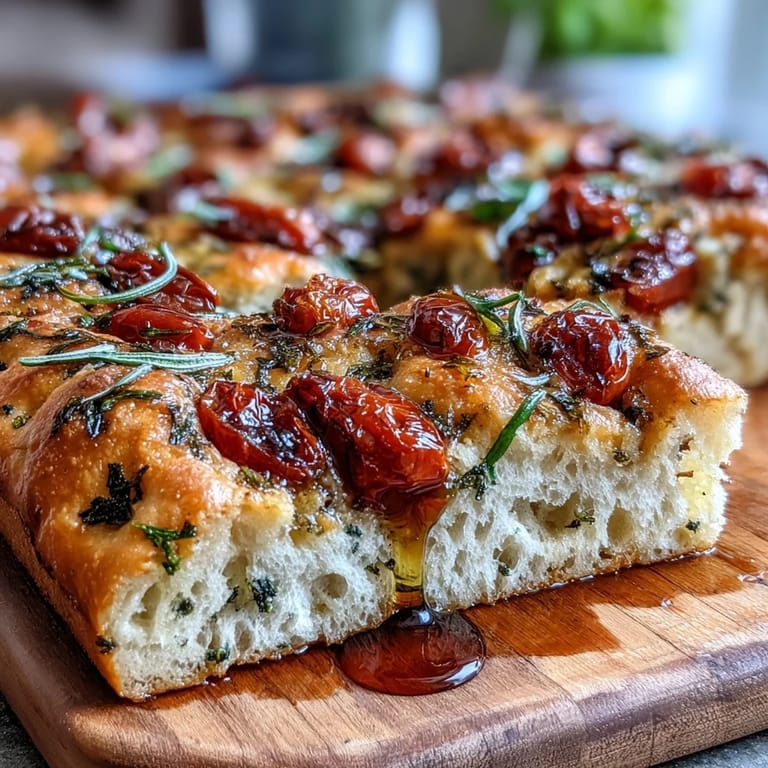
Save There&aposs something about the sound of bubbling yeast that perks up my kitchen on cool spring mornings. When I first attempted focaccia, my hands got comically sticky and I had to stifle laughter as dough clung to my fingers like playful putty. The patience required for rising time reminded me to slow down and notice the scent of fresh rosemary wafting through the air. Watching bright cherry tomatoes and emerald herbs scatter across pillowy dough felt like creating edible artwork. Sharing the finished bread with friends instantly brought the room to life.
The last time I baked this focaccia was during a rare sunny afternoon, with my neighbor peering over the fence drawn by the aroma. She ended up staying for a “quick taste,” and we giggled over crumbed plates as warm slices disappeared faster than I could cut them.
Ingredients
- Bread flour: Look for strong bread flour—it gives the focaccia its lofty, chewy texture and holds up beautifully to all those juicy toppings.
- Fine sea salt: I use fine sea salt in the dough for even seasoning; sprinkle flakes on top for extra flavor pops.
- Active dry yeast: Make sure it&aposs fresh—a sluggish rise is often the fault of old yeast.
- Lukewarm water: If it feels like a warm spring breeze on your wrist, it&aposs just right for waking up the yeast.
- Extra-virgin olive oil: Choose a fruity olive oil—you&aposll taste it in every bite, so it&aposs worth using the good stuff.
- Cherry tomatoes: The juicy bursts from halved tomatoes brighten each mouthful; pick the sweetest, ripest you can find.
- Fresh rosemary, thyme, chives, and basil: Each herb adds a layer of spring flavor—pluck leaves right before using so they don&apost wilt.
- Flaky sea salt: The finish of salty crunch is my favorite part; don&apost skip this, it makes everything sing.
- Freshly ground black pepper: Adds a subtle warmth—just a few twists are enough.
Tired of Takeout? 🥡
Get 10 meals you can make faster than delivery arrives. Seriously.
One email. No spam. Unsubscribe anytime.
Instructions
- Combine Dry Ingredients:
- Whisk together the bread flour and fine sea salt in a large bowl, letting the earthy smell of fresh flour set the mood.
- Activate the Yeast:
- Dissolve the yeast in lukewarm water—listen for the gentle fizz as tiny bubbles form, signaling all systems go.
- Form the Dough:
- Pour in your yeasty water and olive oil, stirring gently with a wooden spoon until a sticky dough develops—it should stick to your hands but pull away from the bowl sides.
- First Rise:
- Coat another bowl lightly with olive oil, tuck the dough in, and cover with a damp towel; leave it somewhere cozy to rise until doubled and impressively pillowy—this step forces you to pause and anticipate.
- Shape and Dimple:
- Oil your baking tray generously, then tip the dough out and gently stretch with oiled fingertips, pressing to the edges and dimpled all over for that signature look.
- Second Rise:
- Cover again and let the dough puff up for up to 40 minutes—the second rise is when it relaxes into its final cloud-like frame.
- Preheat and Top:
- Crank your oven to 220°C (425°F). As it heats, drizzle the dough with olive oil, then joyfully scatter the tomatoes, herbs, flaky salt, and here and there a grind of pepper.
- Bake:
- Slide the tray onto the middle rack and wait for the edges to turn golden and crisp (about 22–25 minutes) while the kitchen fills with tantalizing smells.
- Cool and Serve:
- Let the focaccia cool just enough to handle, slice it up, and serve on a big board—watch the pieces vanish in a heartbeat.
 Save
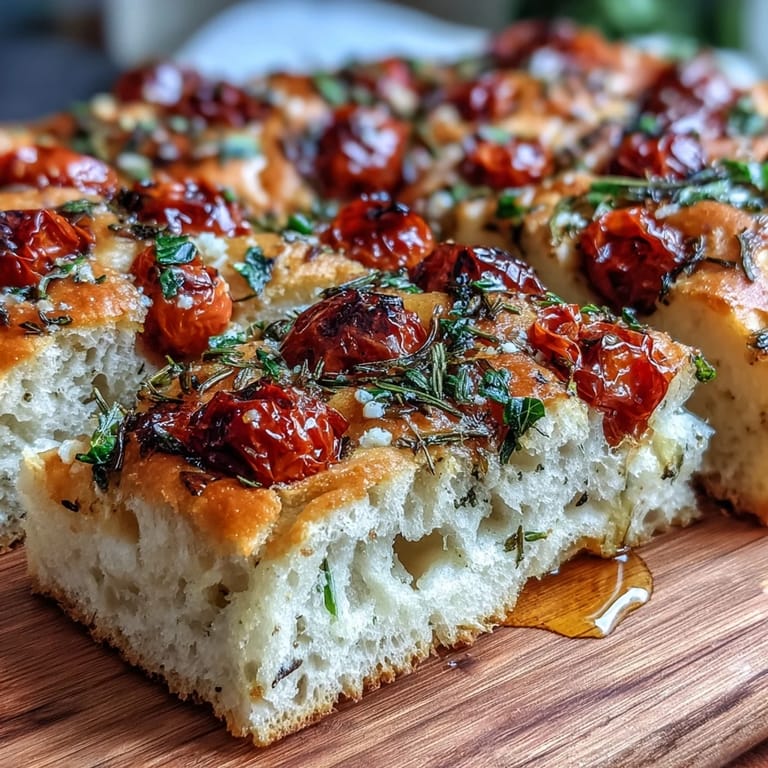
Save The first time my dad tasted my homemade focaccia, he raised his eyebrows in delighted surprise and promptly requested another slice “just for scientific purposes,” which still makes me laugh.
Choosing and Swapping Herbs
Playing with different herb combinations is half the fun—sometimes I reach for fragrant dill or soft, sweet tarragon to shake things up. It&aposs always a bit of a kitchen adventure, and every batch offers a unique flavor twist.
Serving Suggestions for Maximum Enjoyment
I love slicing the focaccia into generous squares and offering bowls of olive oil and balsamic vinegar for dipping. It's also my secret for building unbeatable tomato-mozzarella sandwiches the next day.
Lessons From My Messiest Bakes
One time, flour dust ended up everywhere—on my glasses, the windowsill, even the cat (somehow). Embrace the chaos: these kitchen messes always clean up eventually, and laughter is the best seasoning.
- If your dough seems too sticky, a drop of oil on your hands works wonders.
- Check your yeast date to avoid disappointment.
- Don&apost be shy with the olive oil—it&aposs what gives focaccia its signature bite and shine.
 Save
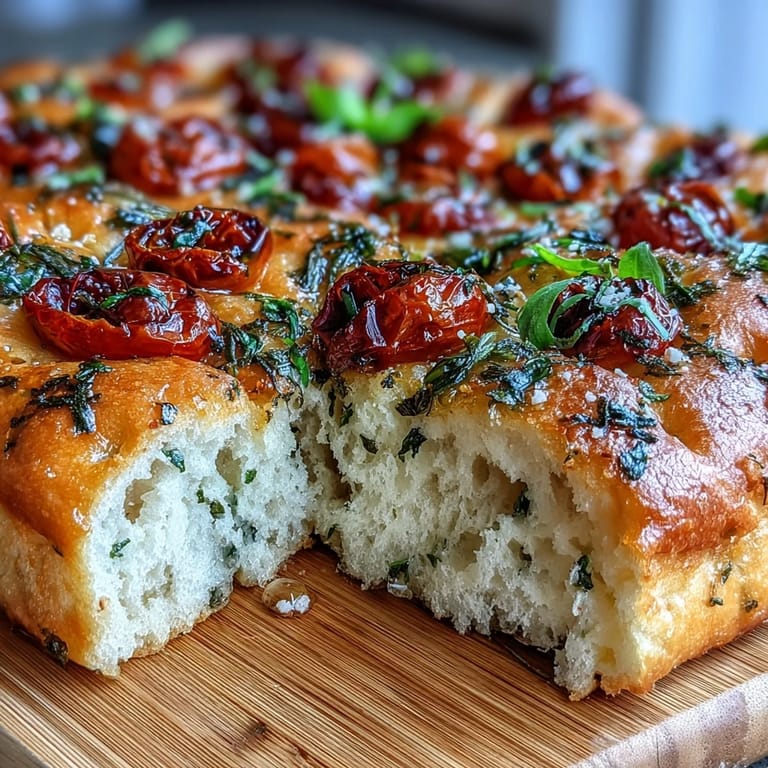
Save May this herby focaccia add its golden crunch and fragrant goodness to your spring table—moments like these make cooking genuinely memorable.
Recipe FAQ
- → How do I achieve a light, airy crumb?
Use a slightly higher hydration and handle the dough gently—mix until just combined, then allow a full first rise until doubled. Warm proofing and proper dimpling before the final rest help trap air for an open crumb.
- → Can I use instant yeast instead of active dry?
Yes. With instant yeast mix it directly into the flour and skip the foaming step; you may see a slightly faster rise, so watch the dough rather than the clock for readiness.
- → Which herbs work best for the topping?
Soft spring herbs like basil, chives and tarragon add freshness; rosemary and thyme give savory depth. Tear delicate leaves and scatter sturdier sprigs so they roast without burning.
- → How do I avoid a soggy bottom?
Generously oil the baking tray and preheat the oven fully. Space tomato halves so juices can roast off, and bake until the edges turn golden and crisp—this prevents excess moisture at the base.
- → Can I prepare ahead or freeze?
Yes. After first rise you can refrigerate the shaped dough up to 24 hours (bring back to room temp before final proof). Fully baked focaccia freezes well; wrap tightly and thaw before warming in a hot oven.
- → Any tips for extra flavor?
Fold grated Parmesan into the dough or sprinkle it over the top in the last minutes of baking. A final drizzle of good olive oil and a few flakes of sea salt brightens the finished loaf.