 Save
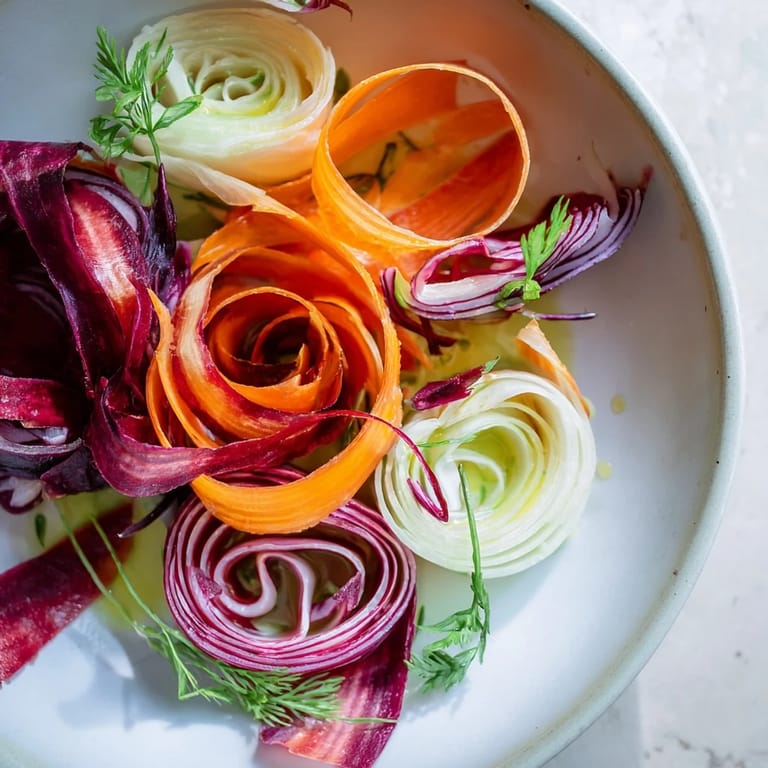
Save I discovered this salad by accident when I was experimenting with a mandoline slicer my friend had just given me. I spent an afternoon shaving vegetables into ribbons so thin they were almost translucent, and something about arranging them in a spiral on the plate felt like creating art instead of just dinner. The way the colors blurred together when I stepped back—deep orange carrots bleeding into golden beets and pale fennel—made me realize that food could be both elegant and playful at the same time.
I made this for a dinner party on a humid summer evening when nobody wanted anything heavy, and I watched my guests lean in closer to the plate before they even tasted it. One person asked if I'd gone to culinary school, and I laughed because I'd just been having fun with a vegetable slicer an hour earlier. That moment taught me that sometimes the most impressive dishes come from curiosity rather than complicated recipes.
Ingredients
- Fennel bulb: One medium bulb gives you that delicate anise flavor and the most beautiful pale ribbons that catch the light.
- Rainbow carrots: Use two small ones in different colors—the visual variety is half the appeal, and they stay naturally sweet when shaved thin.
- Golden beet: Smaller is better here so you get thin, tender slices without that earthy denseness.
- Red onion: Half a small bulb is enough; it adds a sharp, peppery note without overwhelming the plate.
- Fresh dill sprigs: That half cup of dill is your secret weapon for making everything taste bright and summery.
- Fresh chervil or parsley: Whichever you find fresher at the market works equally well—scatter it everywhere for that wispy effect.
- Microgreens: The quarter cup adds texture and those peppery, mineral notes that make people pause mid-bite.
- Extra-virgin olive oil: Two tablespoons of good oil matters here since there's nothing else to hide behind.
- Lemon juice: One tablespoon keeps everything tasting fresh and prevents any bitterness from the raw vegetables.
- Honey: A teaspoon rounds out the dressing and balances the sharpness of the mustard.
- Dijon mustard: Half a teaspoon acts as an emulsifier and adds subtle depth.
- Salt and pepper: Taste as you go because the dressing needs to be assertive enough to coat delicate vegetables.
Tired of Takeout? 🥡
Get 10 meals you can make faster than delivery arrives. Seriously.
One email. No spam. Unsubscribe anytime.
Instructions
- Shave your vegetables into ribbons:
- A mandoline slicer is ideal here, but a sharp vegetable peeler works too if you go slowly and carefully. You want ribbons so thin they're almost see-through, which means the mandoline's finest setting or multiple passes with the peeler.
- Ice bath for crispness:
- Soak those shaved vegetables in a bowl of ice water for 5 to 10 minutes—this is the step that makes them curl and crisp up beautifully. You'll notice the edges start to wave and the whole thing becomes more delicate.
- Make your dressing:
- Whisk together the olive oil, lemon juice, honey, and mustard in a small bowl until everything is emulsified and smooth. Taste it and season with salt and pepper until it feels balanced and bright.
- Build your spiral:
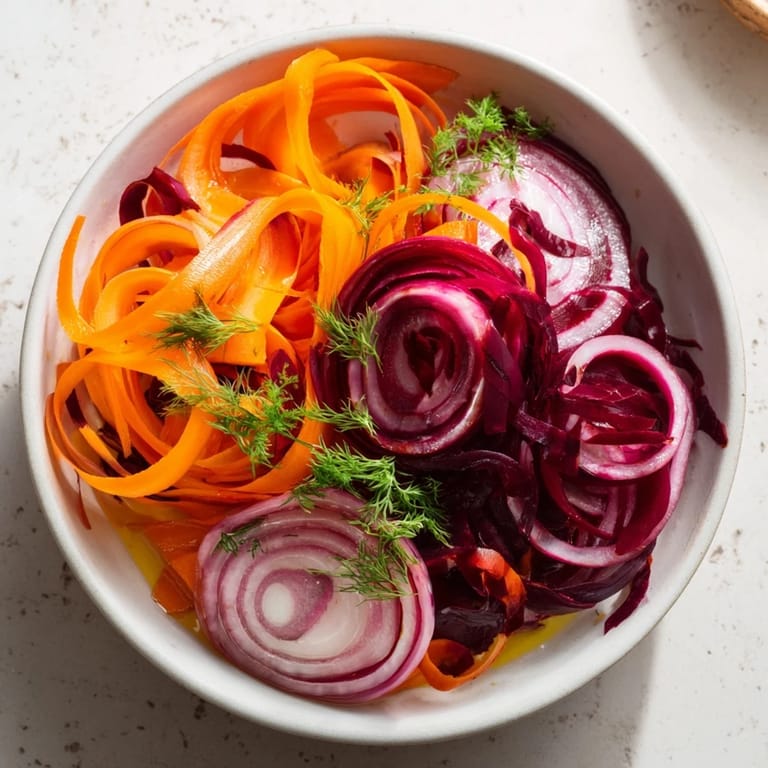
- Start arranging the vegetable ribbons in the center of your plate in a tight circular pattern, overlapping each ribbon slightly as you move outward. Let the edges extend beyond the plate a bit so they look wild and blurred.
- Layer in the herbs:
- Scatter your dill, chervil or parsley, and microgreens over the top, using a little more toward the outer edges to enhance that spinning, wispy look. This is where the salad transforms from vegetable ribbons into something that feels alive on the plate.
- Finish with dressing:
- Drizzle the dressing over everything just before serving—never before, or the vegetables will wilt and lose that crisp texture you worked to create.
 Save
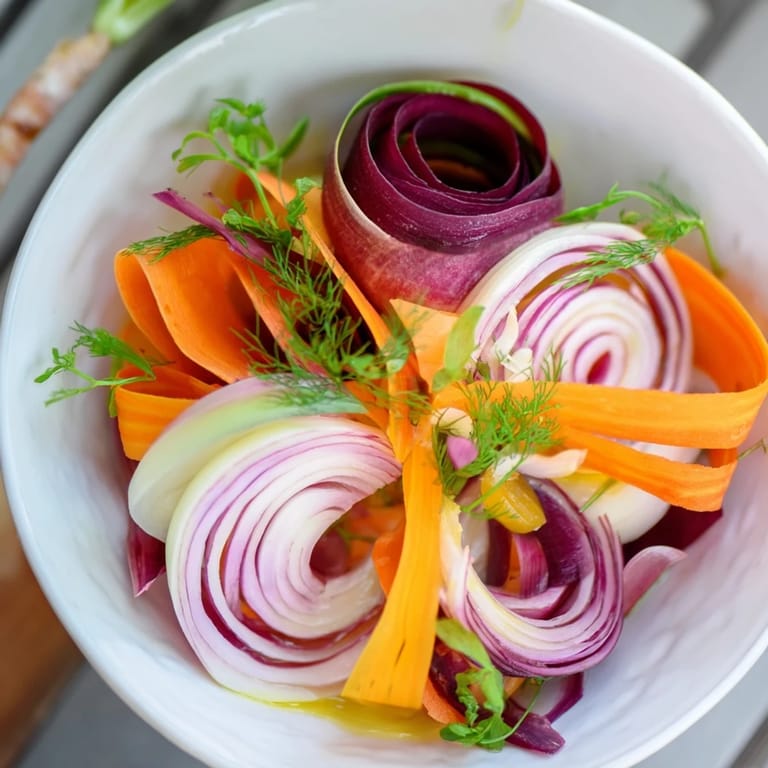
Save I remember serving this to someone who said salad was boring, and then they spent five minutes just looking at it before tasting anything. There's something powerful about making food that catches people off-guard with its beauty, that makes them slow down and actually pay attention before they eat.
The Mandoline Moment
If you've never used a mandoline slicer before, this is the perfect introduction because the results are so visually rewarding. The learning curve is gentle—you'll get the hang of the angle and pressure within a few passes—and suddenly you're creating ribbons that look restaurant-quality. Just keep your fingers tucked and move slowly; the blade is sharper than you think, and one slip is not worth the artistic payoff.
Color Combinations That Work
The real magic of this salad lives in the interplay of colors, so spend a moment choosing vegetables that contrast beautifully together. Golden beets, purple carrots, and white fennel create a palette that feels intentional and sophisticated, while orange and yellow carrots against red onion and green herbs offer a different kind of warmth. You can even add thin slices of purple radish or cucumber if you want to expand the color story.
Timing and Temperature
This salad is at its absolute best served immediately after assembly, when every vegetable is still snapping with crispness and the herbs smell fresh and alive. Think of it as a moment frozen on the plate, something that should be eaten now rather than made ahead and left to sit. The dressing can be made hours in advance, and the vegetables can be shaved and chilled, but the final assembly should happen in those last few minutes before you serve.
- Chill your serving plate in the freezer for 10 minutes before you start arranging if you want the salad to stay cold longer.
- Have all your herbs cleaned and ready to scatter so nothing wilts while you're fussing with the vegetables.
- Pour the dressing directly on the plate just before serving to avoid the vegetables sitting in liquid and losing their texture.
 Save
Save This salad reminds me that food doesn't have to be complicated to be special, and sometimes the most memorable dishes come from playing with simple ingredients in a thoughtful way. Serve it whenever you want something beautiful that tastes as good as it looks.
Recipe FAQ
- → How do I achieve the wispy vegetable ribbons?
Use a mandoline slicer or vegetable peeler to thinly shave the fennel, carrots, beet, and onion for delicate ribbons.
- → Why soak the vegetables in ice water?
Soaking crisps and curls the vegetable ribbons, enhancing texture and creating the spinning, blurred effect.
- → Can I substitute the herbs in this salad?
Yes, fresh dill, parsley, or chervil work well; microgreens add extra freshness and visual appeal.
- → What dressing complements these vegetables?
A light blend of olive oil, lemon juice, honey, and Dijon mustard balances the salad’s fresh flavors without overpowering.
- → How should I serve this salad to keep its shape?
Arrange just before serving and drizzle dressing last to maintain crispness and the dynamic presentation.