 Save
Save I discovered Mongolian chicken on a Tuesday night when my fridge was nearly empty except for chicken thighs and a half-open jar of hoisin sauce. Rather than order takeout, I decided to improvise with whatever pantry staples I could find, and the result was so good that I've made it at least once a month ever since. The beauty of this dish lies in how quickly it comes together, transforming simple ingredients into something that tastes like you've been cooking all day. There's something magical about that moment when the sauce hits the hot pan and fills your kitchen with the aroma of caramelized garlic and ginger.
Last spring, I made this for my roommate who was going through a rough breakup, and watching her face light up at first bite reminded me that food really does have the power to shift someone's mood. She asked for the recipe that same evening, and now it's become her go-to confidence meal. There's something deeply satisfying about feeding someone something warm and bold that makes them forget their troubles, even if just for dinner.
Ingredients
- Boneless, skinless chicken thighs or breasts (500 g): Thighs stay more tender during the quick stir-fry, but breasts work fine if that's what you have; slice everything thinly so it cooks evenly.
- Cornstarch (1 tbsp): This creates a light, silky coating that helps the chicken brown beautifully and thickens the sauce slightly.
- Soy sauce (4 tbsp): The backbone of the sauce, providing umami depth that balances the sweetness.
- Hoisin sauce (2 tbsp): Sweet, savory, and slightly thick, it's what gives this dish its signature Mongolian character.
- Brown sugar (2 tbsp): Don't skip this; it caramelizes with the soy and hoisin to create that glossy, restaurant-quality finish.
- Rice vinegar (1 tbsp): A splash of acidity cuts through the richness and brightens the entire dish.
- Sesame oil (1 tsp): Just a teaspoon adds a nutty, toasty note that elevates everything; more than this and it becomes overwhelming.
- Fresh garlic and ginger (2 cloves garlic, 1 tbsp ginger): Mince these fine and add them directly to the sauce for maximum flavor impact.
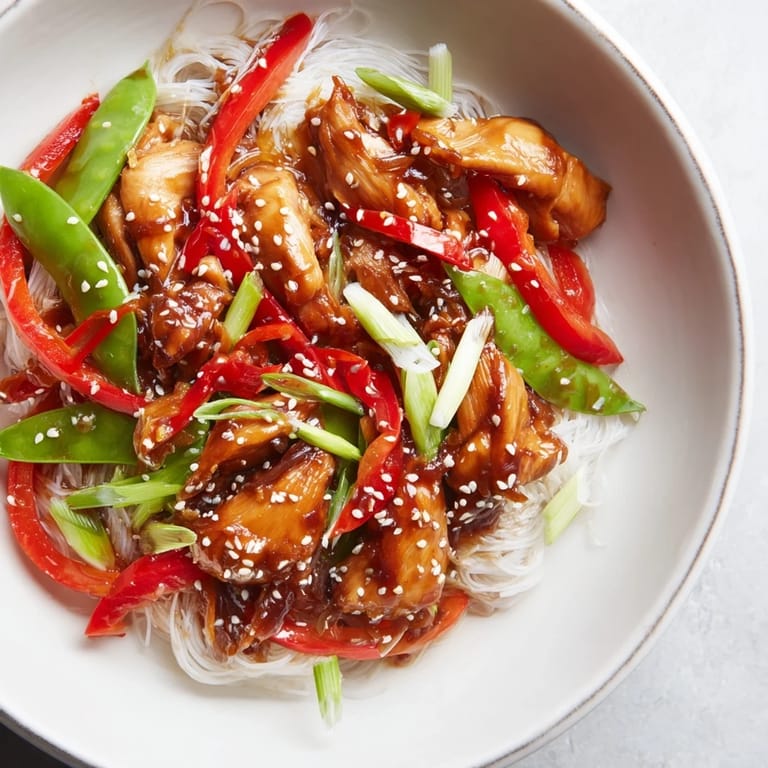
- Red bell pepper and snap peas: These stay crisp and add color and texture that keeps the dish interesting.
- Rice noodles or cooked pasta (200 g dried or 3 cups cooked): Rice noodles are traditional, but honestly, leftover spaghetti works beautifully too.
- Toasted sesame seeds: Scatter these on top right before serving for a nutty crunch and visual appeal.
Tired of Takeout? 🥡
Get 10 meals you can make faster than delivery arrives. Seriously.
One email. No spam. Unsubscribe anytime.
Instructions
- Prep your noodles:
- If using dried rice noodles, cook them according to the package, then drain and rinse with cold water so they don't stick together. Set them aside.
- Coat the chicken:
- Toss your chicken slices with cornstarch, salt, and pepper in a medium bowl until each piece is evenly coated; this is the secret to that tender, slightly crispy exterior.
- Build your sauce:
- Whisk together soy sauce, hoisin, brown sugar, water, rice vinegar, sesame oil, minced garlic, ginger, and red pepper flakes in a small bowl. Taste it and adjust to your preference—this is your moment to make it yours.
- Sear the chicken:
- Heat 1 tablespoon of oil in a large wok or skillet over medium-high heat until it shimmers, then add chicken in a single layer. Let it sit for a moment before stirring so it gets golden brown on the edges; this takes about 4-5 minutes total.
- Cook the vegetables:
- Remove the chicken to a plate, add the remaining oil, and stir-fry the bell pepper and snap peas for 2-3 minutes until they're just tender but still have a little snap to them.
- Bring it together:
- Return the chicken to the pan along with the spring onions and sauce, stirring constantly until everything is coated and the sauce thickens slightly, which should take about 1-2 minutes over the heat.
- Add the noodles:
- Toss in your cooked rice noodles and stir gently but thoroughly so every strand gets coated in that glossy sauce and heated through.
- Plate and garnish:
- Serve immediately while everything is still hot, and scatter extra spring onions and toasted sesame seeds on top for brightness and texture.
 Save
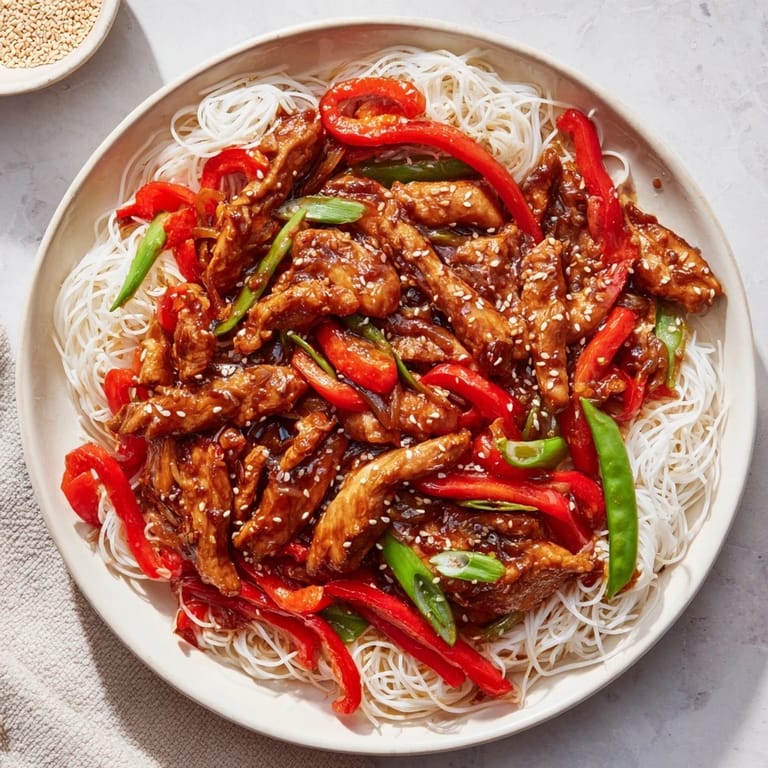
Save There's a quiet moment right after everything comes together, when you're plating and the steam rises up with that intoxicating blend of garlic, ginger, and sesame. That's when you know you've made something special, something that transcends being just dinner and becomes an experience.
Why This Works So Well
The magic of Mongolian chicken lies in the contrast: the savory-sweet sauce against the tender chicken, the crisp vegetables against the soft noodles, the toasted sesame seeds adding a final layer of nutty complexity. It's a dish that feels indulgent but comes together so quickly that it never feels like a burden to make. Every element plays a role, and nothing is there by accident.
Flexibility and Substitutions
One of the reasons I return to this recipe constantly is that it's genuinely forgiving and adaptable to whatever I have in my kitchen on any given day. Swap the chicken for tofu if you're cooking for vegetarian friends, or use shrimp if you want something lighter. The vegetables are equally flexible; water chestnuts, baby corn, broccoli, or even asparagus would all work beautifully. I've even made this with leftover roasted chicken on a night when I was particularly tired, and it was just as delicious. The sauce is the star, and as long as you don't skimp on that, you're guaranteed success.
Serving and Pairing Ideas
This dish sings on its own, but if you're looking to build a meal around it, a crisp white wine like Riesling or a light Sauvignon Blanc pairs wonderfully because of the acidity and slight sweetness. You could also serve it alongside a simple green salad or steamed bok choy if you want to add another vegetable element. For a more casual gathering, I often put everything in shallow bowls and let people help themselves, which always feels more convivial than plated meals.
- Keep extra sauce on the side in case anyone wants to drizzle more over their portion.
- Have sesame seeds and sliced spring onions at the table so people can customize their garnish.
- Make the sauce ahead of time if you're short on time; it keeps in the fridge for up to three days.
 Save
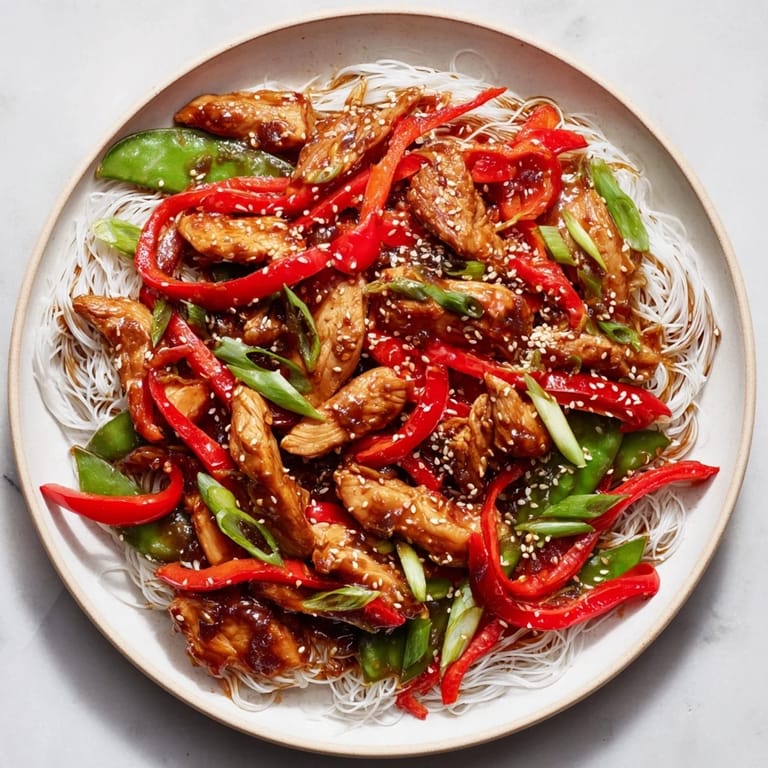
Save This recipe has taught me that simple, bold flavors executed well beat complicated techniques every time. Make this tonight and discover why it's become such a fixture in my kitchen.
Recipe FAQ
- → Can I substitute the chicken with another protein?
Yes, you can replace chicken with tofu or shrimp for different protein options while maintaining the dish’s flavors.
- → How do I prepare the rice noodles for this dish?
Cook dried rice noodles according to package directions, then rinse with cold water to stop cooking and prevent sticking.
- → Is it possible to adjust the sweetness of the sauce?
Absolutely. You can increase or decrease the brown sugar amount to tailor the sweetness to your taste preference.
- → Can I add extra vegetables for more crunch?
Yes, adding ingredients like water chestnuts or baby corn will introduce additional texture and freshness.
- → What cooking tools are recommended for this dish?
A large wok or skillet is ideal for stir-frying, along with mixing bowls, a spatula, and a strainer for noodles.
- → Are there common allergens in this dish I should be aware of?
This dish contains soy and gluten from sauces, and possibly shellfish if oyster sauce is used. Ensure to check ingredient labels for allergies.