 Save
Save I discovered this dish on a Tuesday afternoon when I was staring at a farmers market haul, thinking about how a chef I'd once watched on a grainy video made cooking look like painting. The beets were particularly vivid that week, almost too beautiful to chop, and something clicked—what if I stopped trying to arrange food conventionally and just let the colors speak for themselves? The stripe concept came from that moment of deciding less was genuinely more, and the first time I plated it, my kitchen suddenly felt like a proper studio.
The first time I made this for friends, I was nervous about the minimalism—wouldn't it feel pretentious? But watching people lean in close to examine the colors, then taste each stripe individually, I realized the simplicity was the point. One friend described it as 'edible architecture,' and that stuck with me. It was one of those rare moments where what you make matches exactly what you imagined.
Ingredients
- Beets (2 medium, peeled and diced): Choose ones with smooth skin and no soft spots; they'll puree silkier and taste sweeter when roasted slowly.
- Carrots (3 large, peeled and sliced): Fresh carrots have better color and natural sweetness; older ones can taste woody.
- Avocado (1 ripe): Should yield slightly to thumb pressure but not feel mushy; the ripeness matters for texture and taste here.
- Olive oil, lemon juice, lime juice: These aren't just flavor—they brighten each purée and keep colors from looking dull and muddied.
- Fresh ginger (1 tsp grated): The small amount is key; too much overwhelms the carrot's natural sweetness.
- Greek yogurt (2 tbsp): Adds creaminess to the avocado without making it feel heavy or oily.
- Microgreens, edible flowers, crushed pistachios, flaky sea salt: These aren't toppings—they're the final note, the thing that makes your eye stop and your mouth water.
Tired of Takeout? 🥡
Get 10 meals you can make faster than delivery arrives. Seriously.
One email. No spam. Unsubscribe anytime.
Instructions
- Roast the beets into sweetness:
- Toss diced beets with olive oil and sea salt, then spread them on a baking tray in a single layer. The oven at 400°F will caramelize their natural sugars over 30–35 minutes—you're looking for tender insides and slightly caramelized edges. The smell halfway through is a signal they're becoming something special.
- Cook carrots until they're butter-soft:
- Steam or boil the carrot slices for 15–20 minutes until a fork slides through easily, then drain and let them cool just enough to handle. Overcooking slightly here is actually fine; you want them to puree without resistance.
- Puree the beets into a silky dream:
- Place roasted beets and lemon juice in a blender and process until completely smooth, adding a splash of water only if needed. Stop and scrape the sides if texture is uneven; you're aiming for silk.
- Blend carrot and ginger into warmth:
- Combine cooked carrots, fresh ginger, butter, and salt in the food processor and blend until the texture is unified and creamy. Taste as you go; the ginger should whisper, not shout.
- Create avocado cream with precision:
- In a small bowl, mash the ripe avocado with Greek yogurt, lime juice, and a tiny pinch of salt until completely smooth and silky. Transfer immediately to a piping bag or squeeze bottle so it stays fresh and you have control over where it lands on the plate.
- Spread the beet stripe like you mean it:
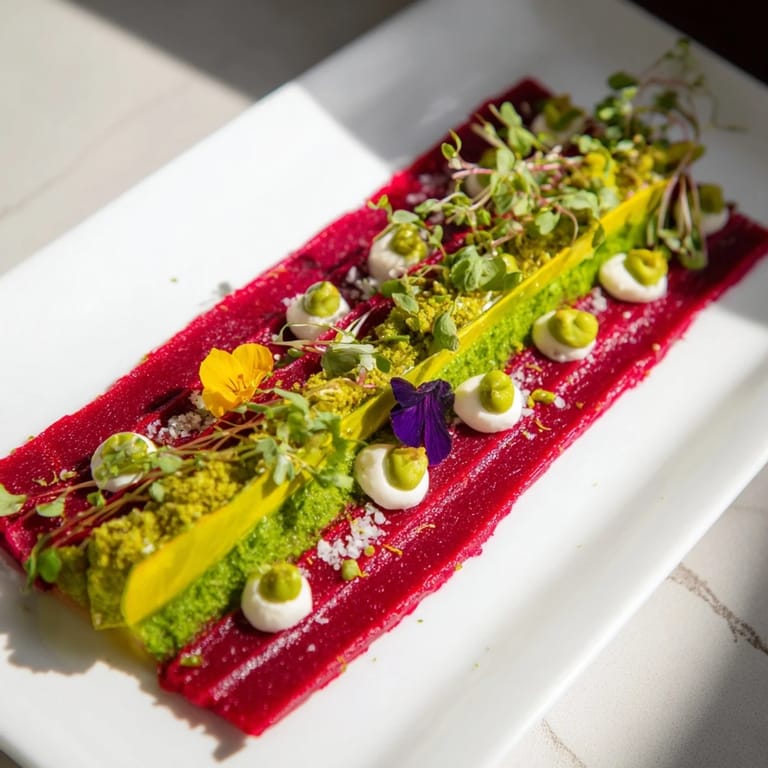
- On a clean, empty serving board or plate, use a wide offset spatula or the back of a large spoon to spread the beet puree in a thick, confident 3-inch-wide stripe down the center. The gesture matters here; let it be bold.
- Layer the remaining purées with intention:
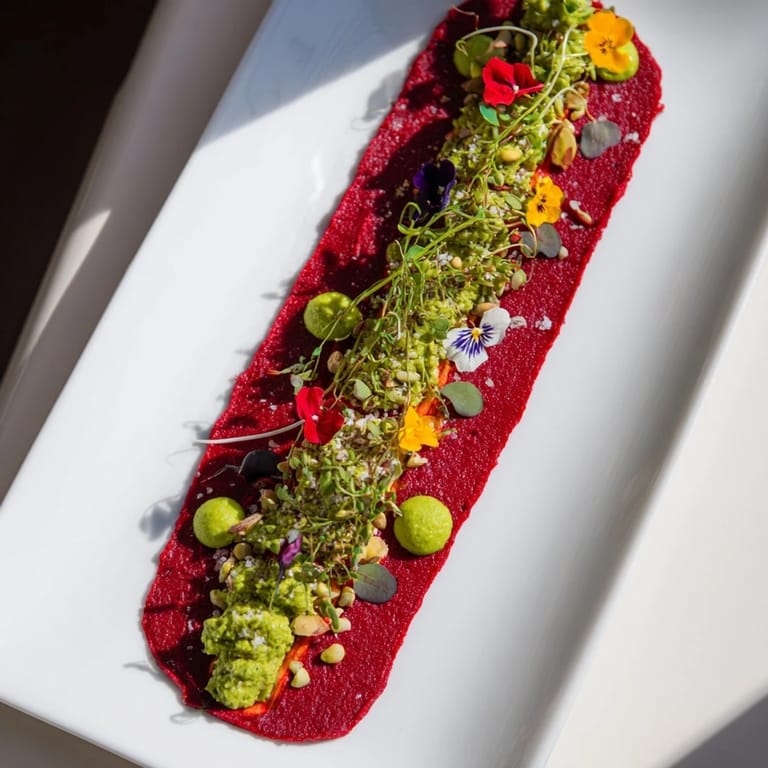
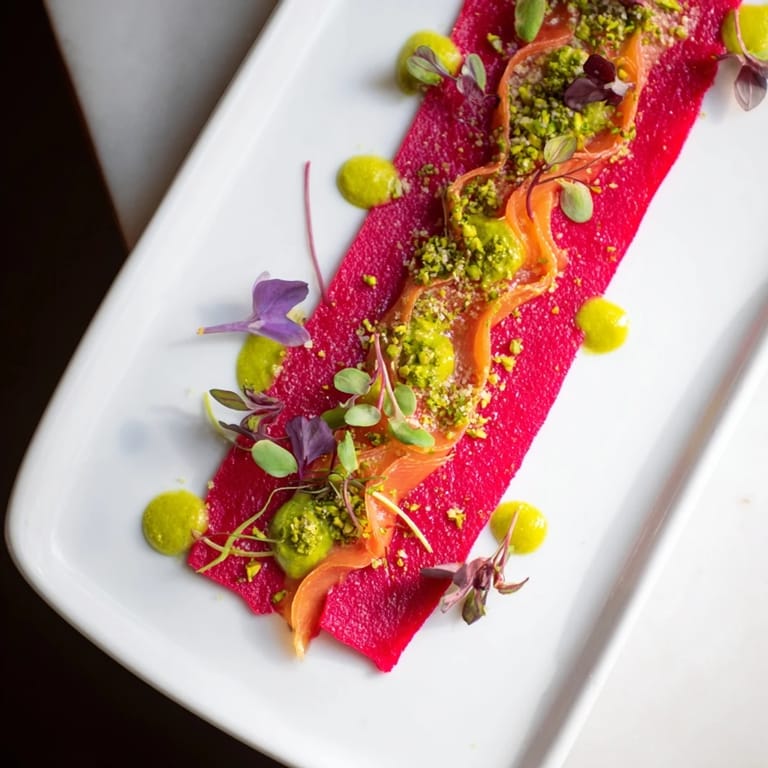
- Pipe or spread the carrot puree and avocado cream in artistic strokes or dots along the top of the beet stripe, varying the pattern so each section feels intentional. This is where you make it yours.
- Garnish like a final brushstroke:
- Scatter microgreens, edible flowers, and crushed pistachios across the stripe, then finish with a light sprinkle of flaky sea salt. Step back and look before serving.
- Serve immediately and watch people respond:
- Bring the board to the table and encourage guests to scoop directly from the stripe with bread or crackers. There's something about eating from the board that makes the whole experience feel different.
 Save
Save There's something quietly powerful about watching someone encounter food arranged like this—the hesitation before tasting, the way they look at the board like it's almost too nice to eat. That moment of permission, where you say 'go ahead, it's meant to be enjoyed,' feels like the real point of cooking.
Why the Stripe Works
The stripe isn't just visual theatrics; it's a way of organizing flavors so each one speaks clearly. The earthiness of beet, the sweetness of carrot, the cool creaminess of avocado—on a stripe, they're neighbors but not competing. You taste them individually as you eat, and that separation makes each flavor brighter than if they'd been mixed. It's what happens when you stop thinking about balance and start thinking about clarity.
Vegetables as a Canvas
This concept works because purées are honest—they're just vegetables at their most essential, without places to hide. If your carrot is mediocre, the puree will be mediocre. If your beet is mealy, you'll taste it. This is actually the joy of it; there's nowhere to hide, so you use the best vegetables you can find and let them be exactly what they are. Once you make this with good ingredients, trying it with less-good ones feels almost insulting.
Playing with Color and Flavor
The magic is in the combinations. Beet and carrot are classic, but once you understand the concept, you can build stripes from sweet potato and pea, squash and herb oils, roasted mushroom and white bean. The rule is simple: choose vegetables that purée smoothly and have contrasting colors that make you want to look at the plate. Temperature variation matters too—a warm beet stripe with a cool avocado cream creates an experience, not just a dish.
- Try pickled onions or roasted chickpeas for crunch if you want texture without overcomplicating the plating.
- A crisp Sauvignon Blanc pairs beautifully; the acidity cuts through the richness of the cream and beet's earthiness.
- Prep the purées ahead and plate just before serving so colors stay vivid and nothing oxidizes or separates.
 Save
Save Making this dish became less about impressing people and more about understanding that sometimes the best food is the simplest, and that simplicity requires more care, not less. It's a small plate with a loud voice.
Recipe FAQ
- → How should the roasted beets be prepared?
Peeled and diced beets are tossed with olive oil and sea salt, then roasted at 400°F (200°C) for 30–35 minutes until tender.
- → What is the best way to achieve smooth purées?
Using a blender or food processor ensures each purée is silky smooth by thoroughly blending ingredients with a splash of water if necessary.
- → Can the avocado cream be made vegan?
Yes, substitute Greek yogurt with coconut yogurt and use olive oil instead of butter in the carrot purée to make it vegan-friendly.
- → What garnishes complement the layered purées?
Microgreens, edible flowers, crushed pistachios, and flaky sea salt add freshness, texture, and visual appeal.
- → How should the purées be plated for the best effect?
Spread a thick stripe of beet purée down the center, then layer or pipe carrot & ginger purée and avocado cream atop in artistic strokes or dots.