 Save
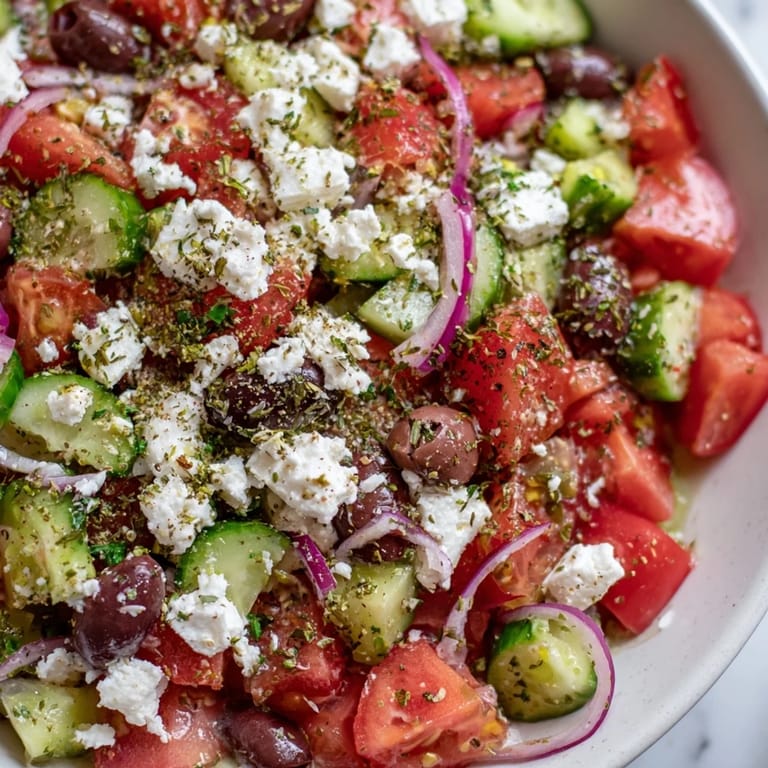
Save I discovered the magic of a proper Mediterranean salad on a sun-soaked afternoon in a small taverna overlooking the water, where the owner's daughter casually assembled this dish in minutes with the kind of confidence that comes from making it a hundred times. The simplicity struck me—no fancy techniques, just perfectly ripe tomatoes meeting their ideal companions. What made it unforgettable wasn't any single ingredient, but how the briny olives and creamy feta seemed to unlock flavors in each other. When I recreated it at home that evening, I realized I'd been overthinking salads my entire life. Now it's the first thing I make when tomatoes are at their peak.
I made this for a potluck once, slightly nervous because it seemed too simple compared to the elaborate casseroles everyone else was bringing. Within minutes, it was gone, and three people asked for the recipe before dessert was even served. That's when I stopped worrying about impressing people with complexity and started paying attention to what actually gets eaten and requested. Since then, this salad has shown up to countless gatherings, and it never fails.
Ingredients
- Ripe tomatoes: The foundation of everything—look for ones that smell sweet at the stem and give slightly when squeezed, not rock-hard supermarket tomatoes that taste like water.
- Cucumber: English cucumbers work best because they have fewer seeds and thinner skin, but regular cucumbers work fine if you scoop out the watery center.
- Red onion: Slice it thin so it mellows out but still adds that sharp bite that keeps the salad from tasting one-dimensional.
- Feta cheese: Don't buy pre-crumbled if you can help it—a block of good feta tastes brighter and holds its shape better when you break it by hand.
- Kalamata olives: Buy them pitted if your budget allows; pitting them yourself is tedious and your fingers will smell like brine for hours.
- Extra virgin olive oil: This is where you splurge a little—cheap olive oil makes the whole salad taste flat and forgettable.
- Red wine vinegar: It cuts through the richness of the oil and feta without overpowering the vegetables like stronger vinegars would.
- Dried oregano: Fresh is lovely if you have it, but dried oregano actually tastes more Mediterranean and authentic here.
Tired of Takeout? 🥡
Get 10 meals you can make faster than delivery arrives. Seriously.
One email. No spam. Unsubscribe anytime.
Instructions
- Prep your vegetables:
- Cut your tomatoes into roughly the same size pieces as your cucumber—if one is much bigger than the other, the salad feels unbalanced in your mouth. Thinly slice the onion, and don't skip this step just because it seems obvious; the thickness matters.
- Build the base:
- Toss the tomatoes, cucumber, onion, and olives together gently in your largest bowl, letting them get to know each other. Some people worry about bruising the tomatoes, but this is a sturdy salad—just use a light hand.
- Add the cheese carefully:
- Crumble or cube the feta and fold it in without manhandling it too much; you want visible pieces of cheese, not feta dust. If you've bought a block, break it with your fingers rather than chopping it for a more rustic look.
- Make the dressing:
- Whisk the olive oil, vinegar, and oregano together with salt and pepper until they're emulsified and smell absolutely fragrant. Taste as you go—the vinegar should sing without making you pucker.
- Bring it together:
- Pour the dressing over and toss with a light hand so every piece gets coated but the vegetables stay in distinct pieces. Let it sit for a few minutes before serving so the flavors meld without the vegetables getting soggy.
 Save
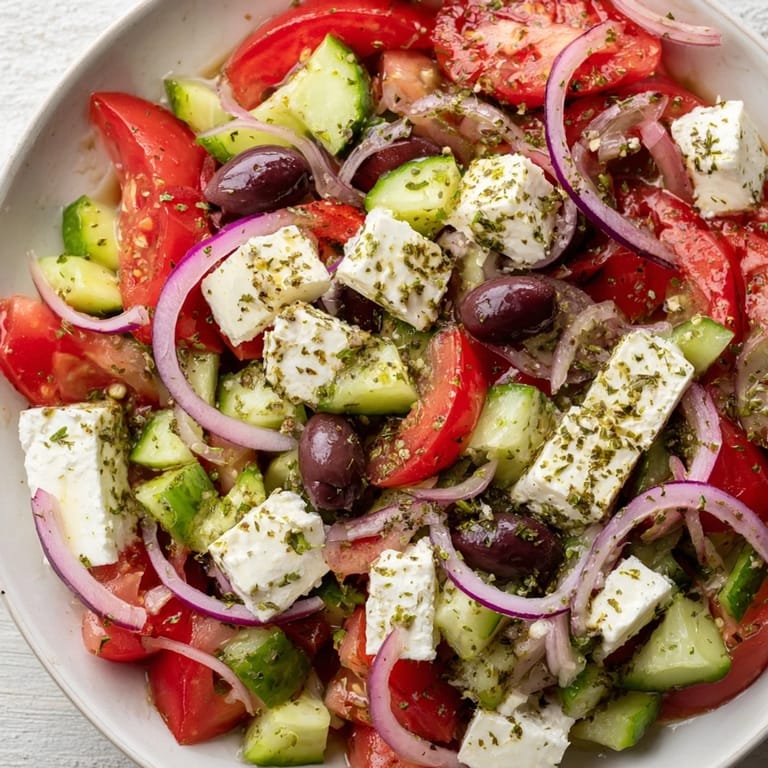
Save There's a moment when you taste this salad properly—when the briny olive, creamy feta, and sweet tomato all hit your tongue at once—that feels like summer itself. That's the moment I understood why people in Mediterranean climates eat salad for practically every meal.
What Makes This Salad Sing
The secret isn't any single ingredient but how they balance each other—the acid from the vinegar wakes up the feta's creaminess, the salt in the olives makes the tomatoes taste sweeter, and the oil carries all those flavors across your palate. It's a lesson in how vegetables cooked alone can taste boring, but the right companions make them unforgettable. I started paying attention to these relationships after making this salad dozens of times, and now I notice them in everything I cook.
When to Make This
This is peak season eating—make it when tomatoes smell like tomatoes and you can find good cucumbers. In winter, I make different salads because the vegetables aren't as kind, and there's no point pretending a pale January tomato tastes anything like August. I've learned this the hard way by stubbornly making this salad year-round and being disappointed every single time in the colder months.
Serving Suggestions and Variations
Serve this immediately with crusty bread, or let it sit as a side dish to grilled fish or chicken that's hot and smoky while the salad stays cool and bright. I've added bell peppers for color, capers for extra briny complexity, and even chickpeas when I wanted to turn it into a proper meal. The beauty is that you can play around without breaking anything fundamental—it's forgiving that way.
- A glass of chilled Sauvignon Blanc beside it tastes like a good decision.
- If you're making it ahead for an event, dress it just before guests arrive to keep it fresh.
- Crumbled feta mixed with a tiny bit of lemon juice beforehand adds brightness if you're not a fan of red wine vinegar.
 Save
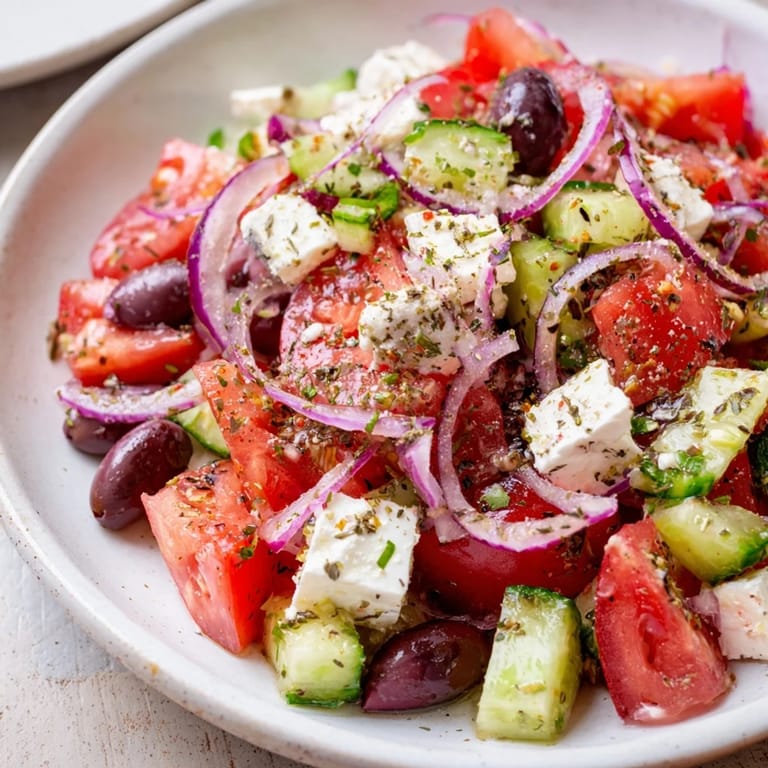
Save This salad has quietly become the recipe people remember me for, which delights me more than any complicated dish ever could. Sometimes the most rewarding cooking is the simple kind.
Recipe FAQ
- → What olives work best for this salad?
Kalamata olives are ideal due to their briny, fruity flavor which complements the vegetables and feta perfectly.
- → Can I make this salad ahead of time?
It’s best served fresh, but you can prepare ingredients in advance and dress the salad just before serving to maintain texture.
- → Is there a good substitute for feta cheese?
Vegan feta or firm tofu with a light seasoning can work as alternatives for those avoiding dairy.
- → How should the salad be served?
Serve chilled or at room temperature, garnished with fresh parsley or mint for added aroma and color.
- → What variations can enhance this salad?
Adding sliced bell peppers or capers can bring extra flavor dimensions to the dish.