 Save
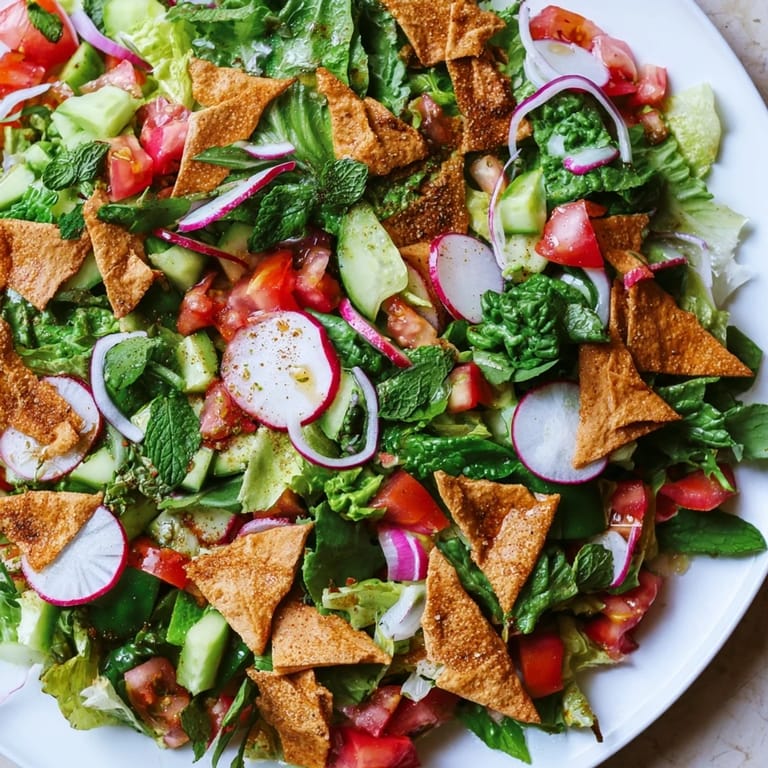
Save There's something almost musical about the way a fattoush salad comes together—the snap of fresh greens, the crisp shatter of warm pita chips, the bright burst of herbs releasing their oils as you toss everything in that golden, tangy dressing. I discovered this salad while sitting in a noisy Beirut café on a summer afternoon, watching the cook assemble plate after plate with the kind of relaxed confidence that comes from making the same thing a thousand times. What struck me most wasn't any single ingredient but how humble they all were—tomatoes, cucumbers, things you could find anywhere—and yet together they tasted like sunlight had a flavor.
I once made this for a friend who claimed she didn't like salad—she was the type who picked at leaves like they personally offended her. But something about the way those warm pita chips broke against the cool, crisp greens, the way the herbs made everything taste alive, shifted something in her. She went back for seconds. That's when I realized this wasn't really a salad in the traditional sense; it was more like edible architecture, each element serving a real purpose.
Ingredients
- Mixed greens (romaine, arugula, or purslane), 2 cups: The base should taste fresh and slightly peppery if you use arugula, or mild if you stick with romaine. Purslane, if you can find it, adds a slightly tangy, succulent note that's traditionally Lebanese.
- Tomatoes, 2 medium: Use the ripest ones you can find—mealy tomatoes will make the whole salad feel sad. Dice them just before assembling so they don't weep into the greens.
- Cucumber, 1 large: A crisp, cool contrast that keeps the salad refreshing. Peel it in strips if you like, or leave the skin on for color and texture.
- Radishes, 4: These little guys provide peppery heat and that crucial crunch factor. Don't skip them.
- Red onion, 1 small: Slice it thin so it doesn't overpower, but don't leave it out—it adds a subtle bite that wakes everything up.
- Fresh parsley, ½ cup: The workhorse herb here. Use the flat-leaf kind if possible; it has more flavor than the curly stuff.
- Fresh mint, ¼ cup: Just a whisper of coolness that balances the brightness of the lemon and sumac.
- Pita bread, 2 pieces: The quality matters here. Good pita will puff and crisp beautifully; cheap pita will just turn bitter.
- Olive oil, 5 tbsp total: Use your best extra-virgin for the dressing. You taste it directly, so cheap oil ruins everything.
- Lemon juice, 2 tbsp: Fresh squeezed, always. Bottled tastes tinny and defeats the whole purpose.
- Red wine vinegar, 1 tbsp: A small amount adds depth without making it taste like a pickle.
- Ground sumac, 1–1½ tsp: This is the secret weapon—tangy, slightly fruity, with a color that makes the dressing look almost alive. If you can't find it, skip the recipe entirely and look for it because nothing else tastes the same.
- Garlic, 1 clove: Just one, minced fine. Garlic powder tastes flat and sad here.
- Sea salt and black pepper, to taste: Taste as you go and don't be shy with the salt.
Tired of Takeout? 🥡
Get 10 meals you can make faster than delivery arrives. Seriously.
One email. No spam. Unsubscribe anytime.
Instructions
- Crisp the pita to golden perfection:
- Preheat your oven to 375°F and cut the pita into bite-sized pieces—squares or triangles, whatever feels right in your hands. Toss them with olive oil and sea salt until every piece looks lightly coated, then spread them on a baking sheet in a single layer and bake for 8–10 minutes until they're golden and the kitchen smells warm and toasted. Let them cool on the sheet while you do everything else; they'll continue crisping as they cool.
- Build the salad base:
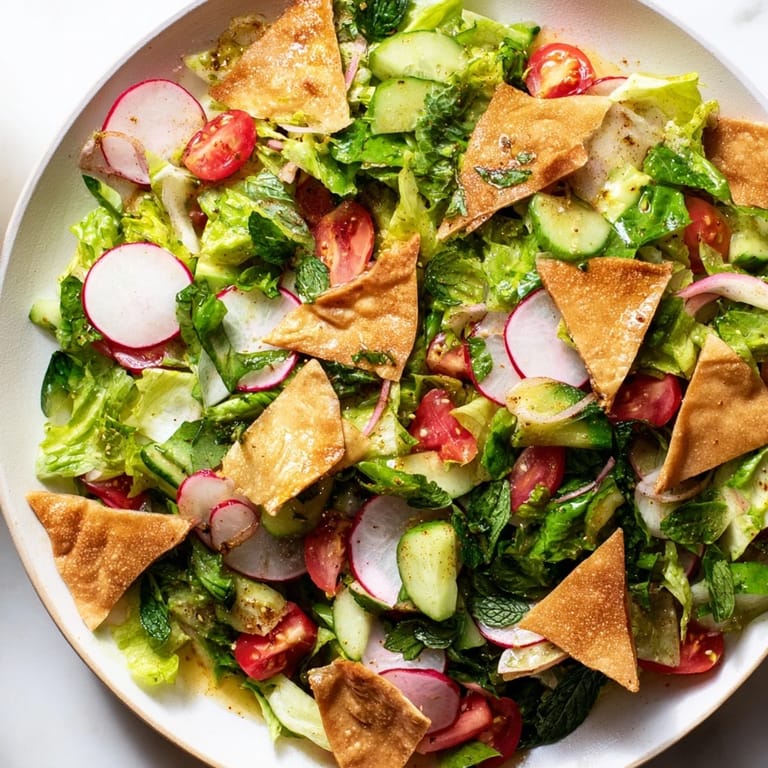
- In your largest salad bowl, combine the mixed greens, tomatoes, cucumber, radishes, red onion, parsley, and mint. Don't toss it yet—just let everything settle together loosely so you can see the colors.
- Wake up the dressing:
- In a small bowl, whisk together the olive oil, fresh lemon juice, red wine vinegar, sumac, minced garlic, salt, and pepper until it looks emulsified and tastes bright enough to make you smile. Taste it and adjust—if it needs more tang, add a squeeze more lemon; if it needs more punch, add a bit more sumac.
- Bring it together just before eating:
- Add those cooled pita chips directly to the salad bowl and immediately pour the dressing over everything. Toss gently but thoroughly so every leaf gets coated without bruising the vegetables. The pita chips should have just enough time to soften slightly while staying mostly crispy.
- Taste and serve right away:
- Do a final taste check and add more salt or pepper if needed. Serve immediately while the pita still has that satisfying crunch against the cool, fresh vegetables.
 Save
Save I remember my grandmother insisting that a proper fattoush was never made in advance, never fussed over, never overthought. She'd pull greens from her garden, chop things quickly and roughly, toss in those warm chips with almost careless confidence, and somehow it was always perfect. She taught me that this salad isn't about precision—it's about freshness and speed and knowing when to stop.
The Magic of Sumac
Sumac is like the secret handshake of Middle Eastern cooking. It's a deep burgundy spice made from dried berries, and it tastes tangy and slightly fruity without being sour. If you've ever had fattoush that tasted impossibly bright and alive, sumac was doing most of the work behind the scenes. It looks beautiful too—that dusty maroon color against the green and red of the salad is half the appeal.
Making It Your Own
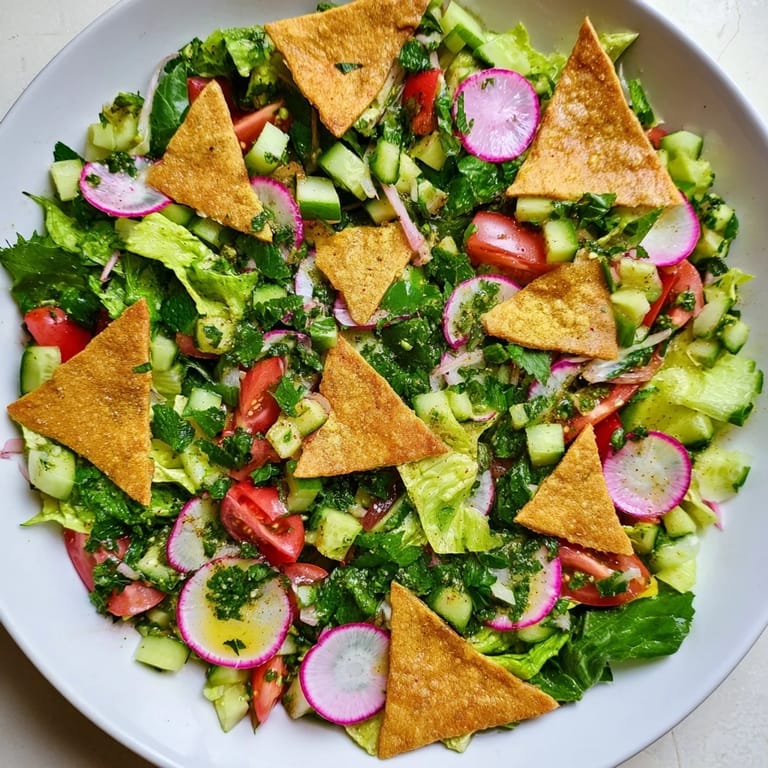
The beauty of fattoush is that it's endlessly flexible. Some people add diced bell pepper for sweetness, others throw in green onions for extra allium punch, and I've seen versions with zucchini or even cooked chickpeas if someone wanted to make it more substantial. The core—fresh herbs, crispy chips, tangy dressing—stays the same, but everything else is negotiable.
Serving and Storing
This salad is best eaten immediately, the moment you toss it together, when the contrast between warm chips and cool greens is at its peak. If you have leftovers (rare in my experience), store the components separately—greens in one container, chips in another, dressing in a jar—and assemble only what you'll eat fresh. It's not a salad that improves with time, but it's so quick to make that you might as well just start from scratch.
- Serve this as a light main course with grilled meat or fish alongside, or as part of a mezze spread with hummus, baba ganoush, and flatbread.
- In summer, when vegetables taste like themselves, this salad becomes almost meditative.
- Double or triple the dressing if you're serving more people—the herb combinations stay the same, just scale everything up.
 Save
Save This is the kind of salad that reminds you why fresh, simple food is worth the tiny effort it takes to make. It tastes like someone who loves you is feeding you.
Recipe FAQ
- → What gives Fattoush its signature tangy flavor?
The tangy flavor comes from ground sumac combined with lemon juice and red wine vinegar in the dressing, creating a bright and zesty taste.
- → How can I make pita chips crisp and flavorful?
Cut pita into bite-sized pieces, toss with olive oil and sea salt, then bake at 375°F until golden and crispy, about 8–10 minutes.
- → Can I customize the greens in this salad?
Absolutely. Typical greens include romaine, arugula, or purslane, but feel free to use your preferred fresh mixed greens.
- → Is there a way to add more crunch to the salad?
Besides the pita chips, adding diced bell peppers or green onions can provide extra crunch and freshness.
- → How should the dressing be combined for best flavor?
Whisk olive oil, lemon juice, red wine vinegar, sumac, minced garlic, salt, and pepper thoroughly to emulsify and blend all flavors before tossing with the salad.