 Save
Save There's something about assembling a rice bowl that feels like creating a small edible landscape. My first proper donburi moment came on a rainy Tuesday when I was tired of eating the same things, so I grabbed leftover salmon from the fridge and decided to make it into something intentional. The way the proteins, vegetables, and rice all came together—each component distinct but meant for the same spoon—felt almost meditative. Now I make this bowl constantly, especially when I need something nourishing but don't want to spend all evening cooking.
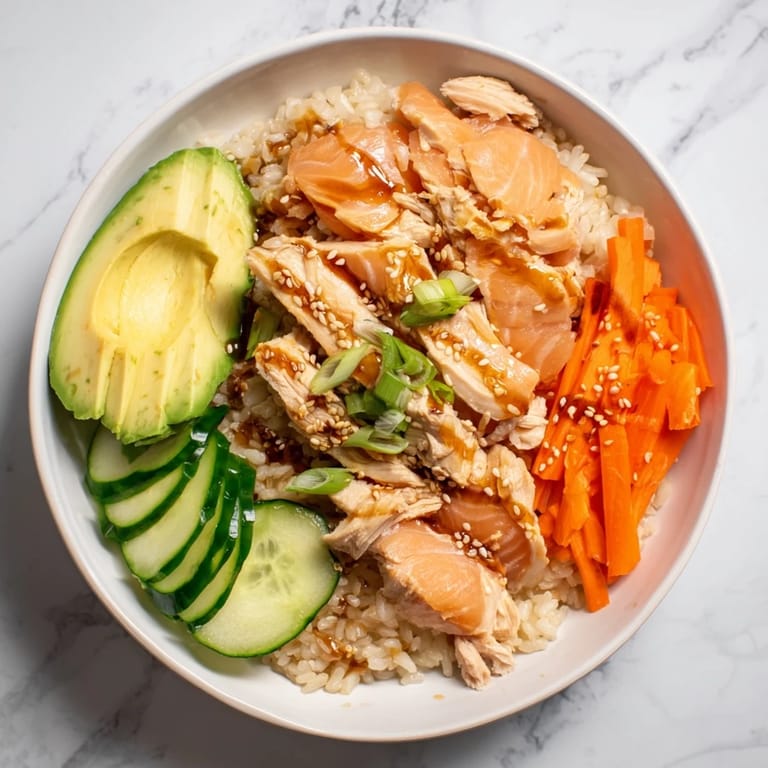
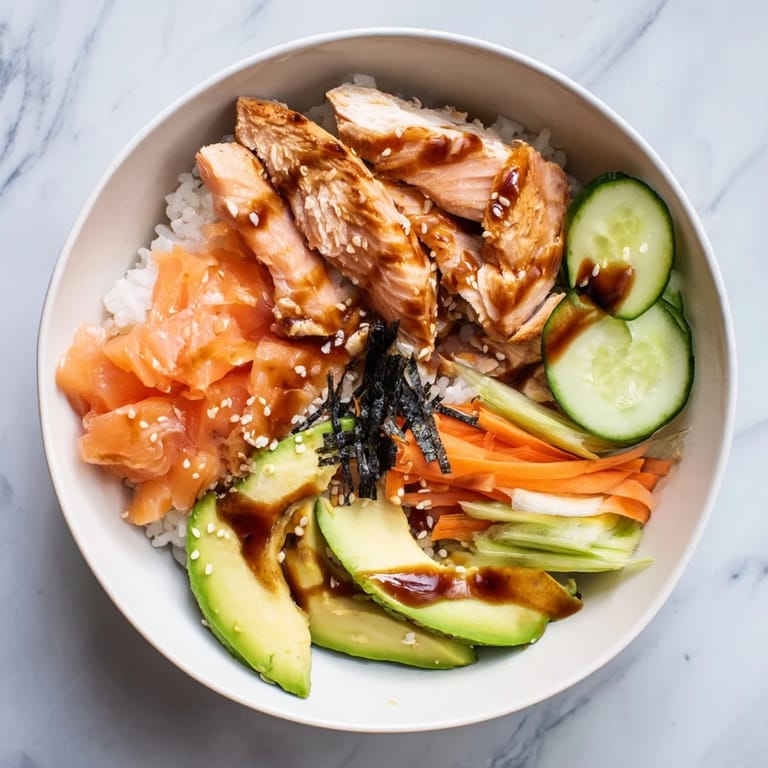
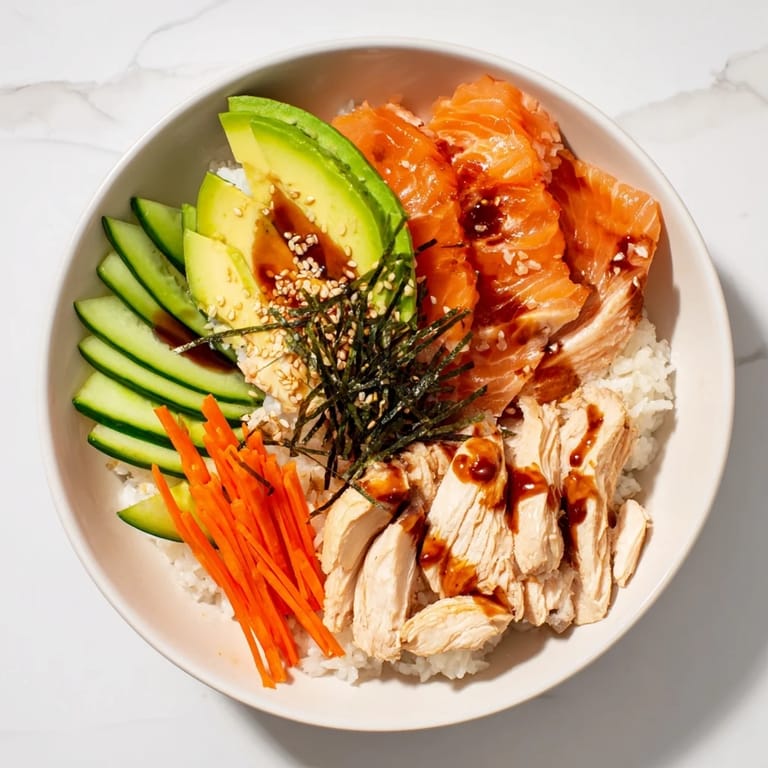
I made this for my sister one Saturday morning when she was stressed about work, and watching her slow down while eating it reminded me why I love food like this. The colors alone seem to calm people down—the pink salmon, the green avocado, those bright orange carrot ribbons against white rice. She asked for the recipe before she'd even finished her bowl.
Ingredients
- Salmon fillets (2, about 300g total): Look for wild-caught if you can—the flavor is noticeably different, and the color is deeper. Pat them dry before cooking so they get a gentle crust instead of steaming.
- Boneless, skinless chicken thighs (2, about 250g total): Thighs stay tender even if you slightly overcook them, which makes them forgiving for weeknight cooking.
- Japanese short-grain rice (2 cups): This rice is stickier than long-grain, which matters for a bowl—it holds together and doesn't scatter across your plate.
- Soy sauce (3 tbsp for marinade, 2 tbsp for sauce): Use good quality soy sauce if you have it; you'll taste the difference in both the marinade and the final drizzle.
- Mirin (1 tbsp): This adds a subtle sweetness that balances the salty soy without being obvious about it.
- Sake or dry white wine (1 tbsp): Sake deepens the flavor, but white wine works if that's what you have—don't overthink this swap.
- Sesame oil (1 tsp for marinade, 1 tsp for sauce): A little goes far with sesame oil; it's about the warmth it brings, not drowning everything in it.
- Honey (1 tsp): This rounds out the marinade and helps the proteins glaze slightly as they cook.
- Rice vinegar (1 tbsp): Vinegar brightens the sauce and cuts through the richness of the salmon and avocado.
- Avocado (1 ripe one): Pick one that gives slightly to pressure but isn't mushy—you want it sliceable, not broken into chunks.
- Cucumber (1 small one, thinly sliced): The fresh crunch here is essential; it's your textural contrast against the soft proteins.
- Carrot (1 medium, julienned): Raw carrots add sweetness and crunch—they're not just decoration, they matter to how the bowl tastes.
- Scallions (2, finely sliced): Save some of the white parts for cooking and use the green tops as your final garnish for color and a tiny bite of sharpness.
- Toasted sesame seeds (2 tbsp): Toast them yourself if you can—the smell alone will make you hungry.
- Nori (1 sheet, cut into strips): Optional but recommended; those thin strips add an umami whisper that ties everything together.
- Sugar (1/2 tsp): Just enough to soften the vinegar's edge in the sauce.
- Ice cubes (4): This might sound odd, but trust the hack—they're your secret to not ruining yesterday's rice bowl.
Tired of Takeout? 🥡
Get 10 meals you can make faster than delivery arrives. Seriously.
One email. No spam. Unsubscribe anytime.
Instructions
- Prepare the rice:
- Rinse the rice under cold water until the water runs clear—this removes excess starch so your rice stays separate and fluffy instead of gluey. Cook it in a rice cooker or saucepan with 2 1/2 cups water, then let it steam undisturbed, which is when all the magic actually happens.
- Make the marinade:
- Whisk soy sauce, mirin, sake, sesame oil, and honey together in a small bowl until the sugar dissolves completely. Divide this between two shallow dishes and add salmon to one, chicken to the other, then let them sit for at least 10 minutes while you prep everything else.
- Cook the chicken:
- Heat your nonstick skillet over medium heat and add the chicken thighs skin-side down if they still have skin, or just laid flat if they don't. Cook for 4 to 5 minutes per side until the outside is golden and the inside is cooked through—you're looking for that gentle browning that means flavor.
- Cook the salmon:
- In the same pan (no need to clean it, those browned bits add flavor), add your salmon fillets. Cook for just 2 to 3 minutes per side—salmon is forgiving up until the moment it becomes tough, so watch carefully and pull it when it still looks barely opaque in the center.
- Prepare toppings:
- While the proteins rest and cool slightly, slice your avocado lengthwise, remove the pit, and slice into half-moons. Slice cucumber thin on a mandoline if you have one, julienne your carrot into thin matchsticks, and slice your scallions at an angle so they look intentional.
- Make the sauce:
- Whisk together soy sauce, rice vinegar, sesame oil, and sugar until smooth and the sugar has completely dissolved into the liquid. Taste it and adjust—if it feels too salty, add a splash of water; if it's too vinegary, add a bit more sesame oil.
- Assemble the bowls:
- Divide your fluffy rice among four bowls, then arrange the cooked chicken and salmon over the top along with your avocado, cucumber, carrot, and scallions in whatever pattern feels right. Drizzle the sauce over everything and finish with a shower of sesame seeds and those strips of nori if you're using them.
- The ice cube hack (for reheating):
- If you're eating these later and need to reheat, place a single ice cube right in the center of the rice, cover the bowl with a microwave-safe lid or even plastic wrap, and microwave on high for 1 to 2 minutes. The ice melts slowly and steams the rice from the inside, keeping it moist instead of rubbery—remove any remaining ice before you eat.
 Save
Save My friend once told me that eating this bowl made her feel like she was taking care of herself, which stuck with me. There's something about having protein, vegetables, and good rice all together that feels intentional instead of random.
Why the Components Matter Together
Each element in this bowl has a reason for being there. The salmon and chicken give you two different textures and flavors—salmon is rich and fatty, chicken is lean and mild. The avocado softens everything with creaminess, the vegetables add crunch and brightness, and the rice is the quiet anchor that holds it all. The sauce ties it together, and honestly, that's when you realize why donburi bowls have been popular for centuries.
Timing and Make-Ahead Strategy
The smart way to handle this is to cook the rice first thing, then while it's doing its thing, marinate and cook the proteins. By the time your rice is fluffy, your proteins are rested and ready. You can absolutely prep the vegetables while the proteins cook, which means the whole thing comes together in one smooth motion. If you're making these for meal prep, cook everything, assemble the bowls, and store them covered in the fridge—the ice cube hack is genuinely your friend when reheating the next day.
Variations and Substitutions
The beauty of a rice bowl is that it's endlessly adaptable without losing its soul. You can swap proteins around—tofu works beautifully if you want to go vegetarian, or you could use shrimp, tuna, or even leftover rotisserie chicken. The vegetables are also flexible; if you don't love cucumber, use more carrot or add some thinly sliced radish for a peppery bite. Edamame or steamed broccoli can replace the avocado if you want something different, and honestly, sriracha or pickled ginger on the side transforms the whole eating experience.
- Try swapping the sake for mirin if you want a slightly sweeter marinade without the alcohol taste.
- If nori feels too intense, skip it—but if you love umami, use it generously.
- Leftover proteins work here too, so this is a perfect way to use up bits from other meals.
 Save
Save This bowl has become my answer to the question of what to make when I want something that feels effortless but still nourishing. It's the kind of meal that reminds you why cooking for yourself matters.
Recipe FAQ
- → What is the purpose of the ice cube in reheating?
The ice cube slowly melts during microwaving, steaming the rice to maintain moisture and prevent dryness.
- → Can other proteins be used instead of salmon and chicken?
Yes, tofu or other preferred proteins can be substituted to suit dietary preferences.
- → What type of rice works best for this bowl?
Japanese short-grain rice is ideal due to its sticky texture which holds well under toppings.
- → How long should the proteins be marinated?
Marinate salmon and chicken for at least 10 minutes to absorb the flavors fully.
- → Are there any suggested vegetable alternatives?
Avocado can be swapped for edamame or steamed broccoli to vary the bowl’s freshness.