 Save
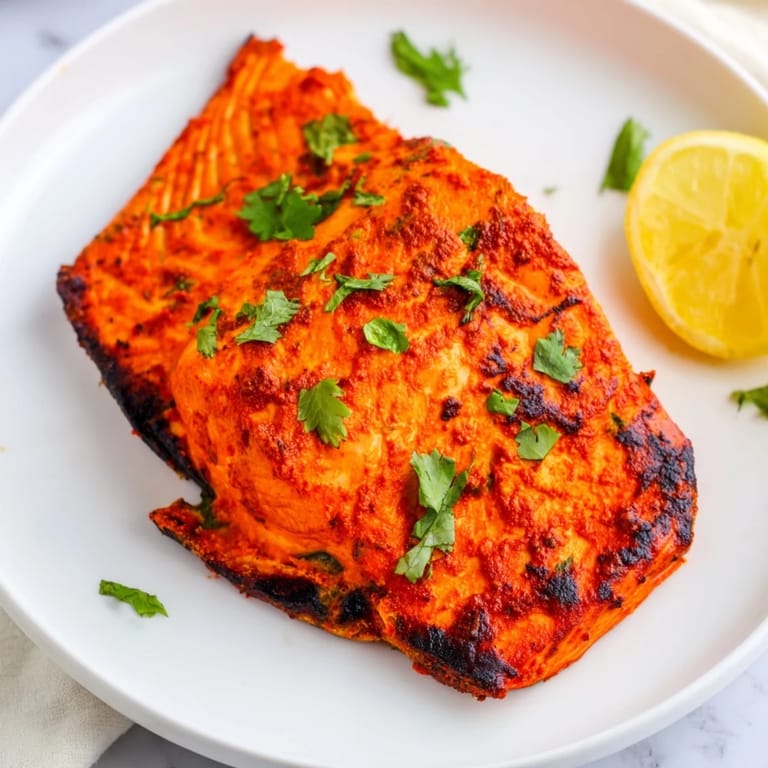
Save I discovered this recipe on a Tuesday evening when I had salmon thawing on the counter and absolutely nothing in my fridge that felt exciting. My friend had raved about tikka salmon at a restaurant, describing how the spices clung to the fish in this beautiful golden crust, and I thought, why not attempt it at home? Twenty minutes later, with a bowl of yogurt and spice paste doing the heavy lifting, I realized this might be the easiest weeknight dinner that actually tastes like you tried.
The first time I made this for my partner, I was nervous about whether homemade tikka paste would taste anything like the restaurant version. But the moment we bit into it, the warmth of the cumin and coriander with that slight smoky paprika hit differently than I expected. He asked for seconds before I'd even finished plating, and that's when I knew this recipe was staying in rotation.
Ingredients
- Salmon fillets (4, about 150 g each): Choose ones that are roughly the same thickness so they cook evenly; thinner edges won't dry out while waiting for thicker parts to finish.
- Plain yogurt (3 tbsp): This is your binding agent and it keeps the fish incredibly moist, so don't skip it or substitute with sour cream which will add unwanted tang.
- Tikka masala paste (2 tbsp): This is the flavor anchor, so use a decent quality one; the spice complexity does most of the heavy lifting for you.
- Lemon juice (1 tbsp): Freshly squeezed makes a real difference in brightness and helps balance the richness of the yogurt.
- Ground cumin and ground coriander (1 tsp each): These two together create that warm, earthy Indian spice foundation that makes people wonder what your secret is.
- Smoked paprika (½ tsp): This adds gentle smoke without overwhelming heat, perfect for letting the fish shine through.
- Chili powder (½ tsp): Start with this amount and adjust upward if you love heat; you can always add more but you can't take it back.
- Olive oil (1 tbsp): Helps the spices distribute evenly and prevents the marinade from drying out during roasting.
- Salt and black pepper: Season deliberately because the yogurt and paste aren't heavily salted on their own.
- Lemon wedges and fresh coriander for serving: These aren't optional extras—they brighten every bite and add freshness that completes the whole experience.
Tired of Takeout? 🥡
Get 10 meals you can make faster than delivery arrives. Seriously.
One email. No spam. Unsubscribe anytime.
Instructions
- Heat your oven and prepare your workspace:
- Set the oven to 220°C and line your tray with parchment paper or foil. This takes about two minutes but saves you from the stress of scrubbing later.
- Make your marinade in one bowl:
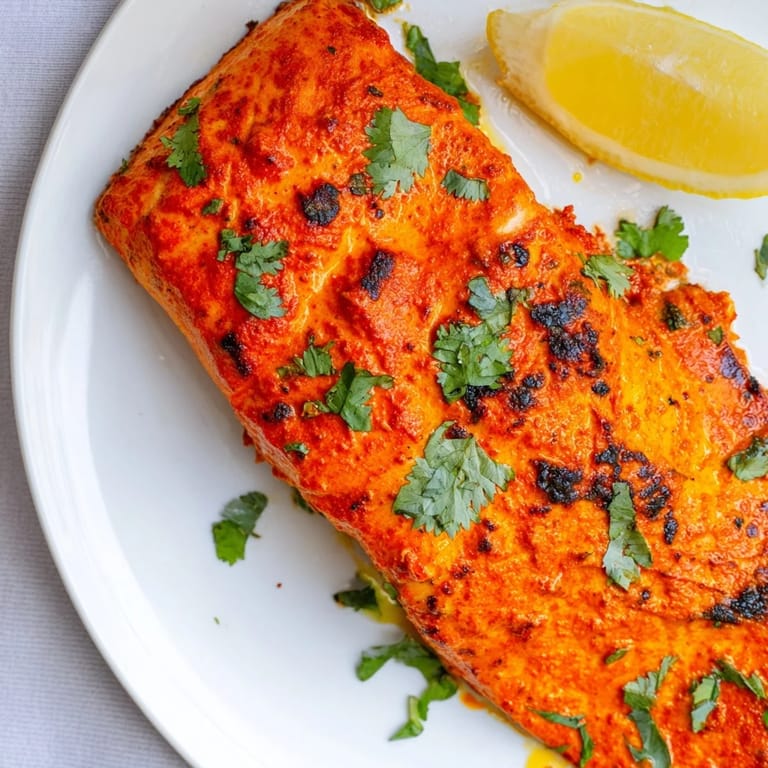
- Whisk together the yogurt, tikka paste, lemon juice, cumin, coriander, paprika, chili powder, olive oil, salt, and pepper until the mixture is smooth and the spices are evenly distributed. You'll notice the color shift from cream to this beautiful warm orange-brown.
- Dry your salmon properly:
- Pat each fillet with paper towels until the surface feels dry to the touch. This step actually matters because it helps the marinade stick and the fish get that gentle crust.
- Coat the salmon generously:
- Using the back of a spoon, spread the marinade over each fillet, making sure to cover the top and sides. Don't be shy; this is where all your flavor is hiding.
- Let it sit if you have time:
- Even ten minutes makes a difference, but if you have thirty minutes or more, the flavors will deepen noticeably. Pop it in the fridge if you're waiting.
- Roast until cooked through:
- Place the tray in your preheated oven and roast for fifteen to eighteen minutes. The salmon is ready when it flakes easily with a fork and the edges have turned a slightly deeper golden color.
- Finish with brightness and serve:
- Plate immediately while hot, scatter fresh coriander over the top, and squeeze lemon wedges over each piece. The warmth and aroma hitting your face when you lean over the plate is the whole point.
 Save
Save There was an evening last month when I made this for my sister who'd been stressed about work, and she just sat there quietly eating, not talking much, but then halfway through she looked up and said this was exactly what she needed. Food doesn't always have to be complicated to mean something.
What Makes This Recipe Work
The genius of this dish is that you're using yogurt and spice paste to do almost all the work for you. The yogurt tenderizes the salmon while also preventing it from drying out during roasting, which is the main thing people worry about when cooking fish. The tikka paste brings an entire flavor profile in one ingredient, so you're not standing at your spice cabinet for ten minutes measuring things. Combined with just a few warm spices to round it out, you end up tasting homemade and complex without the actual complexity.
Serving and Pairing Ideas
I usually serve this with basmati rice because the grain soaks up the spiced juices that pool on the plate, making every bite richer than you'd expect. A simple cucumber salad on the side cuts through the richness beautifully, or if you want something heartier, warm naan bread is perfect for soaking up every last bit of the marinade. Even a basic green salad dressed with lemon and oil works if you're keeping it light.
Flexibility and Substitutions
This recipe isn't rigid, which is one reason I keep coming back to it. If you don't have tikka paste, you can use a good quality curry paste and adjust the other spices accordingly. The salmon can be swapped for cod, halibut, or even firm white fish, though they'll cook slightly faster so watch them carefully. For a plant-based version, thick slabs of tofu or even hearty vegetables like cauliflower steaks marinate beautifully in the same mixture and roast with similar results.
- Dairy-free cooking is simple: substitute plant-based yogurt and the flavor remains nearly identical.
- If you love char and crust, finish under the broiler for the last minute or two to deepen the edges.
- Double the marinade if you're cooking for more people and want extra to drizzle over rice or vegetables.
 Save
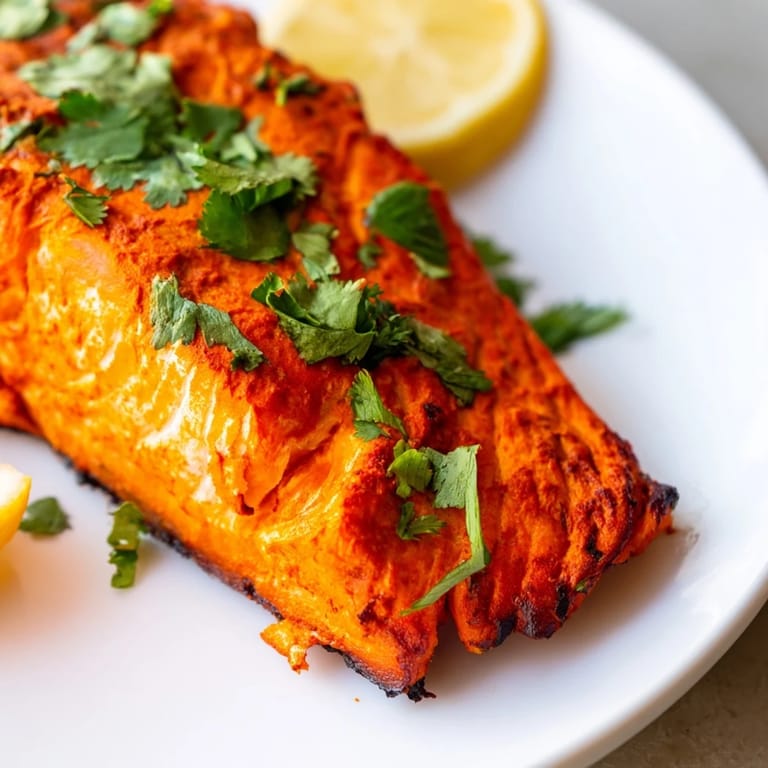
Save This recipe has become my go-to proof that weeknight cooking doesn't have to mean boring. It's the kind of meal that tastes like you spent hours in the kitchen when really you just mixed a bowl and turned on the oven.
Recipe FAQ
- → Can I use skin-on salmon for this dish?
Yes, skin-on salmon works well and can add extra crispness when roasted. Adjust cooking times slightly if needed.
- → How long should the salmon marinate for best flavor?
Marinating for at least 10 minutes is sufficient, but up to 1 hour in the fridge intensifies the spice infusion.
- → Can the chili powder level be modified?
Absolutely, adjust according to your heat preference to keep the dish balanced and enjoyable.
- → What can I serve with the salmon?
This salmon pairs beautifully with basmati rice, naan bread, or a refreshing cucumber salad to complement the spices.
- → Is it possible to substitute the salmon with another protein?
Yes, white fish like cod or haddock, or even firm tofu can be used as alternatives with similar preparation.