 Save
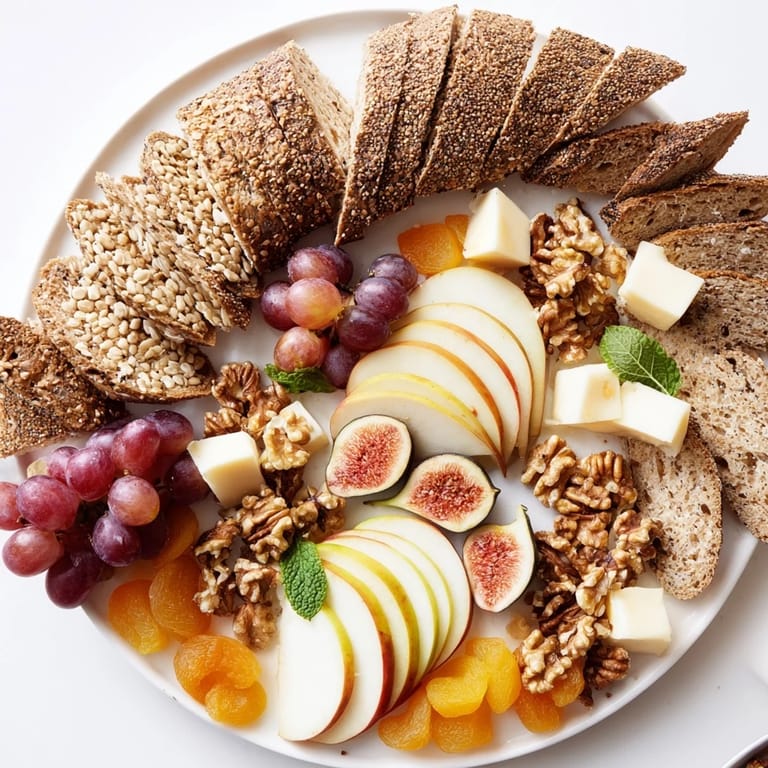
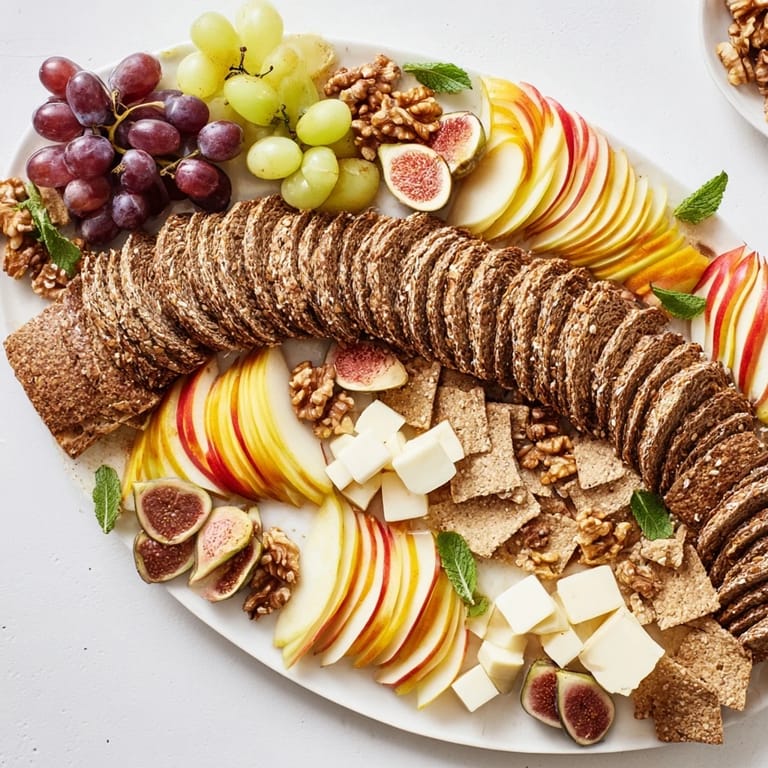
Save I first assembled The Harvest Scythe on a crisp September afternoon when a friend showed up with a basket of farmer's market finds and suggested we do something more memorable than just arranging cheese on a board. The way the late-day light caught the golden baguette slices and glistening grapes as we curved them across the wooden platter felt less like cooking and more like painting. That's when it clicked for me: a platter doesn't have to be fussy to feel special, it just needs intention and a little visual poetry. This arrangement has become my go-to whenever I want to celebrate good ingredients without spending hours in the kitchen.
I remember serving this at a potluck where someone's eight-year-old daughter stood there studying the platter like it was museum art before reaching for a pear slice, and her older brother actually tried the rye bread without being asked. That moment told me something: when food is arranged with care and looks like it belongs in a storybook, people engage with it differently. They slow down, they explore, they try things they might normally skip over.
Ingredients
- Sliced baguette: The backbone of your platter, sturdy enough to hold spreads but tender enough to tear easily with one hand while mingling.
- Multi-grain crackers: They add texture contrast and hold up beautifully to the weight of cheese or jam without breaking.
- Seeded rye bread: The dark, earthy slices create visual depth and introduce a subtle nuttiness that surprises people who usually skip bread.
- Cooked and cooled farro or barley: This creates the 'field' effect visually and adds a chewy, grain-forward element that makes the platter more substantial than fruit and bread alone.
- Seedless red grapes: They're reliable, colorful, and the juiciness cuts through the richness of cheese and bread perfectly.
- Sliced pears and apples: Fresh, crisp, and they stay vibrant for hours if you toss them with a squeeze of lemon juice right before arranging.
- Dried apricots: They concentrate sweetness and add a chewy contrast that people keep reaching for.
- Fresh or dried figs: These are your 'wow' ingredient, elegant and slightly luxurious, they elevate the whole platter.
- Brie and aged cheddar: Brie is mild and approachable, cheddar is bold; together they give people flavor options without overwhelming the fruit and grain.
- Honey or fig jam: A little drizzle transforms simple bread into something more indulgent.
- Fresh mint and roasted nuts: Mint brings a cool brightness, nuts add crunch and warmth that balances the soft elements.
Tired of Takeout? 🥡
Get 10 meals you can make faster than delivery arrives. Seriously.
One email. No spam. Unsubscribe anytime.
Instructions
- Set your stage:
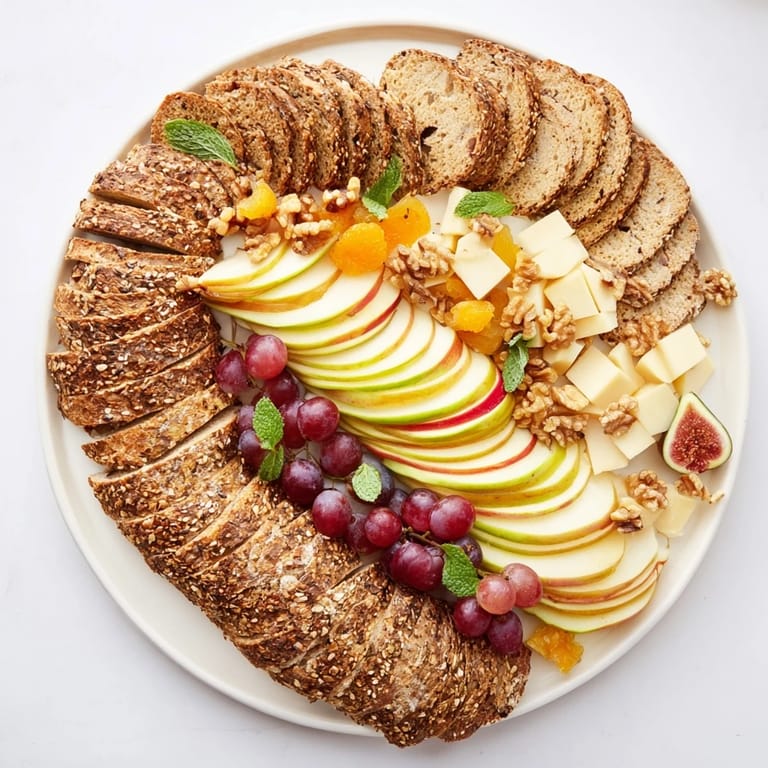
- Choose a large wooden board or neutral platter, something that lets your ingredients be the stars. Take a breath and imagine a scythe's curved blade sweeping across the surface from one corner to the opposite side.
- Create the blade:
- Arrange your baguette and rye bread slices in that graceful curved line, alternating them so colors weave together. Space them close enough to look intentional but loose enough that people can actually pick them up without toppling the rest.
- Build the field:
- Spread the cooked farro or barley in a thin, textured layer along the inner curve of your bread line, almost like it's been scattered by that scythe. This is where things start looking less 'arranged' and more like a landscape.
- Nestle the fruits:
- Now comes the fun part: fan your pear and apple slices, scatter the grapes in little clusters, and tuck the dried apricots and figs into gaps. Don't overthink placement; let colors and textures talk to each other.
- Anchor with cheese:
- Place small wedges of brie and cubes of cheddar in a few spots along the bread line where they'll naturally pair with both bread and fruit. Think of them as anchors that ground the composition.
- Add the finishing touches:
- Tear fresh mint leaves and scatter them across the platter, then sprinkle roasted nuts in pockets throughout. Place your small bowl of honey or jam to the side where it won't be knocked over but remains accessible.
- Serve with presence:
- Step back, admire what you've made, and bring it to the table with pride. Serve it while everything is still cool and fresh, ideally within an hour of assembly.
 Save
Save There's a quiet magic in watching people approach a platter like this with genuine curiosity instead of hunger. Someone inevitably says, 'This is too beautiful to eat,' and then thirty seconds later they're happily pairing fig with brie, and that moment of hesitation just melts away. That's exactly what makes this worthwhile.
Why This Platter Works for Every Occasion
What I've discovered over a few seasons of making this is that it works because it respects what people actually want: choice, variety, and something to graze on without pressure. There's no 'right' way to eat it, no recipe to follow, just ingredients inviting you to explore. You can dress it up with fancy cheeses for a dinner party or keep it simple with just bread and fruit for an afternoon with friends. The arrangement itself tells a story, which means the platter does some of the entertaining work for you.
Seasonal Swaps and Flavor Play
I've made this with blackberries instead of grapes in summer, with roasted beets and pumpkin seeds in fall, and once with fresh strawberries and white chocolate shavings that shouldn't have worked but absolutely did. The grain base stays constant, the bread is always there, but the fruits and accents become a canvas for whatever's fresh and calling to you. The best version is always the one that uses what your neighborhood is actually offering in that moment.
The Art of Arrangement Without Pressure
Here's what I wish I'd known from the start: you can't really mess this up. I've made platters that looked almost haphazard but tasted wonderful because the ingredients were good. I've also spent twenty minutes perfecting every slice and had someone rearrange it five minutes later, which taught me that perfection isn't the point. The point is that good things are arranged with care and offered with warmth. Even slight asymmetry feels intentional when you're working with natural ingredients. If you find yourself stressing about whether the figs are in exactly the right spot, step back, remember this is meant to bring joy, and just let it breathe.
- Trust your instincts about what colors balance each other, and don't be afraid to rearrange as you go.
- If something feels sparse, add more grapes or mint; if it feels crowded, remove a few items and let the negative space work for you.
- The platter gets better, not worse, if you make it a few minutes before serving, because the fruits and bread meld slightly and the flavors find each other.
 Save
Save Make this platter whenever you need to feed people without stress, or whenever you just want to remind yourself that sometimes the most nourishing meals are the ones we arrange with intention and share without ceremony. It's that simple.
Recipe FAQ
- → What breads work best on this platter?
Small baguettes, multi-grain crackers, and seeded rye bread provide diverse textures and flavors that complement fresh fruits well.
- → Can I substitute the grains used here?
Yes, cooked farro, barley, or other hearty grains add an earthy base that pairs well with the fruits and breads.
- → Are cheeses necessary for this arrangement?
Cheeses like brie and aged cheddar offer rich contrasts but can be omitted or swapped for vegan varieties depending on preferences.
- → How should the fruits be prepared?
Fresh fruits should be sliced or halved as appropriate to ensure easy picking and a natural blend of colors and textures.
- → What garnishes enhance the platter?
Fresh mint leaves lend brightness while roasted nuts add crunch and aroma, creating a rounded sensory experience.
- → How to serve this platter best?
Arrange everything on a large wooden board shortly before serving to keep fruits and breads fresh and inviting.