 Save
Save There's something about the smell of butter laminating through dough that makes you feel like you're actually doing something worthwhile in the kitchen. My first attempt at sourdough croissants was messy—I folded the butter block in at the wrong angle and ended up with streaky, uneven layers—but that failure taught me more than any perfect batch could have. Now, years later, these croissants have become my weekend ritual, a way to slow down and actually pay attention to what my hands are doing. The tangy sourdough starter adds this subtle complexity that makes people pause mid-bite and ask what makes them different. It's not magic, just patience and a little bit of strategy.
I made these for my partner one Saturday morning while they were still asleep, and the sound of them waking up to the smell of golden, crispy croissants cooling on the rack—that's the moment I knew this recipe was a keeper. They bit into one still warm and just closed their eyes, which is all the feedback a baker really needs.
Ingredients
- Bread flour (500 g): Use bread flour specifically because it has more gluten than all-purpose, which gives you the structure to handle all that butter without falling apart.
- Granulated sugar (60 g): This isn't about sweetness—it's food for the yeast and helps develop that golden crust in the oven.
- Fine sea salt (10 g): Don't skip this or use table salt; fine sea salt dissolves evenly and controls fermentation without making things taste brackish.
- Cold whole milk (240 ml): Cold is the operative word here because you want to slow down the initial fermentation so the dough stays workable during lamination.
- Active sourdough starter at 100% hydration (100 g): This should be bubbly and alive, fed within the last few hours—if it smells like paint thinner, it's hungry and needs more feeding first.
- Unsalted butter, softened (30 g for dough): Softened butter incorporates smoothly into the dough base without creating greasy pockets.
- Cold unsalted butter block (250 g): This needs to be cold but not rock-hard when you fold it in—you want it pliable enough to spread without shattering, which takes practice to feel.
- Egg and milk (for wash): This simple wash gives you that shiny, professional-looking golden finish without being heavy.
Tired of Takeout? 🥡
Get 10 meals you can make faster than delivery arrives. Seriously.
One email. No spam. Unsubscribe anytime.
Instructions
- Mix the dough base:
- In a large bowl, combine bread flour, sugar, and salt, then add your cold milk, active sourdough starter, and softened butter. Mix until everything is hydrated, then knead for about 8 minutes until the dough is smooth and elastic—you'll feel it transform under your hands from shaggy to silky.
- First chill:
- Shape the dough into a rectangle, wrap it tightly in plastic wrap, and refrigerate for at least 2 hours. This isn't lazy time; it's when the gluten relaxes and the sourdough starter begins developing flavor.
- Prepare the butter block:
- Place your cold butter between two sheets of parchment paper and pound it with a rolling pin until it's about 5 mm thick and roughly 20 x 15 cm. The goal is a butter block that's cold but flexible enough to roll without cracking.
- Laminate—first fold:
- Roll out your chilled dough to 40 x 20 cm, place the butter block on one half, fold the dough over it like a book, and seal the edges by pressing gently with the rolling pin. Turn 90 degrees and roll into a 60 x 20 cm rectangle, then fold into thirds like a business letter—this is your first turn.
- Second and third turns:
- Chill for 1 hour, then repeat the rolling, folding, and chilling process two more times. Each turn distributes the butter more evenly, building those signature flaky layers you're after.
- Overnight rest:
- After your final fold, wrap the dough and refrigerate overnight for 8-12 hours. The cold slows fermentation, and the sourdough starter keeps working slowly, building flavor.
- Shape the croissants:
- The next morning, roll your dough to a 60 x 30 cm rectangle about 5 mm thick, then cut it into 12 long triangles. Roll each triangle starting from the wide end toward the point, tucking the tip underneath as you go, and place them on parchment-lined baking sheets.
- Proof at room temperature:
- Cover loosely with plastic wrap or a clean kitchen towel and let them rise at room temperature until they've roughly doubled in size, about 2-3 hours. They should feel pillowy but still hold a gentle bounce when you press lightly.
- Egg wash and bake:
- Preheat your oven to 200°C (400°F), whisk together an egg and milk for the wash, and brush it lightly over each croissant. Bake for 18-22 minutes until they're deep golden brown and crisp—they'll smell incredible about halfway through.
 Save
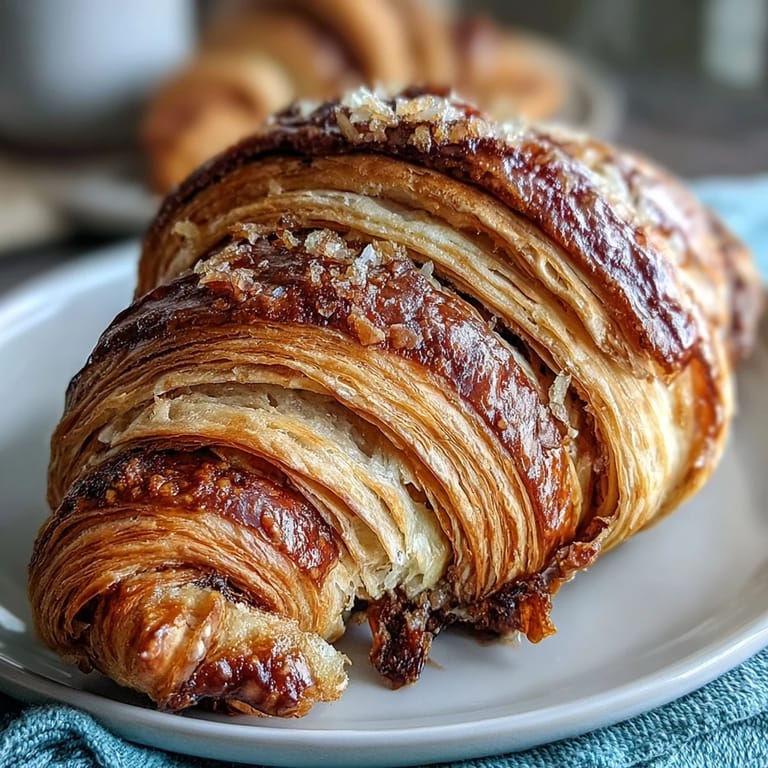
Save There was this one morning when I pulled a batch out of the oven and they had these perfect, almost translucent layers visible on the side—you could actually see the butter and dough in separate sheets. My friend said, 'You made these?' like it was almost suspicious, and I realized that's when baking stops feeling like work and becomes something you're actually proud to share.
The Sourdough Advantage
Using sourdough starter instead of commercial yeast changes everything because you're working with wild fermentation—it's slower, but it builds flavor complexity that instant yeast just can't touch. The tangy notes come through subtle but real, and your croissants actually have character instead of being blank butter vehicles. Plus, because sourdough ferments more slowly, you've got all the time in the world to nail your lamination without feeling rushed.
Cold Butter Is Everything
I can't stress this enough: if your butter warms up too much during lamination, it'll integrate into the dough and you'll get dense, greasy croissants that taste buttery but don't have that shattering, crispy texture. Keep everything cold—your work surface, your hands, even chill your rolling pin if the kitchen is warm. The moment you feel the butter getting soft or the dough getting warm, stop and chill everything for 30 minutes.
What Happens After You Bake Them
Fresh croissants are best eaten within a few hours of baking when they're still warm and the layers are at their most delicate and crispy. If you have leftovers, wrap them loosely in foil and reheat in a 175°C oven for about 5 minutes—it won't be exactly the same as fresh, but it'll wake them back up.
- For a sweet twist, fill them with chocolate or jam before rolling, or go savory with cheese and ham tucked inside for a completely different vibe.
- You can freeze shaped, proofed croissants before baking and bake them straight from the freezer with just 2-3 extra minutes in the oven.
- Pair them with a really good coffee or hot chocolate because these croissants deserve your full attention.
 Save
Save These croissants take time, but it's the kind of time that teaches you something about patience and precision in the kitchen. When you pull them out of the oven golden and crispy, with that sourdough tang underneath all the butter, you'll understand why people spend entire years learning to make them perfectly.
Recipe FAQ
- → What role does the sourdough starter play?
It adds a natural tanginess and depth of flavor while aiding fermentation for a light, airy dough.
- → Why is the dough chilled multiple times?
Chilling firms the butter and dough, allowing distinct layers to form and preventing butter from melting during rolling.
- → Can I use regular yeast instead of sourdough?
Yes, but the flavor will be less tangy and the texture slightly different due to shorter fermentation.
- → How do I know when croissants are properly proofed?
The dough should double in size and feel light and jiggly when gently pressed.
- → What is the purpose of the egg wash?
It gives the pastries a shiny, golden-brown crust during baking.
- → Can croissants be frozen before baking?
Yes, freeze after shaping and proofing, then bake straight from frozen with adjusted timing.