 Save
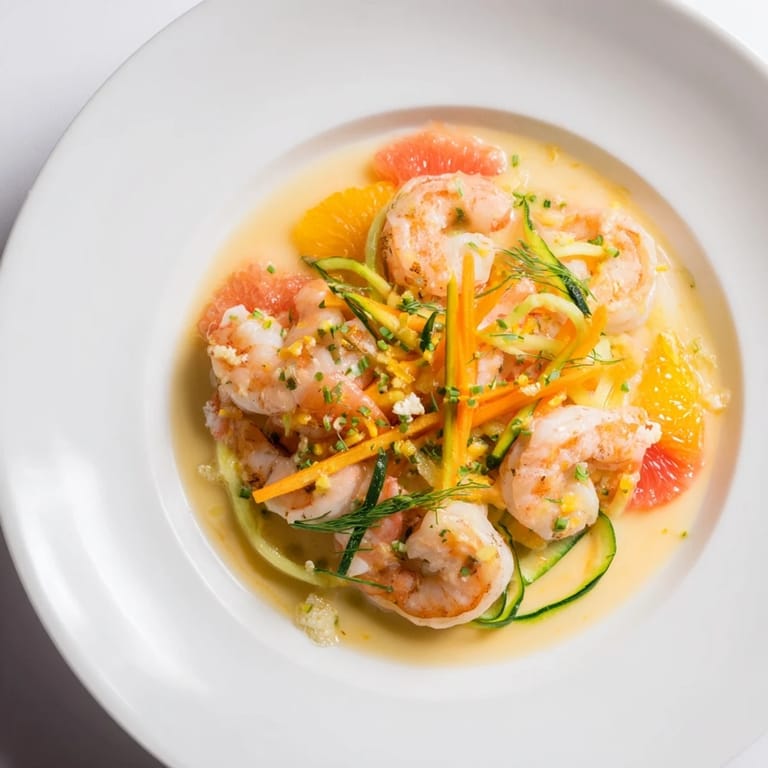
Save The first time I arranged shrimp on a platter like coral was completely accidental. I'd been flipping through a cookbook while my nephew talked about his school field trip to an aquarium, and something just clicked. The way he described the colors—bright oranges, pinks, yellows all stacked together—made me want to recreate that wonder on a plate. What started as a playful experiment became one of those dishes I keep coming back to, especially when I want to impress without spending all day in the kitchen.
I made this for my book club once, and honestly, I was nervous. Everyone's a critic, right? But the moment I pulled it from the broiler and the Gruyère was bubbling gold, someone gasped. Not in a polite way—a genuine, surprised gasp. We ended up talking more about the food than the actual book that night, and I've never been mad about that.
Ingredients
- Large pink shrimp, 500 g (1.1 lb): Buy them already peeled if you can; your hands will thank you, and the color is half the visual magic here.
- Medium oranges, 2 segmented (plus 1 tsp zest): The zest brings a concentrated brightness that ties everything together—don't skip it.
- Small pink grapefruit, 1 segmented: This adds a subtle tartness and completes the coral reef palette.
- Lemon juice: One whole lemon's worth keeps the shrimp tender and the citrus from feeling cloying.
- Gruyère cheese, grated, 120 g (4 oz): The star of the show—it melts into pockets of richness and browns just enough to matter.
- Ricotta cheese, 50 g (1.7 oz): Dollop it on after the broiler to keep it creamy; it's the gentle counterpoint to the sharper Gruyère.
- Small zucchini, 1 thinly sliced into ribbons: The pale green ribbons create the reef's soft coral branches.
- Small carrot, 1 julienned: Bright orange is your accent color, woven through like sea anemones.
- Fresh chives and fresh dill: A tablespoon each, torn or chopped—these herbs are the difference between pretty and memorable.
- Olive oil, 2 tbsp: Use good oil here; you'll taste every drop, especially the finishing drizzle.
- Salt and freshly ground black pepper: More salt than you'd think at first—citrus dishes want it.
Tired of Takeout? 🥡
Get 10 meals you can make faster than delivery arrives. Seriously.
One email. No spam. Unsubscribe anytime.
Instructions
- Season and prepare the shrimp:
- In a bowl, toss your shrimp with half the olive oil, lemon juice, salt, and pepper. You want them glistening and infused before they hit heat.
- Sear the shrimp until just cooked:
- Heat a skillet over medium-high until it's almost smoking, then lay the shrimp flat. You'll hear them sizzle immediately—that's your cue. Two minutes per side and they're done; overdoing it makes them rubbery, and that ruins everything.
- Brighten the citrus:
- In a separate bowl, gently toss your orange and grapefruit segments with the zest and a whisper of salt. This macerates them slightly and brings out their juice.
- Steam the vegetables until just tender:
- Place zucchini ribbons and carrot strips in a steamer or microwave-safe bowl with a splash of water for 1–2 minutes. They should still have a slight bite to them, not soft.
- Arrange the reef on your serving platter:
- Lay down the steamed vegetables as your base, overlapping them like coral branches. Nestle the shrimp and citrus segments between the vegetables, thinking about color balance as you go.
- Top with cheese and broil:
- Sprinkle Gruyère all over the top, then dot small spoonfuls of ricotta wherever you see a gap. Slide the whole platter under a hot broiler for 2–3 minutes, watching it closely—you want the cheese bubbling and lightly browned, not burnt.
- Finish and serve immediately:
- Pull it from the broiler, scatter fresh chives and dill over top, and drizzle with the remaining olive oil. Serve right away while the cheese is still creamy and warm.
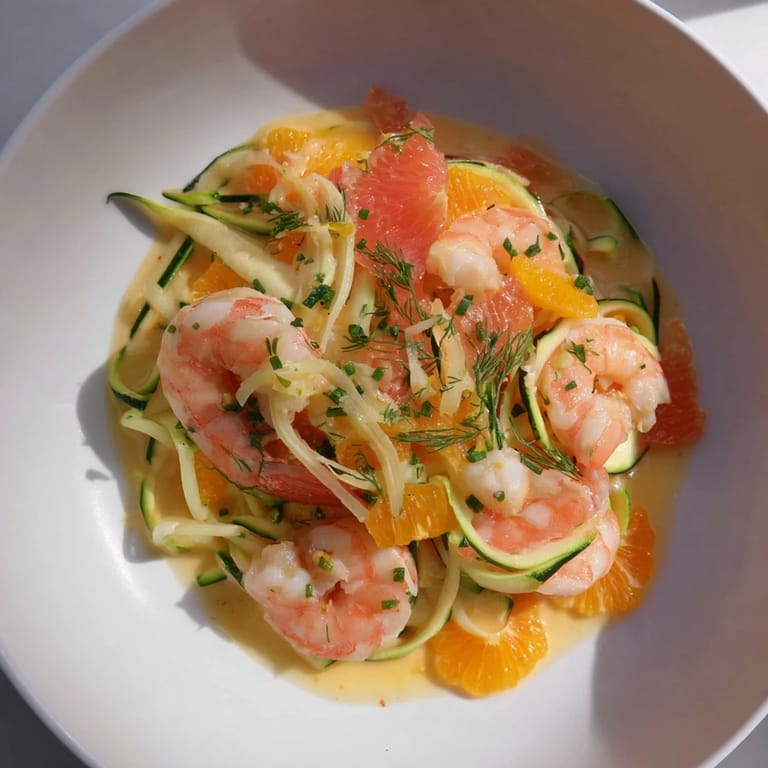 Save
Save There's something about watching someone's face when hot cheese meets cool citrus that makes all the fussy arranging worth it. It's not complicated food, but it feels like an occasion on a plate, and sometimes that's exactly what we need.
Why This Dish Works
The magic here is contrast—temperature, texture, flavor. The cold brightness of citrus against warm, melting cheese is what makes your palate wake up. The shrimp is lean enough that the cheese doesn't feel heavy, and the raw vegetables add a crunch that keeps things interesting. There's no long cooking time, no finicky techniques, just honest assembly and heat.
Swapping Things Around
I've made this with sea bass instead of shrimp on a night when the fishmonger had gorgeous pieces. I've added pomegranate seeds for extra jewel tones. Emmental works beautifully if Gruyère isn't in your budget, though it browns differently. The skeleton of the dish is strong enough to handle swaps—the principle of hot cheese, cool citrus, and colorful vegetables is what matters.
Serving and Pairings
Serve this straight from the broiler while everything is still alive with heat and texture. A crisp Sauvignon Blanc cuts through the richness, or a dry rosé echoes the shrimp's pink color. I've even served it with sparkling water and fresh mint on hot days when wine felt like too much. The platter is meant to be shared, so plan for lingering and second helpings.
- Pair with crisp white wine or sparkling rosé for the clearest flavor match.
- Have extra lemon wedges on the table so people can adjust brightness to their taste.
- This dish is stunning at a dinner party but equally lovely for a solo lunch if you're in the mood to cook for yourself.
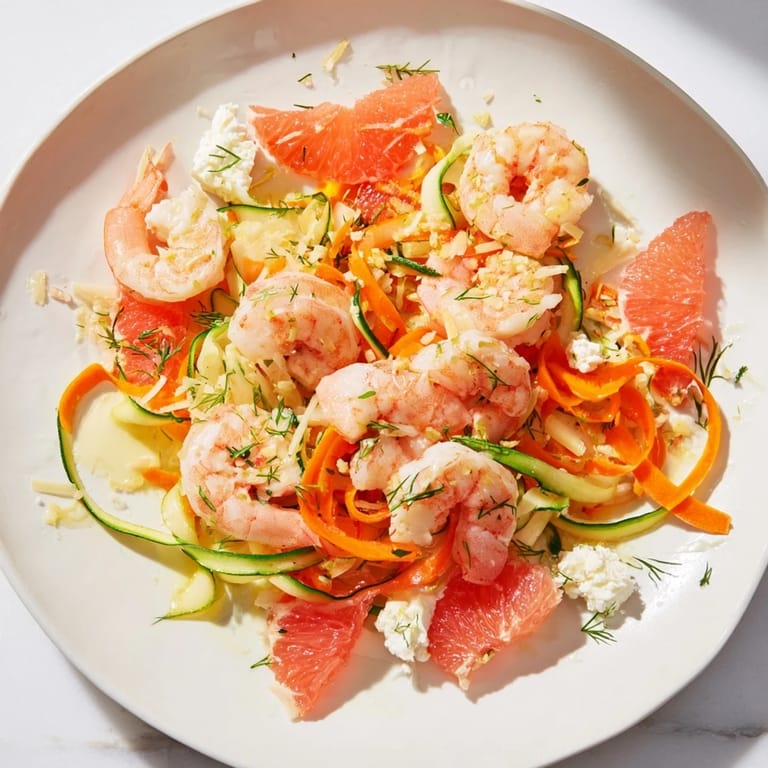 Save
Save This dish reminds me that the best meals aren't about perfection; they're about color, intention, and the joy of watching food transform under heat. Make it, share it, and let it surprise you.
Recipe FAQ
- → What type of shrimp works best for this dish?
Large pink shrimp, peeled and deveined, provide the ideal texture and flavor to complement the citrus and cheese components.
- → Can I substitute the Gruyère cheese?
Yes, Emmental or a bubbly mozzarella can be used as alternatives for a similar melty texture and mild flavor.
- → How should the citrus be prepared?
Segment the oranges and pink grapefruit carefully to remove membranes, and use zest and lemon juice to enhance brightness.
- → What is the purpose of steaming the vegetables?
Steaming zucchini ribbons and carrots softens them slightly while preserving their color and texture, creating an appealing base.
- → How long should the dish be broiled?
Broil for 2–3 minutes until the cheese bubbles and lightly browns to achieve a flavorful, golden finish.