 Save
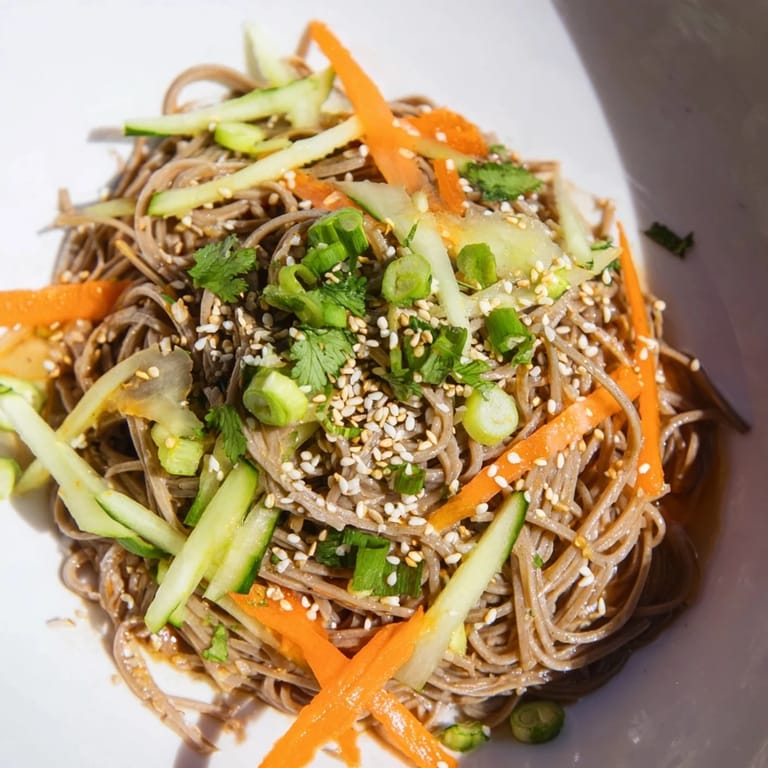
Save There's something about assembling a noodle lunch on a Sunday afternoon that feels like you're getting away with something—meal prep that doesn't feel like punishment. I discovered these chilled cups when I needed lunches that wouldn't turn soggy by Wednesday, and they became my quiet victory every time someone asked what I was eating. The cold sesame-touched noodles stay firm, the vegetables stay crisp, and somehow everything tastes better on day three than it did fresh.
I made these for my coworker who kept bringing sad desk salads, and I watched her eat an entire container without looking up once. The next day she asked for the recipe. That quiet moment—when someone keeps eating instead of making small talk—told me I'd created something worth sharing.
Ingredients
- Soba noodles or rice noodles (200 g): Soba has a subtle earthiness that sesame oil loves, but rice noodles work beautifully if that's what you have and actually stay less sticky over time.
- Soy sauce (3 tbsp): Low sodium lets you taste everything else; regular soy works fine if that's your kitchen default.
- Toasted sesame oil (2 tbsp): The toasted kind matters—it carries the whole flavor profile, so don't skip it for regular sesame oil.
- Rice vinegar (1 tbsp): Adds brightness without overpowering; white vinegar works but tastes sharper and thinner.
- Honey or maple syrup (1 tsp): Just enough to balance the salt and heat, nothing more.
- Chili garlic sauce (1–2 tsp): Start with less unless you love heat—it builds flavor without needing to be spicy.
- Cucumber (1 cup, julienned): English cucumbers are less watery and hold their snap better than regular ones through day three.
- Carrots (2 medium, julienned): Raw carrots stay sweet and crunchy, adding texture that lifts the whole cup.
- Green onions (2, thinly sliced): Save some greens for the top so they stay bright and sharp instead of wilting into the sauce.
- Toasted sesame seeds (2 tbsp): Toast them yourself if you can—they taste roasted and alive instead of dusty.
- Fresh cilantro (1 tbsp, optional): If you're a cilantro person, it adds a clean finishing note; if you're not, skip it without guilt.
Tired of Takeout? 🥡
Get 10 meals you can make faster than delivery arrives. Seriously.
One email. No spam. Unsubscribe anytime.
Instructions
- Cook and chill the noodles:
- Boil water, cook your noodles until just tender (don't oversoak them), then drain and rinse under cold running water until they're completely cool. A quick taste tells you when they're ready—they should feel slippery and cold against your tongue, never warm.
- Build the sauce:
- Whisk soy sauce, sesame oil, rice vinegar, honey, and chili sauce together in a small bowl. The mixture should smell nutty and slightly spicy, with a hint of sweetness catching underneath.
- Assemble in containers:
- Divide cold noodles evenly into four meal prep containers—roughly a handful per cup, loosely packed so they're easy to toss later.
- Layer vegetables:
- Top each noodle portion with cucumber, carrot, and green onion, keeping the layers visible and separate so everything looks fresh and intentional.
- Add sauce and toss:
- Drizzle the sauce evenly over each cup, then gently toss everything together with a fork until the noodles are coated and the vegetables are mixed through without bruising.
- Finish and store:
- Sprinkle sesame seeds and cilantro on top, seal the containers, and refrigerate until hunger finds you—the flavors deepen and marry as they sit.
 Save
Save My friend brought these to a picnic instead of the usual pasta salad, and people actually finished them instead of picking around the edges. There was something almost luxurious about eating cold noodles while everyone else was hot and sluggish—like we were all let in on a secret the recipe already knew.
Why This Works as Meal Prep
Cold noodles are naturally forgiving because the sauce clings to them even as they sit in the fridge, and vegetables stay crisp because they're not swimming in dressing like traditional salads. The flavors actually taste better on day two or three—everything settles and intensifies instead of separating. You can make four at once and never think about lunch until they're gone.
How to Customize Your Cups
These containers love additions without argument. Add a handful of shredded cooked chicken breast for protein that doesn't compete with the sesame flavor, or crumble pressed tofu if you want something plant-based that absorbs the sauce beautifully. Edamame adds a pop of green and a soft chew, while a drizzle of sriracha on top lets you control the heat at eating time instead of baking it in.
Storage and Serving Tips
These noodle cups live in your refrigerator for up to three days without losing their personality, though the vegetables start giving up water after day three. Eat them straight from the container with a fork, or pour the whole thing into a bowl and toss again if you like the sauce redistributed right before eating. They're good cold, better chilled, and honestly taste like you made something worth planning ahead for.
- Let containers sit for five minutes at room temperature if they feel too cold to enjoy the sesame flavor fully.
- If you're taking these to work, pack sesame seeds separately and sprinkle them right before eating so they stay toasted.
- Double or triple the sauce recipe if you like things wetter—more sesame oil only makes them better.
 Save
Save These noodle cups taught me that meal prep doesn't have to taste like punishment, and that something this simple can feel like a small kindness to yourself every lunchtime. Keep them in your rotation and watch how often you actually reach for one instead of ordering lunch.
Recipe FAQ
- → What noodles work best for this dish?
Soba noodles or rice noodles hold up well when chilled and absorb the flavors of the sesame dressing nicely.
- → How can I adjust the spice level?
Modify the amount of chili garlic sauce to taste, starting with a small amount and increasing for more heat.
- → Can I prepare this in advance?
Yes, the cups keep well refrigerated for up to three days, making them ideal for meal prep.
- → What are good protein additions?
Add cubed tofu, shredded chicken, or edamame to boost the protein content while complementing the flavors.
- → Is there a gluten-free option?
Use gluten-free noodles and tamari instead of soy sauce to make this dish gluten-free.