 Save
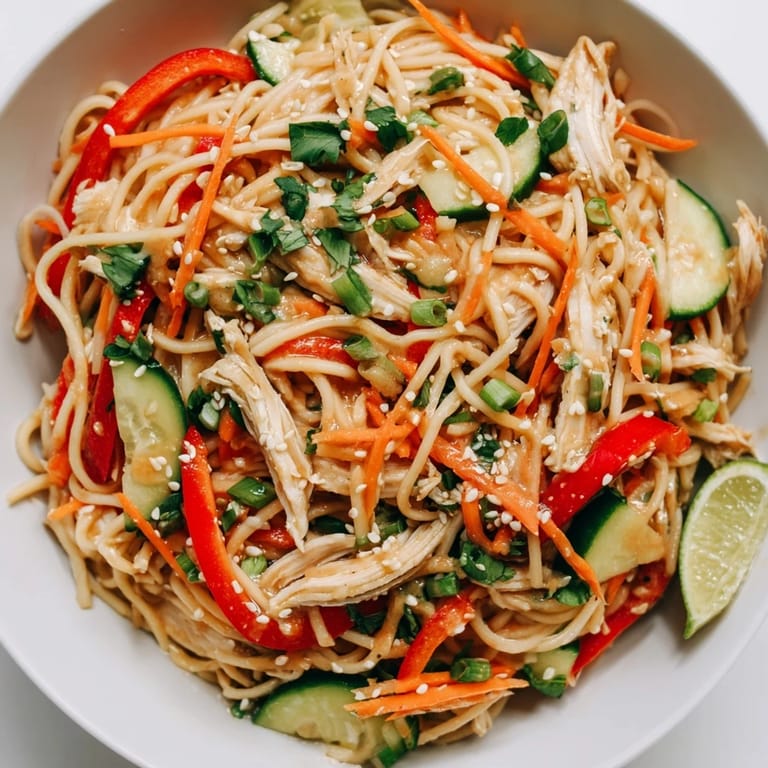
Save There's something about the sound of noodles hitting cold water that signals summer to me. I discovered this salad on a sweltering afternoon when my fridge was full of odds and ends—some leftover roasted chicken, a bundle of cilantro that needed rescuing, and a bottle of sesame oil I'd been meaning to use. I tossed them together almost by accident, drizzled on a quick dressing, and suddenly had something that felt both comforting and impossibly light. It's become my go-to when I want something that feels special but requires barely any real cooking.
The first time I made this for friends during a backyard gathering, I was nervous—it felt too simple, almost too casual. But watching people come back for thirds, noodles hanging from forks as they talked and laughed, taught me that good food doesn't need to be complicated. One friend asked for the recipe that same evening, and I knew I'd stumbled onto something worth keeping.
Ingredients
- Thin egg noodles or rice noodles (250 g): Egg noodles give you that tender chew, but rice noodles work beautifully if you're avoiding wheat, and they won't stick together as stubbornly once chilled.
- Cooked chicken breasts, shredded (300 g): Rotisserie chicken is genuinely your friend here—it's already flavorful and saves you a step, though freshly poached chicken is lovely too.
- Carrot, julienned: A sharp vegetable peeler makes this faster than you'd think, and the thin slices mean the carrot stays crisp.
- Red bell pepper, thinly sliced: Red peppers are sweeter than their yellow cousins and add a natural brightness that balances the richness of the dressing.
- Cucumber, deseeded and julienned: Scooping out the seeds prevents the salad from getting watery as it sits—this small step makes a real difference.
- Spring onions, sliced: Use both the white and green parts; the green adds a gentle onion flavor without being harsh.
- Fresh cilantro, chopped (2 tbsp): If cilantro isn't your thing, parsley or mint swap in seamlessly without throwing off the whole balance.
- Toasted sesame oil (3 tbsp): This is the backbone of your dressing, so don't skimp or use regular sesame oil—the toasted version has that deep, nutty flavor that makes everything taste intentional.
- Soy sauce (2 tbsp): Tamari works here if you're gluten-free, and it won't compromise the taste.
- Rice vinegar (2 tbsp): Milder and gentler than white vinegar, it won't overpower the delicate sesame flavor.
- Honey or maple syrup (1 tbsp): A tiny amount of sweetness rounds out the salty, tangy notes and makes the whole dressing sing.
- Smooth peanut butter or tahini (1 tbsp): This emulsifies the dressing and gives it that silky texture; tahini is slightly nuttier and works beautifully if you're avoiding peanuts.
- Grated fresh ginger (1 tsp): Fresh ginger gives a subtle warmth that bottled ginger powder just can't match.
- Garlic clove, minced: One clove is usually enough unless you really love garlic, in which case, do what makes you happy.
- Chili flakes (1 tsp, optional): A whisper of heat that comes through only if you're paying attention—perfect for complexity without fire.
- Toasted sesame seeds (2 tbsp): Toast them yourself if you can; the difference between toasted and raw is the difference between a good dish and one you'll remember.
- Lime wedges (optional): A squeeze of fresh lime just before eating lifts everything, but it's optional if you don't have one on hand.
Tired of Takeout? 🥡
Get 10 meals you can make faster than delivery arrives. Seriously.
One email. No spam. Unsubscribe anytime.
Instructions
- Cook your noodles:
- Bring a large pot of water to a rolling boil and cook the noodles according to the package time—don't wander off or you'll end up with mush. As soon as they're tender but still have a tiny bit of resistance, drain them and immediately run them under cold water until they're cool to the touch, tossing gently so they don't clump.
- Prep your vegetables:
- While the noodles cook, julienne your carrot and cucumber—a vegetable peeler is faster than a knife if you're in a hurry. Slice the red pepper into thin, elegant strips and chop your spring onions and cilantro, keeping the green parts separate if you want to scatter them at the end for color.
- Build your base:
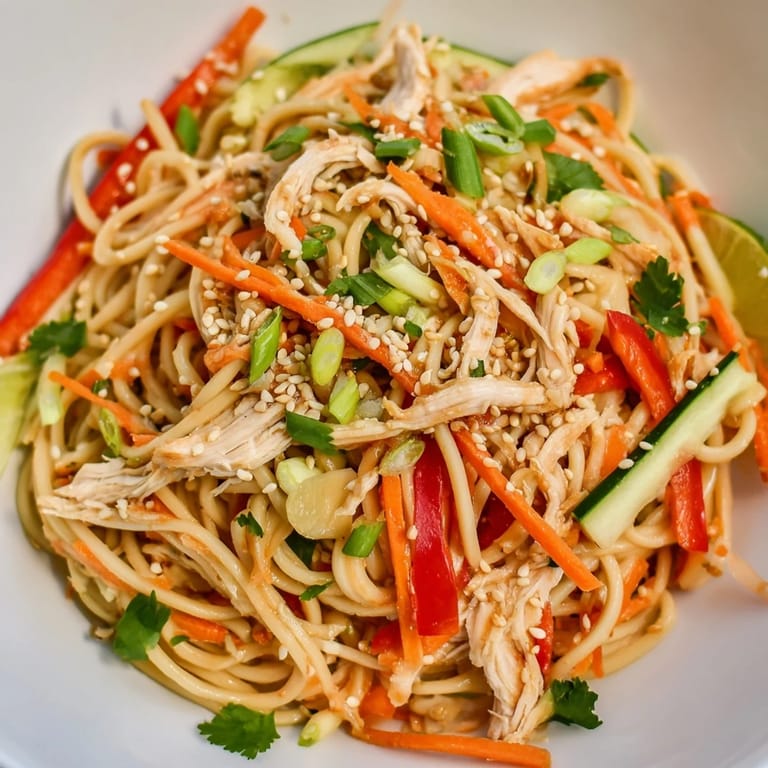
- In a large bowl, combine the cooled noodles with the shredded chicken, carrot, bell pepper, cucumber, spring onion whites, and cilantro, tossing gently so nothing breaks apart. The vegetables should be visible and distinct, not crushed into the noodles.
- Make your dressing:
- In a small bowl, whisk together the sesame oil, soy sauce, rice vinegar, honey, peanut butter, ginger, and garlic until you have something smooth and pourable—if it's too thick, add a splash of water. Taste it with a clean spoon; it should make your mouth water before you add it to anything else.
- Bring it all together:
- Pour the dressing over the salad and toss gently but thoroughly, making sure every strand of noodle and piece of vegetable gets coated. This is when the whole thing transforms from separate ingredients into something whole.
- Finish and serve:
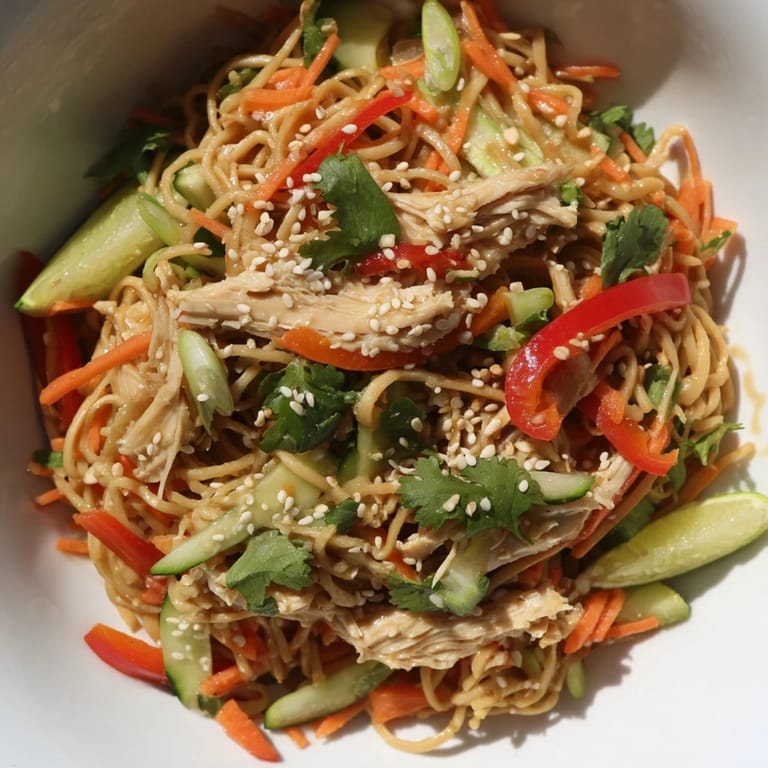
- Transfer to a serving platter or individual bowls and scatter the toasted sesame seeds and cilantro greens over the top. You can serve it immediately while it's still cold, or cover it and refrigerate for up to two hours—the flavors actually deepen as it sits.
 Save
Save I remember taking a bowl of this to a friend who was going through a rough patch, and she called me an hour later just to say how much it meant that someone brought her something cold and fresh when she needed comfort. That's when I realized this isn't just a salad—it's the kind of dish that shows up for people.
Why Sesame Oil Changes Everything
There's a moment, usually about halfway through mixing the dressing, when your kitchen suddenly smells like a really good Asian restaurant. That's the sesame oil doing its thing—it's rich and toasted and full of character in a way that regular oils could never be. I used to make this with neutral oils until someone pointed out that I was essentially muting the whole dish, and once I switched, there was no going back.
Cold Pasta Salads and Meal Prep
This salad is one of those rare dishes that actually improves as it sits, making it perfect for cooking ahead. I've learned to assemble everything but the sesame seeds and garnish the night before, then finish it the morning of, so it comes together quickly at lunchtime. The noodles soften just enough to absorb the dressing, and the vegetables stay crisp because you're not overdressing them hours in advance.
Variations and Personal Touches
The beauty of this salad is how willingly it accepts substitutions and additions depending on what your kitchen holds or what you're craving that day. Shredded tofu swaps in seamlessly for vegetarian versions, and edamame or snap peas add protein and a satisfying crunch that turns lunch into something more substantial. I've added thinly sliced radishes, shredded beets, and even cooked shrimp when I'm feeling fancy—the dressing is flexible enough to welcome almost anything.
- Use rotisserie chicken if you want to skip cooking entirely, or swap in shredded turkey for a lighter variation.
- Rice noodles and tamari make this completely gluten-free without changing the soul of the dish.
- Add a handful of toasted cashews or crushed peanuts at the end if you want an extra layer of richness.
 Save
Save This salad has become my answer to so many moments—too hot to cook, too busy to think, too tired to care about complicated recipes but wanting something that feels thoughtful anyway. Once you make it once, you'll find yourself reaching for it again and again.
Recipe FAQ
- → What type of noodles work best for this dish?
Thin egg noodles or rice noodles are ideal, as they absorb the sesame dressing well and provide a light texture suited for cold preparations.
- → Can I make a vegetarian variation?
Yes, substituting shredded tofu for chicken offers a plant-based protein while maintaining the dish's texture and flavor balance.
- → How should the noodles be prepared for chilling?
Cook the noodles according to package instructions, then rinse thoroughly under cold water to stop cooking and cool them before combining with other ingredients.
- → What can I use to add extra crunch and protein?
Adding edamame or snap peas provides additional crunch and boosts the protein content naturally.
- → Are there gluten-free options for this dish?
Absolutely. Use rice noodles and gluten-free soy sauce such as tamari to keep the dish gluten-free.