 Save
Save My neighbor knocked on the door one chilly afternoon with an armful of carrots from her garden, their tops still dusty with soil. She mentioned offhandedly that ginger was the secret to making them sing, and I found myself standing in my kitchen that evening, peeling and slicing, curious about what she meant. The first spoonful told me everything—that bright, warming heat against the natural sweetness made something click into place. Since then, this soup has become my go-to when I want something that tastes like it took hours but asks for barely more than half one.
I made this for my sister during a gray January when she was feeling under the weather, and watching her face light up at the first spoonful reminded me why I love cooking. She asked for seconds before the bowl was even empty, and I realized this simple soup had managed to do what nothing else could that day—it made her feel genuinely better.
Ingredients
- Olive oil: Just a tablespoon is enough to start building the flavor base without making the soup heavy.
- Medium onion, diced: This becomes almost invisible in the final puree, but it's the foundation—don't skip it.
- Garlic cloves, minced: Two cloves keep things subtle; add more if you love garlic the way some people love their morning coffee.
- Carrots, peeled and sliced: Use about 700 grams (1.5 lbs); sweeter varieties will reward you with deeper flavor.
- Fresh ginger, peeled and finely grated: This is where the magic lives—fresh ginger tastes nothing like the jarred kind.
- Vegetable broth: A liter (4 cups) of good broth makes all the difference; homemade or quality store-bought both work beautifully.
- Coconut milk, optional: Half a cup (250 ml) adds luxury, but the soup is delicious without it if you prefer lighter.
- Sea salt: Start with a teaspoon and adjust at the end when you can actually taste what you've made.
- Freshly ground black pepper: A quarter teaspoon, though you'll likely want to add more once you taste it.
- Lemon juice: Half a lemon's worth of juice brightens everything at the very end.
Tired of Takeout? 🥡
Get 10 meals you can make faster than delivery arrives. Seriously.
One email. No spam. Unsubscribe anytime.
Instructions
- Warm your pot and soften the onion:
- Pour the olive oil into a large pot over medium heat and let it warm for a breath or two. Add your diced onion and let it cook for about three to four minutes, stirring occasionally, until it turns translucent and soft—this is when you know the sweetness is starting to develop.
- Wake up the aromatics:
- Stir in your minced garlic and grated ginger, and stay right there for about a minute, watching as the kitchen fills with that warm, peppery-sweet smell. This is the moment where the foundation becomes a story.
- Introduce the carrots:
- Add your sliced carrots to the pot and stir them around for a couple of minutes, letting them toast slightly in the oil and aromatics. You're not trying to cook them yet, just waking them up.
- Simmer until tender:
- Pour in your vegetable broth and bring the whole thing to a boil, then lower the heat and cover it with a lid. Let it simmer for about twenty to twenty-five minutes until you can easily pierce a carrot with a fork—no resistance at all.
- Puree into silk:
- Remove from heat and use an immersion blender to puree everything into a smooth, velvety consistency, working in batches if needed. Listen for the change in sound as it transforms from chunky to completely smooth.
- Finish and season:
- Stir in your coconut milk if you're using it, squeeze in the lemon juice, and add your salt and pepper. Warm it gently for a few more minutes, tasting and adjusting the seasoning until it tastes like your idea of perfect.
- Serve with intention:
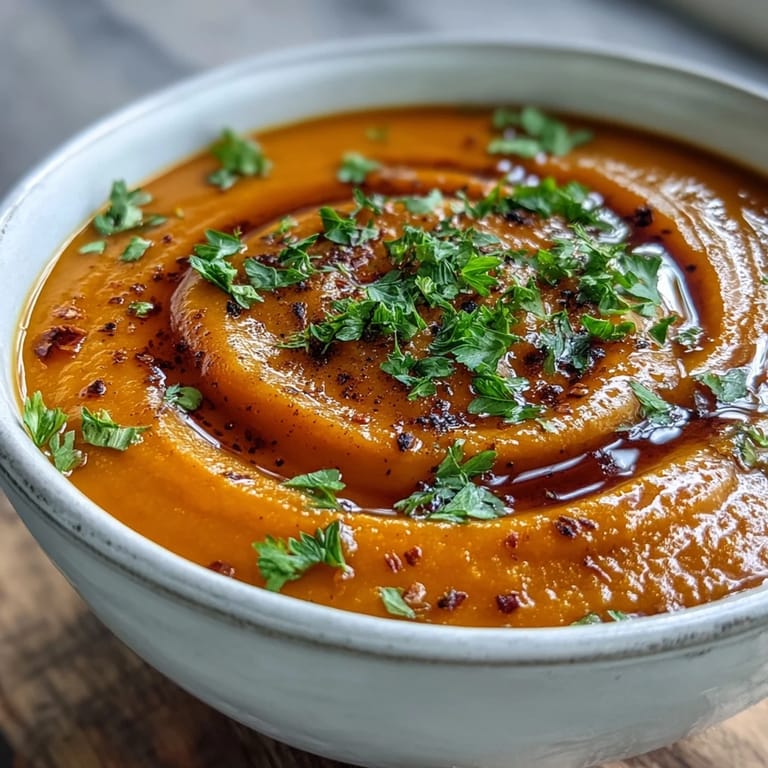
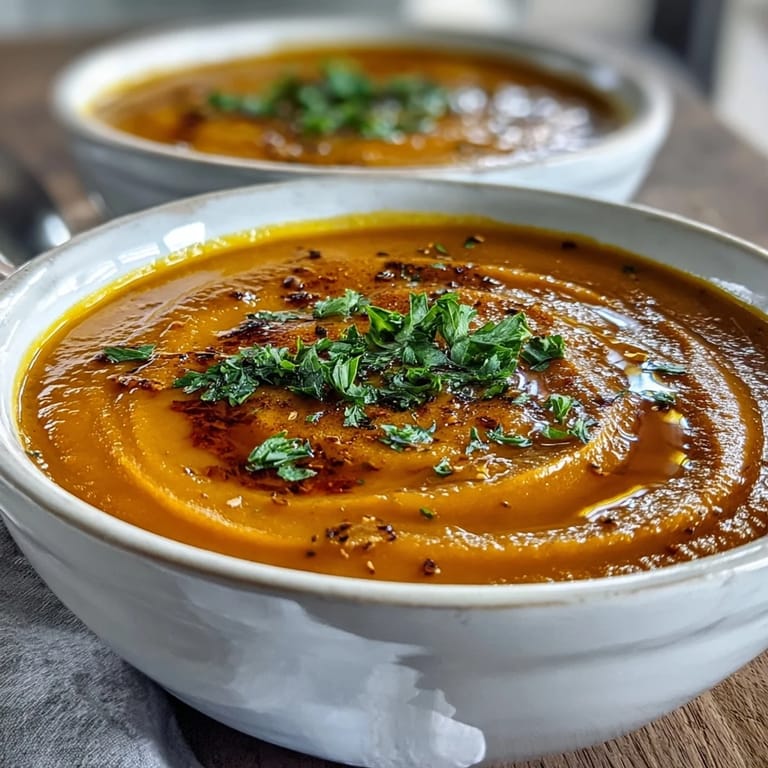
- Ladle into bowls and top with a drizzle of coconut milk, fresh herbs, or toasted pumpkin seeds if you want to make it feel special. Serve alongside something crusty to dip.
 Save
Save There's something quietly powerful about a soup that makes people ask for the recipe—it happened three times at a dinner party, each person surprised that something this elegant came from so few ingredients. In those moments, I understood that good cooking isn't about complexity; it's about respecting what you have and letting each ingredient shine.
The Secret Life of Ginger
Fresh ginger is assertive but fair—it arrives with personality but somehow never overshadows the carrots. The longer it simmers, the more its heat mellows into something almost floral, which is why this soup tastes better if you can let it sit for an hour before serving. I've learned to always grate my ginger just before cooking because pre-grated loses that bright, almost citrusy edge that makes the difference.
Customizing Your Bowl
The beauty of this soup is how it bends to what you're craving and what you have on hand. A pinch of ground cumin stirred in during the ginger step adds earthiness, while coriander brings a subtle sweetness that some people describe as almost floral. I've added everything from a whisper of turmeric to a tiny splash of soy sauce, and each version taught me something new about how these ingredients dance together.
Garnishes That Make It Yours
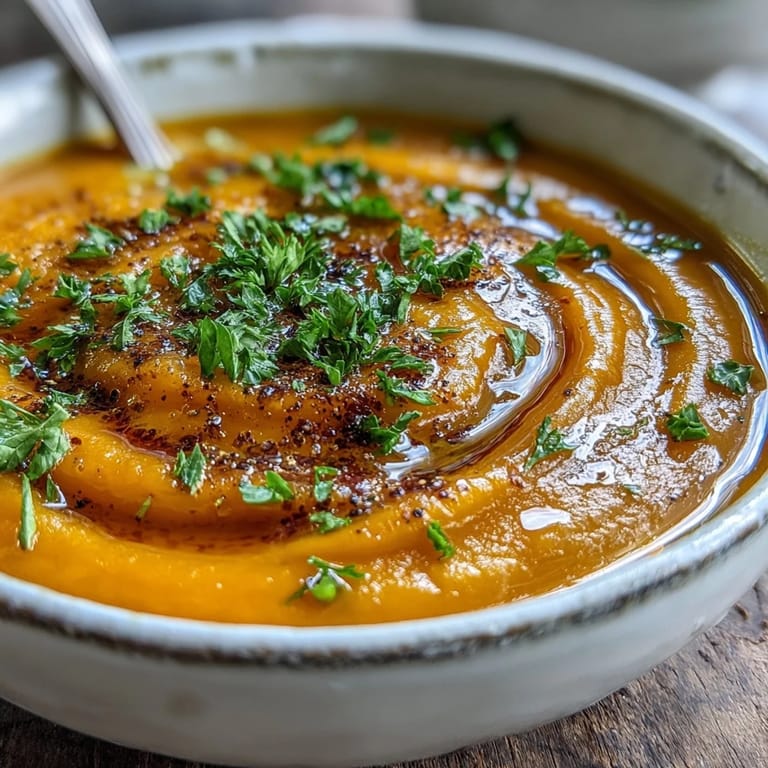
The garnish is where you get to make this soup feel like your own creation, whether that's a handful of fresh cilantro, a scatter of toasted pumpkin seeds, or just a final drizzle of good coconut milk. Some mornings I'll add a soft-boiled egg on top and eat it for breakfast, transforming the whole thing into something more substantial. The soup itself is the canvas; the garnish is where you paint your mood.
- Fresh cilantro adds brightness and a slight herbal note that echoes the ginger beautifully.
- Toasted pumpkin seeds bring a nutty crunch and earthiness that anchors the sweetness.
- A final swirl of coconut milk or a crack of fresh pepper reminds you this came from your own hands.
 Save
Save This soup has become my quiet answer to almost any occasion—when someone needs comfort, when you want to feel like you've cooked something impressive in barely any time, when the evening calls for something warm and kind. It's proof that the simplest things, treated with attention and care, become something unforgettable.
Recipe FAQ
- → Can I make this soup ahead of time?
Yes, this soup actually tastes better the next day as flavors have time to meld. Store in an airtight container in the refrigerator for up to 4 days. Reheat gently on the stove, adding a splash of broth or water if needed to adjust consistency.
- → How do I get the smoothest texture?
Use an immersion blender directly in the pot for easiest results, or transfer to a high-speed blender in batches. Blend for at least 1-2 minutes until completely silky. For extra refinement, pass through a fine-mesh sieve after blending.
- → Can I freeze carrot ginger soup?
Absolutely. Cool completely before transferring to freezer-safe containers, leaving some headspace for expansion. Freeze for up to 3 months. Thaw overnight in the refrigerator and reheat slowly on the stove.
- → What can I use instead of coconut milk?
Heavy cream adds rich decadence, while Greek yogurt provides tangy protein. For a lighter version, simply omit the creamy element or use additional broth. Cashew cream also works beautifully for a dairy-free alternative.
- → How can I add more protein?
Stir in red lentils during the simmering stage, add cubed tofu near the end, or serve with a side of crusty bread topped with cheese or hummus. A dollop of Greek yogurt on top also adds protein and tang.