 Save
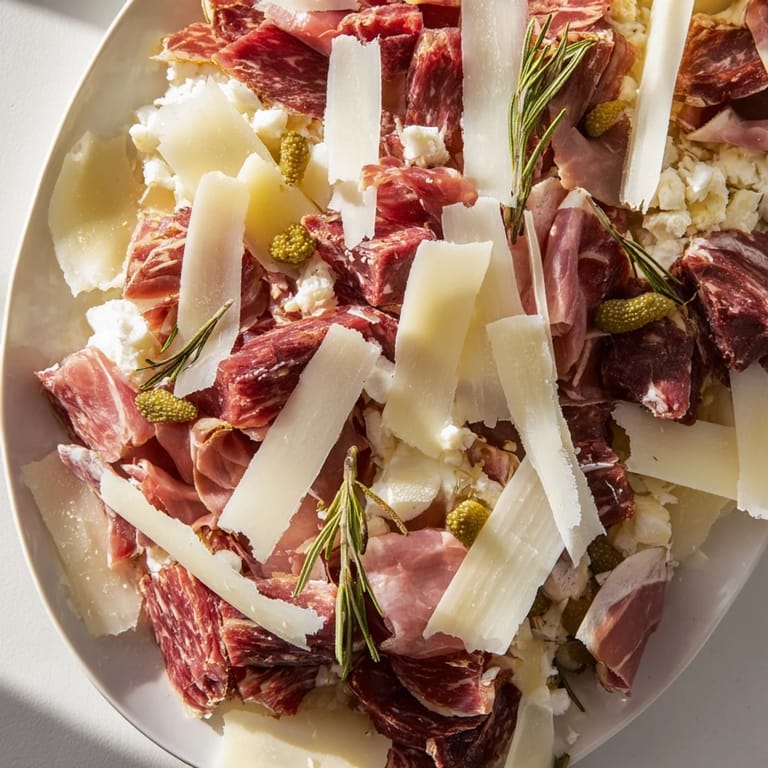
Save There's something about a wooden board that makes everyone slow down. I was setting one together for a casual dinner party—nothing fancy, just people I wanted to spend time with—when I realized the magic wasn't in the complexity but in the contrast. Rough, smoky meats beside delicate, translucent cheese ribbons felt like edible poetry. That's when I understood: the best platters aren't about filling every inch. They're about tension and balance, rustic next to refined, bold flavors whispering against subtle ones.
I remember my aunt pulling out a vegetable peeler at her kitchen counter and showing me how to shave cheese like it was the most obvious thing in the world. "Watch," she said, and suddenly Parmigiano wasn't a chunk anymore—it was ribbons of air and salt and umami. That moment changed how I saw charcuterie boards. They weren't about quantity; they were about respecting what you had enough to present it beautifully.
Ingredients
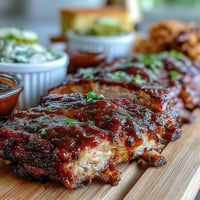
- Smoked beef (120g, thickly sliced or hand-torn): The anchor of the board—use your hands to tear it if you want something more organic and rustic than neat slices.
- Rustic country ham (120g, roughly chopped): This is where you get sweetness and saltiness at once; rough edges catch light and make the platter look alive.
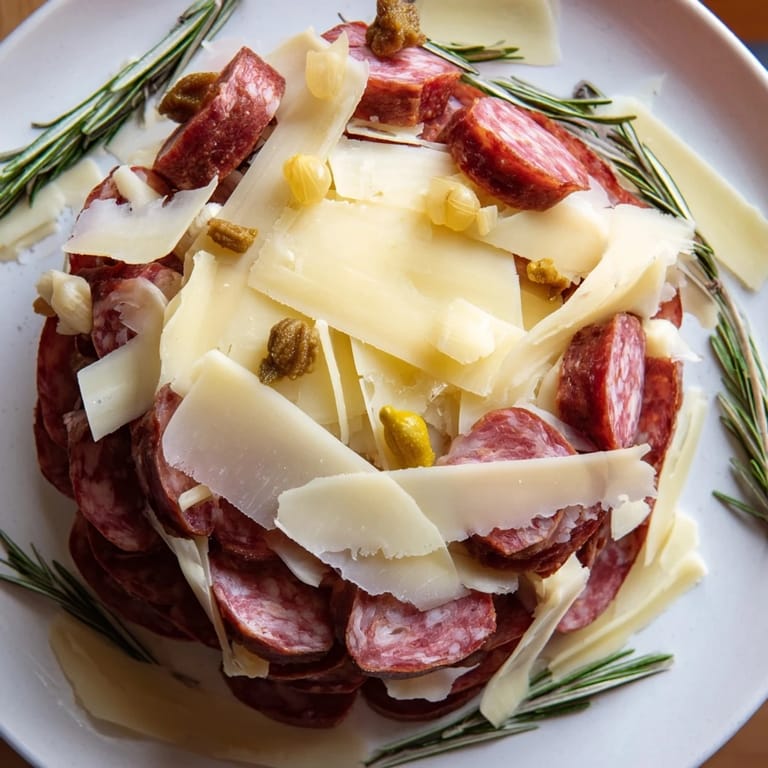
- Smoked sausage (120g, thick-cut rounds or wedges): The textural surprise that keeps your palate interested as you graze.
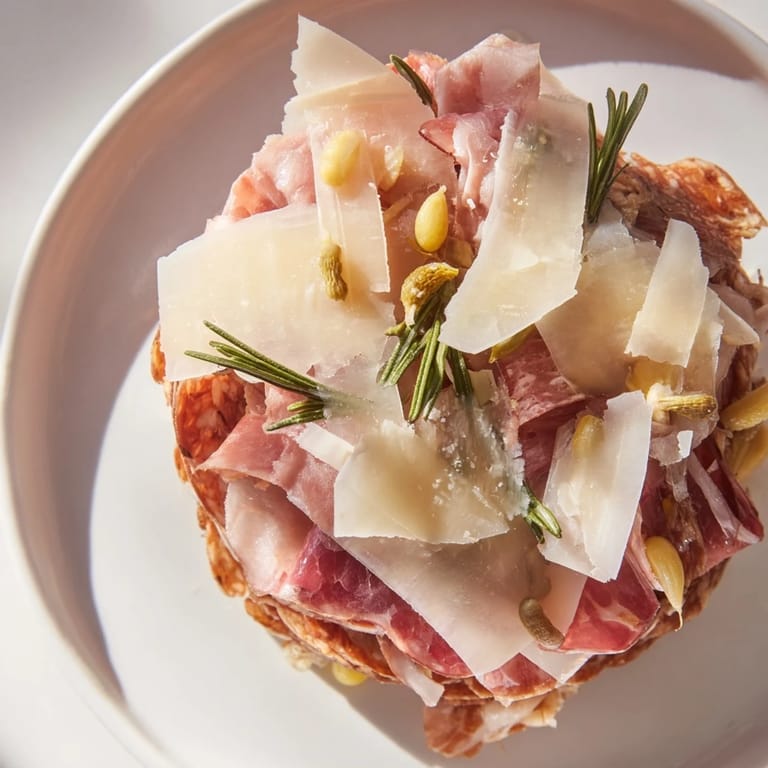
- Parmigiano Reggiano (60g, thinly shaved): Use a cheese plane or vegetable peeler to create thin, brittle ribbons that melt on your tongue almost immediately.
- Aged Manchego (60g, thinly shaved): This has a nuttier, creamier quality than Parm—shave it thin enough that light passes through.
- Gruyère (60g, thinly shaved): The most forgiving cheese to shave; its slight sweetness bridges the salty meats and acidic accompaniments.
- Cornichons (1 small handful): These tiny pickles cut through richness like nothing else and add visual pops of green.
- Red onion (1 small, thinly sliced): Raw onion brings a sharp brightness that balances smoky meats; don't skip this.
- Grainy mustard (2 tbsp): Dab small dollops around the board—it's meant to be discovered, not dominate.
- Fresh thyme or rosemary sprigs (1 small bunch): These release their oils as people pick around them, flavoring the whole experience.
- Rustic country loaf or crusty baguette, sliced (optional): Toast it lightly if you want it to stand up to the richness of the meats and cheeses.
Tired of Takeout? 🥡
Get 10 meals you can make faster than delivery arrives. Seriously.
One email. No spam. Unsubscribe anytime.
Instructions
- Layer the meats with intention:
- Arrange your beef, ham, and sausage on the board in overlapping layers or casual mounds—think more like a still life than geometric precision. Let some pieces fold over others so light catches the different textures.
- Shave the cheese into ribbons:
- With a vegetable peeler or cheese plane held at a shallow angle, pull long, thin shavings from each cheese and drape them over and beside the meats. The translucency is what makes them beautiful, so thin matters.
- Scatter the bright elements:
- Place cornichons, red onion slices, and small dollops of mustard around the platter in clusters rather than evenly spaced—it feels more natural and invites people to explore.
- Finish with aromatics:
- Tuck thyme or rosemary sprigs into the gaps and across the top, letting their green and dried edges add color and releasing their fragrance as people reach for food.
- Serve immediately:
- Bring it to the table right away while the meats are still cool and the cheeses haven't started to sweat. If adding bread, serve it warm or toasted on the side.
 Save
Save There was a moment during that dinner party when someone paused mid-conversation, reached for a piece of ham, draped a ribbon of Manchego over it, added a cornichon, and just closed their eyes for a second. No words needed. That's the moment when a board stops being a appetizer and becomes an experience—when people realize they're not just eating, they're savoring.
The Art of Contrast
This platter works because nothing on it is shy. The meats are smoky and bold, the cheeses are aged and complex, the onion is sharp, the mustard has attitude. Some people think contrast means chaos, but it's actually harmony—each element standing clearly itself so that when they touch on your tongue, they amplify rather than cancel each other out. That's the secret to boards that people remember.
Sourcing Matters More Than You'd Think
A good charcuterie board lives or dies by its ingredients, not its arrangement. Seek out a butcher or cheese monger who can help you pick meats and cheeses that have actual character—smoky beef that tastes smoky, ham that has been aged properly, cheeses with texture and story. The difference between a forgettable board and one people talk about for weeks comes down to that ten minutes you spend choosing what goes on it. Pre-sliced vacuum-packed cheese from a supermarket will never give you those thin, delicate ribbons that catch the light.
Building a Board That Feeds Conversation
The best boards are architectural—different heights, textures, colors creating visual interest that pulls people in. Think of it like setting a scene: the mounded meats are the anchor, the cheese ribbons add movement and refinement, the cornichons bring bright green moments, the mustard gives flecks of warmth. When your board has texture and surprise, people don't just eat it quickly; they pick thoughtfully, comparing combinations, discovering new flavors they didn't expect.
- Leave some empty space—it makes the board feel abundant and lets people see what's available at a glance.
- Group similar colors together so different elements pop against each other rather than blending into a muddy appearance.
- Add the garnish at the very last moment so the herbs are fresh and the onion hasn't started to wilt from the moisture of the other ingredients.
 Save
Save There's nothing quite like watching people gather around a board and slow down, really taste what they're eating, and connect with each other. That's the real gift this dish offers.
Recipe FAQ
- → What types of meats are used in this platter?
It includes smoked beef, rustic country ham, and smoked sausage, all prepared with varying textures to balance the plate.
- → How should the cheeses be prepared?
Cheeses such as Parmigiano Reggiano, Manchego, and Gruyère are thinly shaved into delicate ribbons to contrast the hearty meats.
- → What accompaniments enhance the flavors?
Cornichons, sliced red onion, grainy mustard, and fresh thyme or rosemary add tanginess, sharpness, and fragrant herbal notes.
- → Can this platter be served with bread?
Yes, a rustic country loaf or crusty baguette can be served alongside, adding texture and balancing flavors.
- → Are there suggestions for additional flavor variations?
Adding toasted nuts like walnuts or dried fruits such as figs and apricots can introduce a sweet and crunchy dimension.