 Save
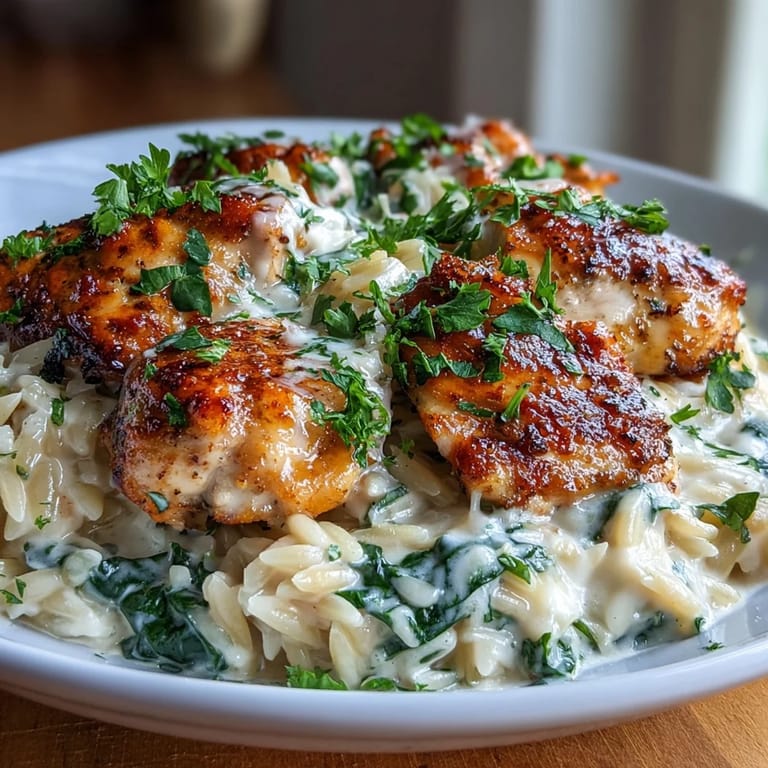
Save This one-pot creamy garlic Parmesan chicken orzo landed in my life on a Tuesday when I was scrolling through my phone at midnight, half-asleep, and suddenly thought, why hasn't anyone combined garlic bread, creamy pasta, and chicken into one skillet before? I made it the next evening with whatever cream I had left and olive oil I'd been meaning to use, and my kitchen smelled so good that my roommate came home early just to ask what was cooking. It's the kind of dish that feels restaurant-quality but tastes like comfort, and honestly, it's become my go-to when I want to impress someone without spending hours at the stove.
I made this for my friend who was going through a rough week, and watching her face when she tasted it was everything. She literally stopped mid-bite and said it tasted like the chicken Alfredo from that Italian place downtown, except better because I'd made it. That's when I realized this dish does something special—it transforms a regular Tuesday dinner into a moment where people feel genuinely cared for.
Ingredients
- Boneless, skinless chicken breasts or thighs, cut into bite-sized pieces (1 lb): Thighs stay juicier if you're not vigilant, but breasts work beautifully if you don't overcook them—aim for that golden crust and pull them out when you think they're almost done.
- Salt, black pepper, and smoked paprika: These three create a subtle depth that transforms plain chicken into something that feels intentional without overpowering the creamy sauce.
- Olive oil and unsalted butter: The butter adds richness to the sauce while olive oil gets the pan hot enough to sear the chicken properly—don't skip either one.
- Medium yellow onion, finely diced: Dicing it small means it softens faster and melts into the sauce, creating sweetness without chunks.
- Garlic, minced (4 cloves): Fresh garlic is non-negotiable here; it's the soul of this dish, so don't even think about using the jarred kind.
- Dry orzo pasta (1 cup): This tiny rice-shaped pasta absorbs the sauce like a sponge, which is exactly what makes this dish special—it's not just noodles swimming in cream.
- Red pepper flakes (1/2 tsp, optional): A tiny pinch gives you that chili mac vibe if you want it, adding warmth without heat.
- Dry white wine or chicken broth (1/2 cup): Wine deglazes the pan and adds subtle acidity; broth works if you'd rather skip the alcohol, and the sauce won't suffer.
- Low-sodium chicken broth (2 cups): The foundation of your sauce, and low-sodium means you control the salt levels instead of the box controlling you.
- Whole milk or half-and-half, and heavy cream (1 cup plus 1/2 cup): The combination creates a sauce that's luxurious without being heavy; it coats the orzo without weighing you down.
- Freshly grated Parmesan cheese (1 cup): Pre-grated cheese has anti-caking agents that keep it from melting smoothly, so genuinely grate it yourself if you can—the difference is noticeable.
- Baby spinach, roughly chopped (2 cups): It wilts down to almost nothing, adding nutrition and color without changing the flavor profile.
- Fresh parsley, chopped (1/4 cup): A finishing touch that makes the dish look intentional and adds a fresh herbal note that balances all the richness.
Tired of Takeout? 🥡
Get 10 meals you can make faster than delivery arrives. Seriously.
One email. No spam. Unsubscribe anytime.
Instructions
- Season and sear your chicken:
- Pat the chicken pieces dry with paper towels before seasoning—moisture is the enemy of a good sear. Heat your olive oil until it shimmers, then add the chicken in a single layer and let it sit undisturbed for a couple minutes before stirring; this creates that golden crust that tastes like you actually know what you're doing.
- Build your aromatics:
- After the chicken's out, add butter and onion to the same pan, letting the fond (those browned bits) stay put because that's pure flavor. Once the onion softens, add garlic and listen for that immediate sizzle—that's the signal that you're cooking something worth your time.
- Toast the orzo:
- Stirring the dry pasta in the butter for a minute or two changes its texture completely, giving it a subtle nuttiness that separates this from regular pasta dishes. Don't skip this step even though it feels small.
- Deglaze with wine or broth:
- Pour in your liquid of choice and use a wooden spoon to scrape up every bit of caramelized goodness from the pan bottom. Let it bubble for a minute to reduce slightly and cook off any raw alcohol if using wine.
- Simmer everything together:
- Add your broths, milk, and cream, then nestle the chicken back in and cover the skillet. The orzo will cook directly in this creamy mixture, absorbing flavors as it softens—this is where the magic happens.
- Finish with cheese and greens:
- Stir in Parmesan until it's completely melted and the sauce looks silky, then fold in spinach and cook just until it's wilted and vivid green. Taste and adjust seasoning because this is your moment to make it exactly right.
 Save
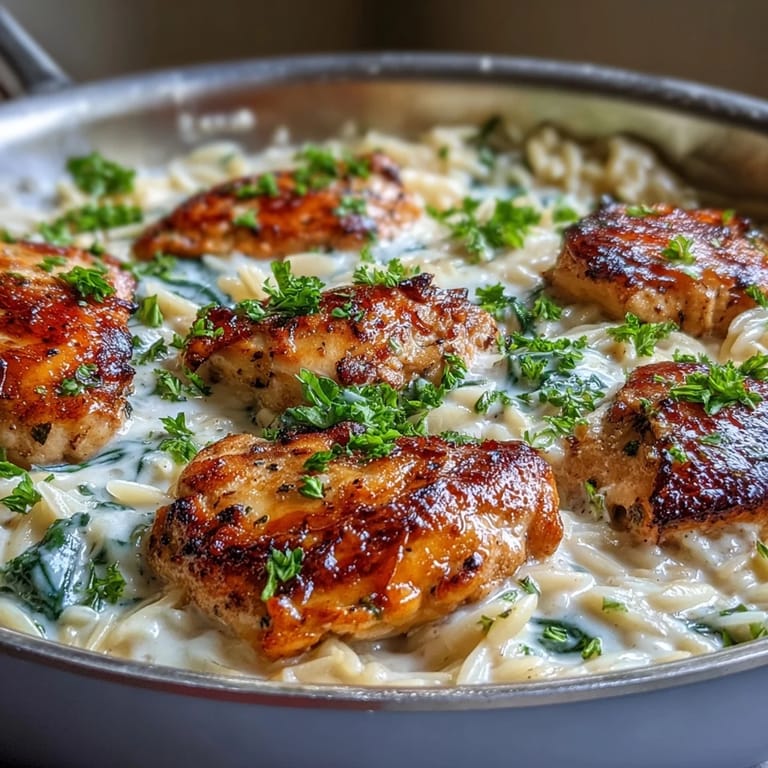
Save There's a moment, maybe a minute before serving, when you stir in that Parmesan and the sauce transforms from pale cream into something golden and glossy. That moment is why people say cooking is meditation—it's just you, heat, ingredients, and something becoming more beautiful than it was before.
Why This Dish Works
This recipe succeeds because it respects the natural flavors of each ingredient while building on them. The chicken gets seared for texture, the garlic and onion create an aromatic base, and the orzo absorbs everything without becoming mushy. It's not overthinking a good thing; it's understanding that sometimes the most impressive meals come from knowing when to add something and when to let it be.
Customization Ideas That Actually Work
Swap the spinach for wilted kale if you want something more substantial, or use frozen peas for sweetness. Mushrooms sautéed separately and stirred in at the end create an earthy version for vegetarian guests. Some nights I add a pinch of lemon zest at the end because citrus cuts through cream beautifully, or a splash of Dijon mustard if I'm feeling bold.
Serving and Pairing Suggestions
Serve this straight from the skillet with crusty bread for soaking up every bit of sauce, and a crisp salad on the side to balance the richness. A glass of white wine—Pinot Grigio or Chardonnay—is the obvious choice, but honestly, even cold water tastes good alongside this because you'll be too busy enjoying your food to care.
- Tear some fresh basil over the top if you have it; it adds brightness without changing what makes this dish special.
- Grate extra Parmesan at the table because some people always want more, and that's valid.
- If you have leftovers, add a splash of broth when reheating so the sauce doesn't tighten up in the fridge.
 Save
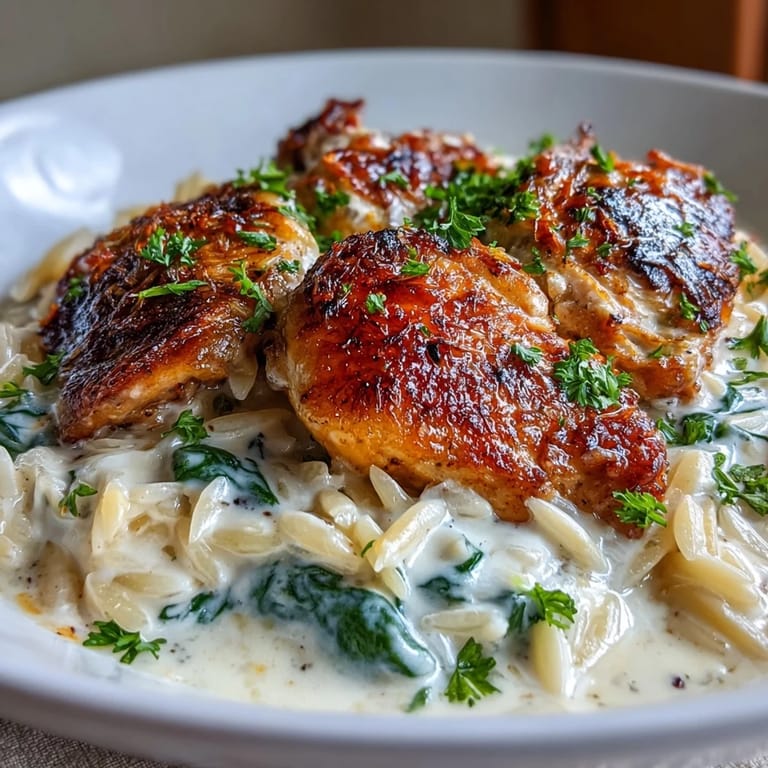
Save This dish has become my answer to so many nights when I want to cook something that feels special but doesn't require special skills. It's proof that sometimes the best meals come from simple ingredients treated with respect and a little bit of care.
Recipe FAQ
- → Can I make this dish ahead of time?
Yes, you can prepare it up to 2 days in advance. Store in an airtight container in the refrigerator and reheat gently with a splash of milk or cream to restore the creamy consistency.
- → What can I use instead of orzo pasta?
Arborio rice, small shells, or ditalini pasta work well as substitutes. Keep in mind cooking times may vary slightly depending on the pasta shape you choose.
- → Is this dish freezer-friendly?
It freezes well for up to 3 months. Portion into freezer-safe containers and thaw overnight in the refrigerator before reheating. The sauce may separate slightly but will come together with gentle heating.
- → Can I make this vegetarian?
Absolutely. Simply omit the chicken and add sautéed mushrooms, extra spinach, or white beans for protein. Use vegetable broth instead of chicken broth for a fully vegetarian version.
- → How do I prevent the orzo from sticking?
Stir occasionally during cooking and ensure there's enough liquid in the pan. The orzo should be mostly submerged while simmering. If it becomes too thick, add small splashes of broth or water.
- → Can I use pre-grated Parmesan cheese?
Freshly grated Parmesan melts better and provides superior flavor. Pre-grated cheese often contains anti-caking agents that prevent smooth melting. For the creamiest results, grate your own from a wedge.