 Save
Save There's something about whisking egg whites that makes me feel like I'm creating edible clouds. Years ago, a friend brought mini pavlovas to a garden party on the first warm Saturday of spring, and I watched people's faces light up when they bit through that crispy shell into the pillowy center. That moment made me determined to master them myself, though my first attempt collapsed faster than I could blink. Now, these delicate nests have become my secret weapon for impressing people without actually spending hours in the kitchen.
I'll never forget making these for my sister's birthday brunch when she was going through a tough time. She bit into one and got this shocked expression, like she couldn't believe something so beautiful could taste that good. The way her shoulders relaxed told me more than any words could—sometimes dessert is about more than just sugar and eggs.
Ingredients
- Egg whites (4 large, room temperature): This is non-negotiable—cold eggs won't whip properly, and any yolk will sabotage your peaks, so take them out an hour before and use a completely grease-free bowl.
- Superfine sugar (1 cup): The fine crystals dissolve smoothly into the whites, creating that signature glossy finish that regular sugar just can't achieve.
- Cornstarch (1 teaspoon): This tiny amount stabilizes the meringue and gives it that satisfying crispy exterior while keeping the inside tender.
- White vinegar (1 teaspoon): It sounds odd, but vinegar prevents the meringue from browning and adds a subtle tang that balances the sweetness.
- Vanilla extract (1 teaspoon for meringue, 1 teaspoon for cream): Fresh vanilla makes a noticeable difference in the flavor—don't skip it or use the artificial stuff.
- Heavy whipping cream (1 cup, cold): Cold cream whips faster and holds its shape longer, so keep it in the fridge until the last moment.
- Powdered sugar (2 tablespoons): Use powdered instead of granulated here because it dissolves instantly into the cream without any grittiness.
- Fresh strawberries (1½ cups, hulled and sliced): Peak season berries make all the difference—look for ones that smell fragrant and feel slightly soft.
- Granulated sugar and lemon juice (for strawberries): This draws out the juice and creates a light syrup that keeps everything moist and flavorful.
Tired of Takeout? 🥡
Get 10 meals you can make faster than delivery arrives. Seriously.
One email. No spam. Unsubscribe anytime.
Instructions
- Prepare and preheat:
- Set your oven to 250°F and line a baking sheet with parchment paper—low heat is your friend here because you want to dry out the meringue, not bake it brown. This gentle approach is what creates that shatteringly crisp exterior.
- Whip the egg whites:
- Start beating the room-temperature egg whites on medium speed until they transform into soft, cloud-like peaks that curl slightly when you lift the beater. This usually takes about 3 to 4 minutes, and you'll see the mixture go from frothy to silky.
- Add the sugar gradually:
- Add your superfine sugar one tablespoon at a time, beating continuously, and you'll watch the meringue shift from foamy to thick and glossy as the sugar dissolves completely. This slow process takes patience but makes all the difference—rushing it leaves grainy spots that ruin the texture.
- Fold in the magic ingredients:
- Gently fold the cornstarch, vinegar, and vanilla into the glossy peaks using a spatula, being careful not to deflate all your hard work. You want to see ribbons of mixture folding over itself, keeping as much air as possible trapped inside.
- Pipe or spoon the nests:
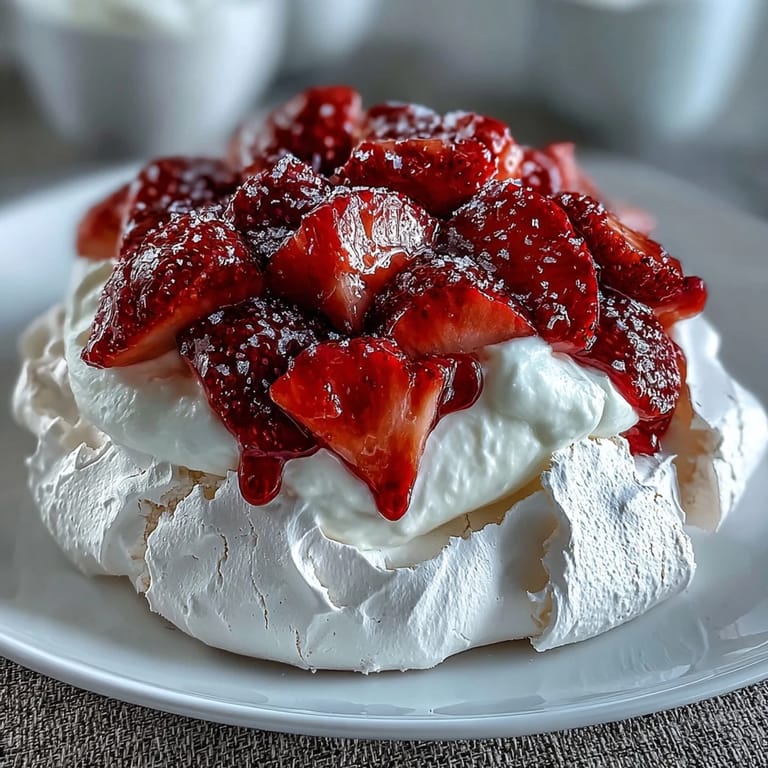
- Using a spoon or piping bag, create 6 small nests on the parchment, making an indentation in the center of each one where your cream and berries will sit. Don't worry if they're not perfect—rustic looking pavlovas have their own charm.
- Bake low and slow:
- Bake for exactly one hour at that low temperature, then turn off the oven and crack the door open slightly to let them cool gradually. This slow cooling prevents cracks and keeps the insides tender—resist the urge to open it fully or the temperature drop will shock them.
- Macerate the berries:
- While the meringues cool, toss your sliced strawberries with granulated sugar and lemon juice, then let them sit for 15 minutes to release their juices. The berries will become glossy and create a light syrup that's absolutely delicious.
- Whip the cream:
- Beat your cold heavy cream with powdered sugar and vanilla until soft peaks form—this takes about 2 to 3 minutes and you want it billowy but still structured. Over-whip and you'll have sweet butter, so stop while it's still creamy.
- Assemble and serve:
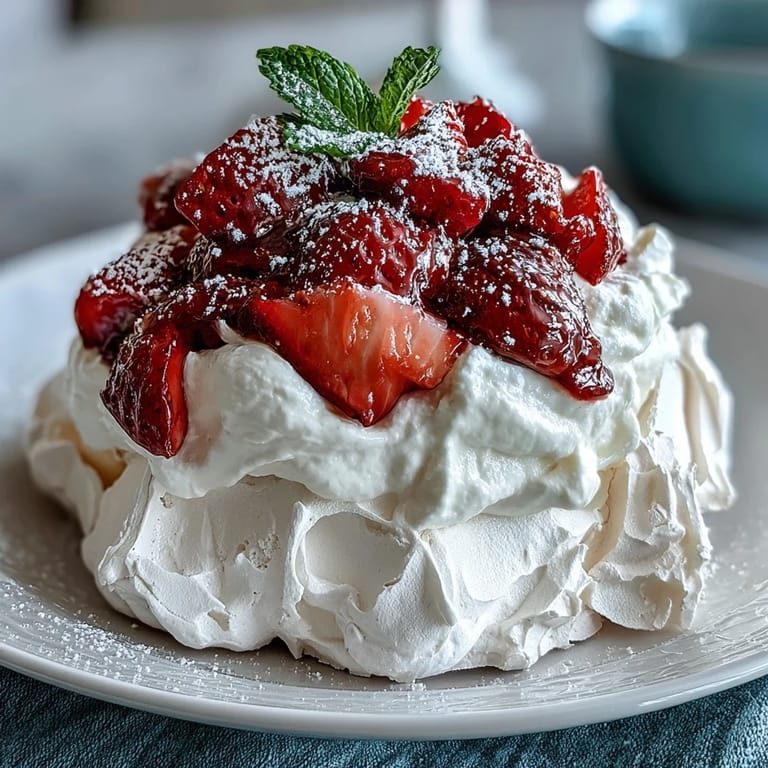
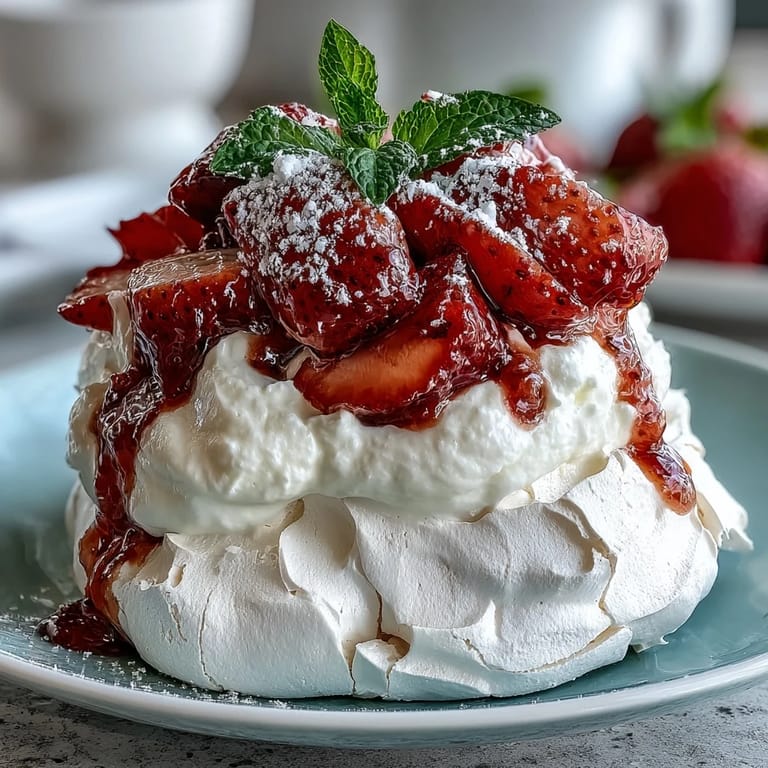
- Place each cooled meringue on a plate, fill the center generously with whipped cream, then top with your macerated strawberries and a drizzle of their syrup. Serve immediately so the meringue stays crispy and the cream stays cold.
 Save
Save My mother-in-law once told me that pavlovas remind her of her grandmother's kitchen in Sydney, where they were made for every special occasion. That connection to place and memory changed how I think about this dessert—it's not just about technique, it's about carrying forward something someone loved.
Timing and Make-Ahead Strategy
The beauty of these pavlovas is that you can bake the meringue nests up to two days ahead and store them in an airtight container in a cool, dry place. This takes the pressure off on the day of your gathering because your actual work comes down to whipping cream and arranging berries, which takes maybe five minutes. I learned this the hard way after stressing about timing, and now I always have my nests ready to go before guests arrive.
Variations and Flavor Combinations
While strawberries are the classic pairing, I've experimented with raspberries, blackberries, and even a mix of all three when the farmers market is overflowing. My favorite discovery was adding a thin layer of lemon curd under the cream, which adds a sophisticated tang, or drizzling passion fruit pulp over the top for tropical brightness. You can even dust the finished pavlova with edible flowers or a light sprinkle of pistachios for color and crunch, though the simplicity of just berries and cream is hard to beat.
Troubleshooting and Success Tips
The most common issue people face is weeping meringue, where liquid pools underneath, and this usually means either the oven temperature was too high or the meringues cooled too quickly. Another surprise I encountered was my first batch spreading into flat puddles, which taught me that humidity matters—make these on a dry day if possible, since moisture in the air interferes with the meringue structure. If your cream won't whip, check that both the bowl and beaters are chilled, and start again if necessary.
- If your strawberries are not very sweet, add an extra teaspoon of sugar to the maceration and let them sit longer.
- Keep an extra dollop of whipped cream on hand for filling any cracks or imperfections in the baked meringue.
- Serve these on your best plates because they deserve to be presented as the elegant little treasures they are.
 Save
Save These little pavlovas have taught me that the most impressive desserts often come from understanding a few simple techniques and then trusting the process. They're proof that you don't need complicated ingredients or hours of work to create something that feels special and tastes absolutely divine.
Recipe FAQ
- → How do I achieve crisp meringue nests?
Bake the meringue nests at a low temperature (250°F/120°C) for about an hour, then let them cool completely in the oven with the door slightly ajar to ensure dryness and crispness.
- → What is the best way to whip cream for topping?
Use cold heavy cream with powdered sugar and vanilla extract. Whip on medium speed until soft peaks form to achieve a light, fluffy texture.
- → Can I prepare the meringue nests in advance?
Yes, meringue nests can be made ahead and stored in an airtight container. Assemble with cream and strawberries just before serving for best texture.
- → How do I macerate the strawberries?
Toss sliced strawberries with granulated sugar and lemon juice, then let them sit for about 15 minutes to release their natural juices and enhance sweetness.
- → Are substitutions possible for the strawberry topping?
Absolutely, you can replace strawberries with other fresh berries or a combination, and even add a drizzle of passion fruit pulp or berry coulis for extra flavor.